Muutke küpsiste eelistusi

E-raamat: AIDS, Intimacy and Care in Rural KwaZulu-Natal: A Kinship of Bones

  • Formaat: PDF+DRM
  • Sari: Care & Welfare
  • Ilmumisaeg: 01-Oct-2025
  • Kirjastus: Amsterdam University Press
  • Keel: eng
  • ISBN-13: 9781040785645
Teised raamatud teemal:
  • Formaat - PDF+DRM
  • Hind: 4,47 €*
  • * hind on lõplik, st. muud allahindlused enam ei rakendu
  • Lisa ostukorvi
  • Lisa soovinimekirja
  • See e-raamat on mõeldud ainult isiklikuks kasutamiseks. E-raamatuid ei saa tagastada.
  • Formaat: PDF+DRM
  • Sari: Care & Welfare
  • Ilmumisaeg: 01-Oct-2025
  • Kirjastus: Amsterdam University Press
  • Keel: eng
  • ISBN-13: 9781040785645
Teised raamatud teemal:

DRM piirangud

  • Kopeerimine (copy/paste):

    ei ole lubatud

  • Printimine:

    ei ole lubatud

  • Kasutamine:

    Digitaalõiguste kaitse (DRM)
    Kirjastus on väljastanud selle e-raamatu krüpteeritud kujul, mis tähendab, et selle lugemiseks peate installeerima spetsiaalse tarkvara. Samuti peate looma endale  Adobe ID Rohkem infot siin. E-raamatut saab lugeda 1 kasutaja ning alla laadida kuni 6'de seadmesse (kõik autoriseeritud sama Adobe ID-ga).

    Vajalik tarkvara
    Mobiilsetes seadmetes (telefon või tahvelarvuti) lugemiseks peate installeerima selle tasuta rakenduse: PocketBook Reader (iOS / Android)

    PC või Mac seadmes lugemiseks peate installima Adobe Digital Editionsi (Seeon tasuta rakendus spetsiaalselt e-raamatute lugemiseks. Seda ei tohi segamini ajada Adober Reader'iga, mis tõenäoliselt on juba teie arvutisse installeeritud )

    Seda e-raamatut ei saa lugeda Amazon Kindle's. 

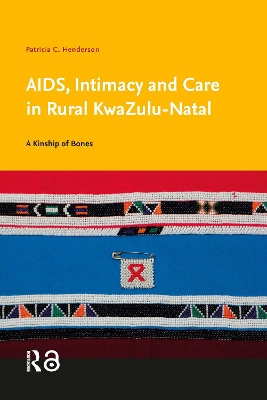
In 2003-2006, Patricia Henderson lived in the South African province of KwaZulu-Natal where she recorded the experiences of people living with HIV/AIDS. In this illuminating study, she recounts the concerns of rural people and explores local repertoires through which illness was folded into everyday life.


The book spans a period when antiretroviral medication was not available, and moves on to a time when the treatment became accessible. Hope gradually became manifest in the recovery of a number of people through antiretroviral therapies and the return of bodies they could recognise as their own. This research implies that protracted interaction with people over time, offers insights into the unfolding textures of everyday life, in particular in its focus on suffering, social and structural inequality, illness, violence, mourning, sensibility, care and intimacy.

Arvustused

"Taking the reader through landscapes of disease, devastation and hope, Henderson's book is theoretically erudite without her philosophical observations overwriting the words of her respondents. She shows what fidelity in the fields anthropologists cultivate means within the practice of anthropology." Veena Das, Krieger-Eisenhower Professor of Anthropology, Johns Hopkins University "In a most personal and ethically informed narrative, Henderson develops a carnal anthropology of the decaying and dying body of HIV/AIDS patients that may trigger love and care as well as stress and rejection. Her work will be of immense benefit to medics, social workers, and home-based care organisations confronted with this disease." Jean-Pierre Warnier, Professor of Anthropology, African Studies Centre, Paris " [ ...] a beautiful, messy-with-life book. I am awed by Hendersons protracted ethnographicwork, and her storytelling, that at once sprawls out into a community and spills inwards, closely grained, looking steadily (and respectfully) at the minutiae of how illness, griefand healing is experienced in mutual, inter-subjective gestures. There is something astute, fierce and intimate that we take away from reading A Kinship of Bones like touching and being touched, we see and care about people in a different way." Linda Wilbraham, Rhodes University, South Africa

Acknowledgements 9(4)
Preface 13(4)
Introduction 17(24)
1 The Vertiginous Body and Social Metamorphosis
41(18)
The life and death of Nkosinathi Dladla
44(7)
Symbolic investments in the body
51(5)
Conclusion
56(3)
2 Mortality and the Ethics of Ethnographic Research
59(24)
In the presence of death
59(5)
Theoretical pathways
64(6)
Accompanying Mandla Shabalala in his illness
70(10)
Conclusion
80(3)
3 Children and Youth in Pursuit of Care
83(22)
Introduction
83(4)
The variable living circumstances of the children and youth of Amatikwe
87(8)
The pain of mobility
95(4)
Expressive genres
99(3)
Conclusion
102(3)
4 Healers Negotiating the Local and the Global
105(22)
Exploring healer narratives: Ntuthuko Hadebe
108(5)
Nonhlanhla Duma
113(3)
Ties between the living and the dead, a conduit of knowledge
116(3)
The politics of illness
119(6)
Conclusion
125(2)
5 Love in a Time of Adversity
127(26)
Part One
129(15)
Part Two
144(6)
Conclusion
150(3)
6 On Accompanying the Ill
153(28)
Zinhle Vilikazi
157(5)
Life experience and philosophy in relation to becoming a volunteer
162(5)
Home-based carers as brokers
167(3)
The illegal sale of medication from a public health facility
170(2)
Beginning a journey with antiretroviral therapies
172(4)
Conclusion
176(5)
Epilogue 181(6)
Appendix: Interlocutors and Research Methods 187(6)
Acronyms 193(2)
Glossary 195(6)
Notes 201(24)
Bibliography 225(18)
Index 243
Patricia C. Henderson is a lecturer in the Department of Social Anthropology at the University of Cape Town.