Muutke küpsiste eelistusi

E-raamat: Arguments Against the Christian Religion in Amsterdam by Saul Levi Morteira, Spinoza's Rabbi

  • Formaat - EPUB+DRM
  • Hind: 59,79 €*
  • * hind on lõplik, st. muud allahindlused enam ei rakendu
  • Lisa ostukorvi
  • Lisa soovinimekirja
  • See e-raamat on mõeldud ainult isiklikuks kasutamiseks. E-raamatuid ei saa tagastada.

DRM piirangud

  • Kopeerimine (copy/paste):

    ei ole lubatud

  • Printimine:

    ei ole lubatud

  • Kasutamine:

    Digitaalõiguste kaitse (DRM)
    Kirjastus on väljastanud selle e-raamatu krüpteeritud kujul, mis tähendab, et selle lugemiseks peate installeerima spetsiaalse tarkvara. Samuti peate looma endale  Adobe ID Rohkem infot siin. E-raamatut saab lugeda 1 kasutaja ning alla laadida kuni 6'de seadmesse (kõik autoriseeritud sama Adobe ID-ga).

    Vajalik tarkvara
    Mobiilsetes seadmetes (telefon või tahvelarvuti) lugemiseks peate installeerima selle tasuta rakenduse: PocketBook Reader (iOS / Android)

    PC või Mac seadmes lugemiseks peate installima Adobe Digital Editionsi (Seeon tasuta rakendus spetsiaalselt e-raamatute lugemiseks. Seda ei tohi segamini ajada Adober Reader'iga, mis tõenäoliselt on juba teie arvutisse installeeritud )

    Seda e-raamatut ei saa lugeda Amazon Kindle's. 

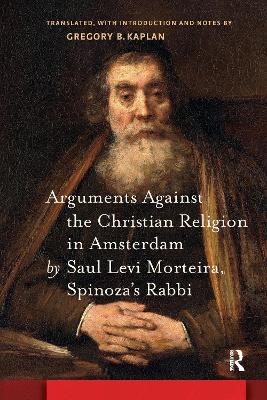
This is the first book to offer a translation into English—as well as a critical study—of a Spanish treatise written in about 1650 by Rabbi Saul Levi Morteira, whose most renowned congregant was Baruch Spinoza. Aimed at encouraging the practice of halachic Judaism among the Amsterdam-based descendants of conversos, Spanish and Portuguese Sephardic Jews who had been forced to convert to Christianity, the book stages a dialogue between two conversos that ultimately leads to a vision of a Jewish homeland—an outcome that Morteira thought was only possible through his program for rejudaization.

Arvustused

"Kaplans translation is a pleasure to read and it succeeds in bringing out the literary quality of Morteiras work. ... This is an edition and translation; it is not an attempt to deliver an intellectual biography of Morteira. Nevertheless, Kaplans rendering of the Amsterdams rabbis Arguments will turn out to be an invaluable source to anyone willing and able to write such a biography." - Wiep van Bunge, Renaissance Quarterly, Winter 2019 "This book makes a significant contribution to a better understanding of the life of early modern Jewish communities, particularly but not exclusively in Amsterdam, against the background of the socio-cultural relations, and of the tensions, between different components of early modern Jewry." - Diego Lucci, American University in Bulgaria, Blagoevgrad in the Journal of Ecclesiastical History

Acknowledgements 9(4)
List of abbreviations
11(2)
Introduction 13(1)
Ets Haim Library ms. EH/LM 48D38 [ Fuks 206]: A `Monuments Men' manuscript
13(4)
Morteira's youth in the Venetian Ghetto
17(5)
The converso heritage of Morteira's congregants in Amsterdam
22(3)
Crypto-Judaism
25(4)
Rejudaization
29(2)
Morteira's role in rejudaization
31(2)
The Portuguese Nation
33(2)
Plot summary of Arguments against the Christian Religion in Amsterdam (ms. EH/LM 48D38 [ Fuks 206])
35(1)
The Portuguese Nation in Arguments against the Christian Religion in Amsterdam
36(4)
Crypto-Judaism and rejudaization in Arguments
40(1)
Converso protagonists in Arguments: Historical precedents
41(2)
The influence of Lazarillo de Tormes on Arguments
43(2)
The influence of Spanish Golden Age theater on Arguments
45(6)
Arguments: Biblical sources
51(12)
Arguments: Eschatology, rejudaization and Baruch Spinoza
63(11)
Biographical notes on Miguel Lopez and notes on his messianic images
74(2)
Translator's notes on ms. EH/LM 48D38 [ Fuks 206]
76(3)
Notes to introduction 79(8)
Arguments against the Christian Religion in Amsterdam 87(72)
Notes to Arguments 159(34)
Works Cited 193(6)
Index of direct and indirect biblical quotations in Arguments 199(6)
Index to Introduction 205
Professor Gregory Kaplan is a Professor of Spanish at the University of Tennessee, where he also holds a Lindsay Young Professorship. He has received an NEH Fellowship and the Jefferson Prize at the University of Tennessee.