Muutke küpsiste eelistusi

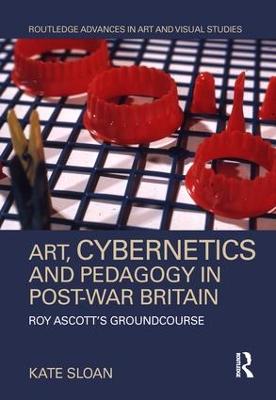
E-raamat: Art, Cybernetics and Pedagogy in Post-War Britain: Roy Ascott's Groundcourse

(University of Edinburgh)
  • Formaat - EPUB+DRM
  • Hind: 54,59 €*
  • * hind on lõplik, st. muud allahindlused enam ei rakendu
  • Lisa ostukorvi
  • Lisa soovinimekirja
  • See e-raamat on mõeldud ainult isiklikuks kasutamiseks. E-raamatuid ei saa tagastada.

DRM piirangud

  • Kopeerimine (copy/paste):

    ei ole lubatud

  • Printimine:

    ei ole lubatud

  • Kasutamine:

    Digitaalõiguste kaitse (DRM)
    Kirjastus on väljastanud selle e-raamatu krüpteeritud kujul, mis tähendab, et selle lugemiseks peate installeerima spetsiaalse tarkvara. Samuti peate looma endale  Adobe ID Rohkem infot siin. E-raamatut saab lugeda 1 kasutaja ning alla laadida kuni 6'de seadmesse (kõik autoriseeritud sama Adobe ID-ga).

    Vajalik tarkvara
    Mobiilsetes seadmetes (telefon või tahvelarvuti) lugemiseks peate installeerima selle tasuta rakenduse: PocketBook Reader (iOS / Android)

    PC või Mac seadmes lugemiseks peate installima Adobe Digital Editionsi (Seeon tasuta rakendus spetsiaalselt e-raamatute lugemiseks. Seda ei tohi segamini ajada Adober Reader'iga, mis tõenäoliselt on juba teie arvutisse installeeritud )

    Seda e-raamatut ei saa lugeda Amazon Kindle's. 

This is the first full-length study about the British artist Roy Ascott, one of the first cybernetic artists, with a career spanning seven decades to date. The book focuses on his early career, exploring the evolution of his early interests in communication in the context of the rich overlaps between art, science and engineering in Britain during the 1950s and 1960s. The first part of the book looks at Ascott’s training and early work, while the second looks solely at Groundcourse, Ascott’s extraordinary pedagogical model for visual arts and cybernetics which used an integrative and systems-based model, drawing in behaviourism, analogue machines, performance and games. Using hitherto unpublished photographs and documents, this book will forge a more prominent place for cybernetics in post-war British art.

Arvustused

"There is a great deal of original research here and it is a worthy contribution. One can only hope that it opens up the field of art pedagogy even further."

- Beth Williamson, Art History

1. Dialogue (Introduction)

2. Metaform

3. Field

4. Analogue

5. Control

6. Calibrator

7. Game

8. Synthesizer (Conclusion)
Kate Sloan teaches for Newcastle Univerity and the University of Edinburgh, where she was previously Henry Moore Foundation Post-Doctoral Fellow 2015-17.