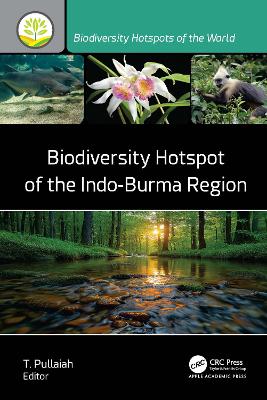
Studies the paleoclimatic oscillations of the region as well as the impact of climate change on the region. Also addressed are the various types of forests, plants and vegetation, lichen and cyanobacteria, etc., found in the hotspot. It presents examinations of faunal diversity and agrobiodiversity as well.
The Indo-Burma Biodiversity Hotspot, spanning over two million total square kilometers, covers parts of Cambodia, Laos, Myanmar, Thailand, Vietnam, southern China, northeast India, and Bangladesh. It is one of the world 36 biodiversity hotspots and is considered one of the most biologically important regions on Earth. The hotspot is home to a remarkable diversity of plants and animals.
This new volume covers a range of diverse topics, including studies of the paleoclimatic oscillations of the region as well as the impact of climate change. Also addressed are the various types of forests, plants and vegetation, lichen and cyanobacteria, etc., found in the hotspot. It presents examinations of faunal diversity and agrobiodiversity as well.
This volume is part of the Biodiversity Hotspots of the World book series, which addresses the urgent need to take stock of the biodiversity in hotspots around the world in order to foster conservation and management. The volumes in this series are essential resources for researchers and practitioners in the fields of conservation biology, ecology, and evolution as the series concisely records the existing biodiversity of these hotspots of the world.
Preface
1. Palaeoclimatic Oscillations in the Indo-Burma Hotspot: Recent
Evidence from Wetlands
2. Vegetation and Forest Types of Vietnam Part of the
Indo-Burma Hotspot
3. Microbial Diversity of Soil and Sandstones Forming
Historical Monuments of the Indo-Burma Region: A Review
4. Cyanobacteria from
the Indo-Burma Hotspot Region of India: Diversity, Endemism, and Future Scope
5. Lichen Diversity of the Indo-Burma Biodiversity Hotspot
6. Liverwort and
Hornwort Diversity in the Indo-Burma Hotspot Region of India
7. Pteridophytes
of the Indo-Burma Region: A Look into Their Status
8. Diversity of
Angiosperms in the IndoBurma Biodiversity Hotspot Region
9. The Changing
Paradigms of Phyto-Diversity in Andaman Group Islands of the Indo-Burma
Biodiversity Hotspot
10. Faunal Diversity of Andaman Group of Islands, Part
of Indo-Burma Hotspot
11. Indo-Burma Biodiversity Hotspot and Climate Change
12. Diversity of Eel Species in the Indo-Burma Biodiversity Hotspot:
Taxonomic Status, Economic Importance, Present Status, and Prevailing Threats
13. Agro-biodiversity in Traditional Land-Use Systems of Northeast Indian
Part of Indo-Burma Hotspot
T. Pullaiah, PhD, is a former Professor in the Department of Botany at Sri Krishnadevaraya University in Andhra Pradesh, India, where he has taught for more than 35 years. He has held several positions at the university, including Dean, Faculty of Biosciences; Head of the Department of Botany; Head of the Department of Biotechnology; and member of the Academic Senate. He was President of the Indian Botanical Society (2014), President of the Indian Association for Angiosperm Taxonomy (2013), and Fellow of Andhra Pradesh Akademi of Sciences. Under his guidance, over 50 students earned their doctoral degrees. He has authored over 70 books, edited over 40 books, and published over 340 papers. He was also a member of the Species Survival Commission of the International Union for Conservation of Nature (IUCN). Professor Pullaiah received his PhD from Andhra University, India, attended Moscow State University, Russia, and worked as postdoctoral fellow during 1976-1978.