Muutke küpsiste eelistusi

Biology and Ecology of Aphids [Kõva köide]

Edited by (Institute for Insect Biotechnology, Justus Liebig University of Giessen, Germany)
  • Formaat: Hardback, 282 pages, kõrgus x laius: 234x156 mm, kaal: 695 g, 16 Illustrations, color; 16 Illustrations, black and white
  • Ilmumisaeg: 17-Feb-2016
  • Kirjastus: CRC Press Inc
  • ISBN-10: 1482236761
  • ISBN-13: 9781482236767
  • Kõva köide
  • Hind: 204,75 €*
  • * hind on lõplik, st. muud allahindlused enam ei rakendu
  • Tavahind: 273,00 €
  • Säästad 25%
  • Raamatu kohalejõudmiseks kirjastusest kulub orienteeruvalt 3-4 nädalat
  • Kogus:
  • Lisa ostukorvi
  • Tasuta tarne
  • Tellimisaeg 2-4 nädalat
  • Lisa soovinimekirja
  • Formaat: Hardback, 282 pages, kõrgus x laius: 234x156 mm, kaal: 695 g, 16 Illustrations, color; 16 Illustrations, black and white
  • Ilmumisaeg: 17-Feb-2016
  • Kirjastus: CRC Press Inc
  • ISBN-10: 1482236761
  • ISBN-13: 9781482236767

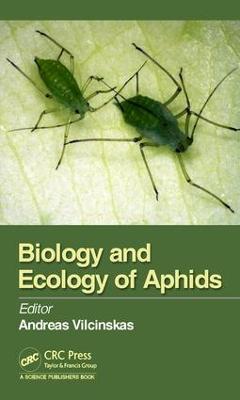
Most people know of aphids as garden pests, infesting the soft green tissues of plants in vast numbers and killing them by sucking out the sap. Indeed, among the 4000 or so known species of aphids about 250 are pests, and in temperate regions several are economically important agricultural pests that damage crops directly during feeding or act as vectors for plant pathogens. But aphids are also important model organisms in evolutionary biology and ecology because they combine a number of unique features such as complex life cycles involving the development of morphological distinct phenotypes (polyphenism), sexual and asexual reproduction strategies and changes of host plants.

Aphids can also be regarded as holobionts because they are colonized by obligate and facultative microbes which enable them to feed exclusively on phloem sap and influence their resistance against pathogens, parasitoids or environmental stress. This book combines fundamental information about aphids with chapters addressing state-of-the-art research in topics such as aphid-related phylogeny, genome biology, epigenetics and chemical ecology. The chapters have been compiled by experts in the field to provide a valuable and accessible source of information for researchers and for students in biology, ecology and agriculture.

Preface v
1 Phylogeny of the Aphids
1(13)
Lars Podsiadlowski
2 The Ontogenesis of the Pea Aphid Acyrthosiphon pisum
14(38)
Henrike Schmidtberg
Andreas Vilcinskas
3 Functional and Evolutionary Genomics in Aphids
52(37)
Denis Tagu
Federica Calevro
Stefano Colella
Toni Gabaldon
Akiko Sugio
4 Epigenetic Control of Polyphenism in Aphids
89(11)
Krishnendu Mukherjee
Arne F. Baudach
5 Bacterial Symbionts of Aphids (Hemiptera: Aphididae)
100(26)
Marisa Skaljac
6 Aphid Immunity
126(9)
Andreas Vilcinskas
7 Aphid Molecular Stress Biology
135(17)
Laramy S. Enders
Nicholas J. Miller
8 The Effect of Plant Within-Species Variation on Aphid Ecology
152(19)
Sharon E. Zytynska
Wolfgang Weisser
9 Chemical Ecology of Aphids (Hemiptera: Aphididae)
171(28)
Antoine Boullis
Francois J. Verheggen
10 Aphid Honeydew: Rubbish or Signaler
199(22)
Klaus H. Hoffmann
11 Function of Aphid Saliva in Aphid-Plant Interaction
221(17)
Torsten Will
12 Biotechnological Approaches to Aphid Management
238(17)
Benjamin R. Deist
Bryony C. Bonning
13 Aphid Techniques
255(16)
Torsten Will
Index 271
Andreas Vilcinskas