Muutke küpsiste eelistusi

Contextualizing Melodrama in the Czech Lands: In Concert and on Stage [Pehme köide]

  • Formaat: Paperback / softback, 260 pages, kõrgus x laius: 234x156 mm, kaal: 371 g, 56 Halftones, black and white; 56 Illustrations, black and white
  • Sari: Ashgate Interdisciplinary Studies in Opera
  • Ilmumisaeg: 29-Apr-2022
  • Kirjastus: Routledge
  • ISBN-10: 0367539640
  • ISBN-13: 9780367539641
  • Pehme köide
  • Hind: 48,81 €*
  • * hind on lõplik, st. muud allahindlused enam ei rakendu
  • Tavahind: 65,09 €
  • Säästad 25%
  • Raamatu kohalejõudmiseks kirjastusest kulub orienteeruvalt 3-4 nädalat
  • Kogus:
  • Lisa ostukorvi
  • Tasuta tarne
  • Tellimisaeg 2-4 nädalat
  • Lisa soovinimekirja
  • Formaat: Paperback / softback, 260 pages, kõrgus x laius: 234x156 mm, kaal: 371 g, 56 Halftones, black and white; 56 Illustrations, black and white
  • Sari: Ashgate Interdisciplinary Studies in Opera
  • Ilmumisaeg: 29-Apr-2022
  • Kirjastus: Routledge
  • ISBN-10: 0367539640
  • ISBN-13: 9780367539641
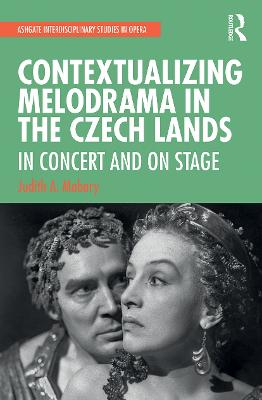
The mention of the term "melodrama" is likely to evoke a response from laymen and musicians alike that betrays an acquaintance only with the popular form of the genre and its greatly heightened drama, exaggerated often to the point of the ridiculous. Few are aware that there exists a type of melodrama that contains in its smaller forms the beauty of the sung ballad and, in the larger-scale works, the appeal of the spoken play. This category of melodrama is one that surfaced in many cultures but was perhaps never so enthusiastically cultivated as in the Czech lands. The melodrama varied greatly at the hands of its Czech advocates. While the works of Zdenk Fibich and his contemporary Josef Bohuslav Foerster, a composer best known for his songs, remained closely bound to the text, those of conductor/composer Otakar Ostril reveal a stance that privileged the music and, given their creators orchestral experience, are more reminiscent of the symphonic poem. Fibich in his staged works and Josef Suk (composer/violinist and Dvoáks son-in-law), in his incidental music reflect variously late nineteenth-century Romanticism, the influence of Wagner, and early manifestations of Impressionism. In its more recent guise, the principles of the staged melodrama reside quite comfortably in the film score. Judith A. Mabarys important volume will be of interest not only to musicologists, but those working in Central and East European studies, voice studies, European theatre, and those studying music and nationalism.
1. The Musical Melodrama: Rationality Overruled;
2. The Path to Bendas
Melodramas: From the Jesuit Schuldrama through Rousseaus Experiment in
Pygmalion;
3. A Place in the Theatre: The Impact of Jií Benda and the Seyler
Company on Melodrama;
4. The Sacred and the Profane: Melodrama in Prague;
5.
From Paris and the Boulevard du Crime to Pragues Estates Theatre: Tracing
the Popular Melodrama;
6. Zdenk Fibich and the Revitalization of the
Classical Melodrama;
7. Fibichs Concert Melodramas: A Closer Look;
8.
Fibichs Hippodamie: Melodrama for the Dramatic Stage;
9. Epilogue
Judith A. Mabary is Associate Professor of Musicology at the University of Missouri in Columbia. Her research interests center on Czech music of the nineteenth and early twentieth centuries, namely the life and works of Antonín Dvoák, Zdeek Fibich, Bohuslav Martin, and Vítzslava Kaprálová as well as the genre of Czech melodrama.