Muutke küpsiste eelistusi

E-raamat: Corpus Inscriptionum Arabicarum Palaestinae, Volume One: -A-

  • Formaat - PDF+DRM
  • Hind: 283,99 €*
  • * hind on lõplik, st. muud allahindlused enam ei rakendu
  • Lisa ostukorvi
  • Lisa soovinimekirja
  • See e-raamat on mõeldud ainult isiklikuks kasutamiseks. E-raamatuid ei saa tagastada.

DRM piirangud

  • Kopeerimine (copy/paste):

    ei ole lubatud

  • Printimine:

    ei ole lubatud

  • Kasutamine:

    Digitaalõiguste kaitse (DRM)
    Kirjastus on väljastanud selle e-raamatu krüpteeritud kujul, mis tähendab, et selle lugemiseks peate installeerima spetsiaalse tarkvara. Samuti peate looma endale  Adobe ID Rohkem infot siin. E-raamatut saab lugeda 1 kasutaja ning alla laadida kuni 6'de seadmesse (kõik autoriseeritud sama Adobe ID-ga).

    Vajalik tarkvara
    Mobiilsetes seadmetes (telefon või tahvelarvuti) lugemiseks peate installeerima selle tasuta rakenduse: PocketBook Reader (iOS / Android)

    PC või Mac seadmes lugemiseks peate installima Adobe Digital Editionsi (Seeon tasuta rakendus spetsiaalselt e-raamatute lugemiseks. Seda ei tohi segamini ajada Adober Reader'iga, mis tõenäoliselt on juba teie arvutisse installeeritud )

    Seda e-raamatut ei saa lugeda Amazon Kindle's. 
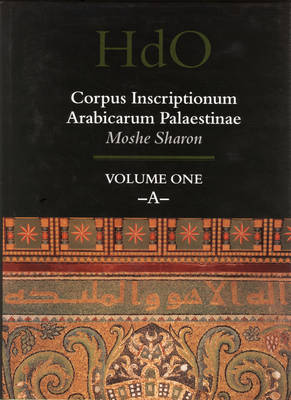
Western Palestine is extremely rich in Arabic inscriptions, whose dates range from as early as CE 150 until modern times. Most of the inscriptions date from the Islamic period, for under Islam the country gained particular religious and strategic importance, even though it made up only part of the larger province of Syria. This historical importance is clearly reflected in the hundreds of inscriptions, the texts of which cover a variety of topics: construction, dedication, religious endowments, epitaphs, Qur'anic texts, prayers and invocations, all now assembled in the Corpus Inscriptionum Arabicarum Palaestinae (CIAP). The CIAP follows the method established at the end of the 19th century by Max van Berchem, namely, the studying of the Arabic inscriptions 'in context'. Van Berchem managed to publish two volumes of the inscriptions from Jerusalem: the CIAP covers the entire country. The inscriptions are arranged according to site, and are studied in their respective topographical, historical and cultural context. In this way the CIAP offers more than a survey of inscriptions: it represents the epigraphical angle of the geographical history of the Holy Land. Volume One: (A) was published in 1997, Volume Two: (B-C) in 1999, Volume Three: (D-F) in 2004, Volume Four: (G) in 2008, an Addendum in 2007, Volume Five: (H-I) in 2013, Volume Six: J (1) in 2016 and Volume Seven: J (2) Jerusalem 1 in 2021. All volumes are still available.
Moshe Sharon, Ph.D., is Professor of Islamic History at The Hebrew University, Jerusalem. He studied epigraphy under Gaston Wiet, and has been collecting the material for CIAP since the last 1960s. He has published many books and articles on a variety of subjects on medieval Islam and Arabic epigraphy, as well as on the Bb-Bah faiths. In 2014 he was elected member of the American Philosophical Society. He also received an award from lAcademie des Inscriptions et Belles-Lettres for Volume 6.