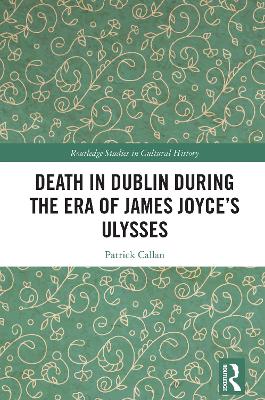
The funeral of Paddy Dignam in James Joyces Ulysses serves as the pivotal event of the Hades episode. This volume explores how Dignams interment in Glasnevin Cemetery allowed Joyce the freedom to consider the conventions, rituals and superstitions associated with death and burial in Dublin.
Integrating the words and characters of Ulysses with its figurative locale, the book looks at the presence of Dublin in Ulysses, and Ulysses in Dublin. It emphasises the highly visible public role assigned to death in Joyces world, while also appreciating how it is woven into the universe of Ulysses. The study examines the role of Glasnevin Cemetery where the Joyce family plot was opened in 1880 and remained in use for eight decades as well as the social and medical problems associated with life in Dublin, a city divided by class, status, wealth and health. Nineteen burials took place in Glasnevin on 16 June 1904, and the analysis of this group illuminates the role of undertakers and insurers, along with the importance of memorialisation.
This book is an important contribution to Joyce and Irish studies, as well as to international studies related to the treatment of the dead body and the development of garden cemeteries.
Introduction Part A: Developing Irelands National Cemetery the
grave elders (U 12.1185)
1. Dublins New Burial Ground When churchyards
yawn (U 6.750)
2. The Emergence of a National Cemetery hero martyr (U
12.609)
3. Managing Dublins Largest Cemetery over us dead they bend (U
14.393) Part B: Living and Dying in Paddy Dignams Dublin wipe away a
tear (U 11.1101)
4. On the Edge in Dublin till their dying day (U
13.88889)
5. For all things dying (U 11.1102) Part C: Bringing Paddy
Dignam to Glasnevin great race tomorrow (U 6.369)
6. Death Notices and
Mourning Styles Sufficient for the day (U 7.726)
7. Getting to Glasnevin
Grand Funeral (U 18.1093) Part D: Burial in Glasnevin the debt of
nature (U 12.335)
8. Burying Paddy Dignam First the stiff (U 6.5223)
9.
The Joyce Family Plot, 18801957 ends and ultimates (U 14.38889) Part E:
Interment in Glasnevin, June 16, 1904 Ashes to ashes (U 6.986)
10. Burial
in the Poor Ground burying the little dead (U 6.692)
11. Burial in the
General Ground Cry you mercy, gentlemen (U 12.1607) Part F: Paying for
Paddy Dignams funeral Good Fallback (U 5.119)
12. Isnt he in the
insurance line? (U 8.939)
13. The chapter of the saints of finance (U
15.1419)
14. Preparing for the last farewell (U 12.525) Part G:
Commemorating Paddy Dignam We obey them in the grave (U 6.126)
15.
Legacies and Bequests All dead names (U 4.222)
16. Commemorating the dead
as memory fabled it (U 2.08)
Patrick Callan is Visiting Research Fellow at Trinity College Dublin. His work on Ulysses, and the role of radio in Joyces work, has appeared in the James Joyce Quarterly (2021), the Historical Journal of Film, Radio and Television (2019), and the Dublin James Joyce Journal (201820).