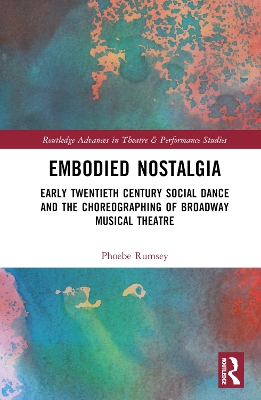
Embodied Nostalgia is a collection of interlocking case studies that focus on how social dance in musical theatre brings forth the dancer on stage as a site of embodied history, cultural memory, and nostalgia, and asks what social dance is doing performatively, dramaturgically, and critically in musical theatre.
Embodied Nostalgia is a collection of interlocking case studies that focus on how social dance in musical theatre brings forth the dancer on stage as a site of embodied history, cultural memory, and nostalgia, and asks what social dance is doing performatively, dramaturgically, and critically in musical theatre.
The case studies in this volume are all Broadway musicals set during the Jazz Age (1910-1950), however, performed and produced after that time, creating a spectrum of nostalgic impulses that are interrogated for social and political resonance and meaning. All reflect the fractures or changes in the social dance when brought to the stage and expose the complexities of the embodied nostalgia – broadly interpreted as the physicalizing of community memories, longings, and historical meaning – the dances carry with them. Particular attention is focused on the Black ownership of the social dances and the subsequent appropriation, cultural theft, and forgotten legacies.
By approaching musical theatre through this lens of social dance––always already deeply connected to notions of class and race––and the politics of choreography therein, a unique and necessary method to describing, discussing, and critically evaluating the body in motion in musical theatre is put forth.

 Rohkem infot Taylor & Francis e-raamatute kohta