Muutke küpsiste eelistusi

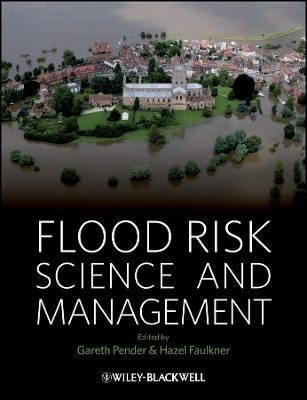
E-raamat: Flood Risk Science and Management

Edited by (Middlesex University), Edited by (Heriot-Watt University)
  • Formaat: EPUB+DRM
  • Ilmumisaeg: 01-Dec-2010
  • Kirjastus: Wiley-Blackwell
  • Keel: eng
  • ISBN-13: 9781444340761
Teised raamatud teemal:
  • Formaat - EPUB+DRM
  • Hind: 291,40 €*
  • * hind on lõplik, st. muud allahindlused enam ei rakendu
  • Lisa ostukorvi
  • Lisa soovinimekirja
  • See e-raamat on mõeldud ainult isiklikuks kasutamiseks. E-raamatuid ei saa tagastada.
  • Raamatukogudele
  • Formaat: EPUB+DRM
  • Ilmumisaeg: 01-Dec-2010
  • Kirjastus: Wiley-Blackwell
  • Keel: eng
  • ISBN-13: 9781444340761
Teised raamatud teemal:

DRM piirangud

  • Kopeerimine (copy/paste):

    ei ole lubatud

  • Printimine:

    ei ole lubatud

  • Kasutamine:

    Digitaalõiguste kaitse (DRM)
    Kirjastus on väljastanud selle e-raamatu krüpteeritud kujul, mis tähendab, et selle lugemiseks peate installeerima spetsiaalse tarkvara. Samuti peate looma endale  Adobe ID Rohkem infot siin. E-raamatut saab lugeda 1 kasutaja ning alla laadida kuni 6'de seadmesse (kõik autoriseeritud sama Adobe ID-ga).

    Vajalik tarkvara
    Mobiilsetes seadmetes (telefon või tahvelarvuti) lugemiseks peate installeerima selle tasuta rakenduse: PocketBook Reader (iOS / Android)

    PC või Mac seadmes lugemiseks peate installima Adobe Digital Editionsi (Seeon tasuta rakendus spetsiaalselt e-raamatute lugemiseks. Seda ei tohi segamini ajada Adober Reader'iga, mis tõenäoliselt on juba teie arvutisse installeeritud )

    Seda e-raamatut ei saa lugeda Amazon Kindle's. 

Approaches to avoid loss of life and limit disruption and damage from flooding have changed significantly in recent years. Worldwide, there has been a move from a strategy of flood defence to one of flood risk management. Flood risk management includes flood prevention using hard defences, where appropriate, but also requires that society learns to live with floods and that stakeholders living in flood prone areas develop coping strategies to increase their resilience to flood impacts when these occur. This change in approach represents a paradigm shift which stems from the realisation that continuing to strengthen and extend conventional flood defences is unsustainable economically, environmentally,  and in terms of social equity. Flood risk management recognises that a sustainable approach must rest on integrated measures that reduce not only the probability of flooding, but also the consequences.  This is essential as increases in the probability of inundation are inevitable in many areas of the world due to climate change, while socio-economic development will lead to spiralling increases in the consequences of flooding unless land use in floodplains is carefully planned. 

Flood Risk Science and Management provides an extensive and comprehensive synthesis of current research in flood management; providing a multi-disciplinary reference text covering a wide range of flood management topics. Its targeted readership is the international research community (from research students through to senior staff) and flood management professionals, such as engineers, planners, government officials and those with flood management responsibility in the public sector. By using the concept of case study chapters, international coverage is given to the topic,  ensuring a world-wide relevance.

Arvustused

Preface vi
Contributors viii
Foreword xii
Acronyms/Glossary of terms xiii
PART 1 INTRODUCTION
1 Setting the Scene for Flood Risk Management
3(16)
Jim W. Hall
Edmund C. Penning-Rowsell
PART 2 LAND USE AND FLOODING
2 Strategic Overview of Land Use Management in the Context of Catchment Flood Risk Management Planning
19(20)
Enda O'Connell
John Ewen
Greg O'Donnell
3 Multiscale Impacts of Land Management on Flooding
39(21)
Howard S. Wheater
Neil McIntyre
Bethanna M. Jackson
Miles R. Marshall
Caroline Ballard
Nataliya S. Bulygina
Brian Reynolds
Zoe Frogbrook
4 Managed Realignment: A Coastal Flood Management Strategy
60(27)
Ian Townend
Colin Scott
Mark Dixon
5 Accountingfor Sediment in Flood Risk Management
87(27)
Colin Thorne
Nick Wallerstein
Philip Soar
Andrew Brookes
Duncan Wishart
David Biedenharn
Stanford Gibson
Charles Little Jr.
David Mooney
Chester C. Watson
Tony Green
Tom Coulthard
Marco Van De Wiel
6 A Measured step Towards Performance-Based Visual Inspection of Flood Defence Assets
114(21)
Gavin Long
Michael J. Mawdesley
PART 3 FLOOD FORECASTING AND WARNING
7 Advances in the Remote Sensing of Precipitation Using Weather radar
135(10)
Ian D. Cluckie
8 Artificial Intelligence Techniques for Real-Time Flood Forecasting
145(18)
Jonathan Lawry
Daniel R. McCulloch
Nicholas J. Randon
Ian D. Cluckie
9 Real-Time Updating in Flood Forecasting and Warning
163(33)
Peter C. Young
10 Coupling Meteorological and Hydrological Models for Real-Time Flood Forecasting
196(15)
Geoff Austin
Barney Austin
Luke Sutherland-Stacey
Paul Shucksmith
PART 4 FLOOD MODELLING AND MITIGATION
11 Data Utilization in Flood Inundation Modelling
211(23)
David C. Mason
Guy J.-P. Schumann
Paul D. Bates
12 Flood Inundation Modelling to Support Flood Risk Management
234(24)
Gareth Pender
Sylvain Neelz
13 Integrated Urban Flood Modelling
258(33)
Adrian J. Saul
Slobodan Djordjevic
Cedo Maksimovic
John Blanksby
PART 5 SYSTEMS MODELLING AND UNCERTAINTY HANDLING
14 Distributed Models and Uncertainty in Flood Risk Management
291(22)
Keith Beven
15 Towards the Next Generation of Risk-Based Asset Management Tools
313(23)
Paul B. Sayers
Mike J. Wallis
Jonathan D. Simm
Greg Baxter
Tony Andryszewski
16 Handling Uncertainty in Coastal Modelling
336(23)
Dominic E. Reeve
Jose Horrillo-Caraballo
Adrian Pedrozo-Acuna
PART 6 POLICY AND PLANNING
17 The Practice of Power: Governance and Flood Risk Management
359(13)
Colin Green
18 Stakeholder Engagement in Flood Risk Management
372(14)
Colin Green
Edmund C. Penning-Rowsell
19 Flood Risk Communication
386(21)
Hazel Faulkner
Simon McCarthy
Sylvia Tunstall
20 Socio-Psychological Dimensions of Flood Risk Management
407(22)
Sue Tapsell
21 Assessment of Infection Risks due to Urban Flooding
429(16)
Lorna Fewtrell
Keren Smith
David Kay
PART 7 CASE STUDIES
22 Modelling Concepts and Strategies to Support Integrated Flood Risk Management in Large, Lowland Basins: Rio Salado Basin, argentina
445(27)
Rodo Aradas
Colin R. Thorne
Nigel Wright
23 Flood Modelling in the thames Estuary
472(12)
Jon Wicks
Luke Lovell
Owen Tarrant
24 A Strategic View of Land Management Planning in Bangladesh
484(15)
Ainun Nishat
Bushra Nishat
Malik Fida Abdullah Khan
25 Goals, Institutions and Governance: the Us Experience
499(14)
Gerald E. Galloway
Index 513
Gareth Pender is Professor of Environmental Engineering in the School of the Built Environment at Heriot Watt University. His research and consultancy interests are in fluvial flooding, particularly in the development and testing of computer models to predict flood inundation extent.  For the past five years he has led the UKs Flood Risk Management Research Consortium an academic industrial partnership - to undertake research to improve flood risk management practice worldwide. Hazel Faulkner is a Professor of Environmental Science at the Flood Hazard Research Centre. Whilst spending a considerable part of her early career exploring the role of dispersive soils in gully initiation in semi-arid contexts, she has recently focused on the challenges of translating scientific formulations of flood risk, and communicating both risk and uncertainty effectively.   She sits on the Management Committee of the UKs Flood Risk Management Research Consortium with responsibilities for integrated activities.