Muutke küpsiste eelistusi

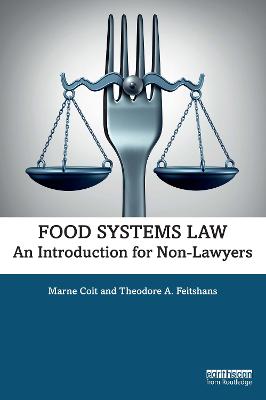
E-raamat: Food Systems Law: An Introduction for Non-Lawyers

  • Formaat: EPUB+DRM
  • Ilmumisaeg: 07-Jul-2020
  • Kirjastus: Routledge
  • Keel: eng
  • ISBN-13: 9780429761287
  • Formaat - EPUB+DRM
  • Hind: 50,69 €*
  • * hind on lõplik, st. muud allahindlused enam ei rakendu
  • Lisa ostukorvi
  • Lisa soovinimekirja
  • See e-raamat on mõeldud ainult isiklikuks kasutamiseks. E-raamatuid ei saa tagastada.
  • Formaat: EPUB+DRM
  • Ilmumisaeg: 07-Jul-2020
  • Kirjastus: Routledge
  • Keel: eng
  • ISBN-13: 9780429761287

DRM piirangud

  • Kopeerimine (copy/paste):

    ei ole lubatud

  • Printimine:

    ei ole lubatud

  • Kasutamine:

    Digitaalõiguste kaitse (DRM)
    Kirjastus on väljastanud selle e-raamatu krüpteeritud kujul, mis tähendab, et selle lugemiseks peate installeerima spetsiaalse tarkvara. Samuti peate looma endale  Adobe ID Rohkem infot siin. E-raamatut saab lugeda 1 kasutaja ning alla laadida kuni 6'de seadmesse (kõik autoriseeritud sama Adobe ID-ga).

    Vajalik tarkvara
    Mobiilsetes seadmetes (telefon või tahvelarvuti) lugemiseks peate installeerima selle tasuta rakenduse: PocketBook Reader (iOS / Android)

    PC või Mac seadmes lugemiseks peate installima Adobe Digital Editionsi (Seeon tasuta rakendus spetsiaalselt e-raamatute lugemiseks. Seda ei tohi segamini ajada Adober Reader'iga, mis tõenäoliselt on juba teie arvutisse installeeritud )

    Seda e-raamatut ei saa lugeda Amazon Kindle's. 

"Food law is a rapidly developing area, with interest being driven at the consumer, handler and farm level. This introductory textbook provides an overview of the concepts necessary for an understanding of food law and regulations, providing the non-specialist reader with a more comprehensive understanding of food systems from production to consumption. Food Systems Law first introduces the US legal system, and then moves on to explain the Federal Regulation of Food systems, the Food Safety ModernizationAct (FSMA), and the Farm Bill, the single most important piece of legislation which impacts the way in which federal resources are used within the food industry. The following chapters provide concise explanations of key topics including food safety, food labeling, organic certification and food waste, with examples from US law and policy included. Importantly, the book also addresses key topics which overlap with food law, such as environmental, health and agricultural law. This textbook is geared towards a non-legal audience, particularly students of interdisciplinary food studies and food science who are taking food law courses, as well as those studying agricultural law, food policy and environmental law. It will also be of interest to professionals working in the food industry and those who want to learn more about how food is regulated"--

Food law is a rapidly developing area, with interest being driven at the consumer, handler and farm level. This introductory textbook provides an overview of the concepts necessary for an understanding of food law and regulations, providing the non-specialist reader with a more comprehensive understanding of food systems from production to consumption.

Food Systems Law

first introduces the US legal system and then moves on to explain the Federal Regulation of Food systems, the Food Safety Modernization Act (FSMA) and the Farm Bill, the single most important piece of legislation which impacts the way in which federal resources are used within the food industry. The following chapters provide concise explanations of key topics including food safety, food labeling, organic certification and food waste, with examples from US law and policy included. Importantly, the book also addresses key topics which overlap with food law, such as environmental, health and agricultural law.

This textbook is geared towards a non-legal audience, particularly students of interdisciplinary food studies and food science who are taking food law courses, as well as those studying agricultural law, food policy and environmental law. It will also be of interest to professionals working in the food industry and those who want to learn more about how food is regulated.

Arvustused

"The field of food law continues to be a developing area of the law that grows in importance. This textbook is perfect to help undergraduates understand the impacts the law plays in what we eat and how we eat it. The information in the book is covered in an easy-to-understand fashion. Theodore Feitshans and Marne Coit are two of the preeminent professors involved in the field of food law." Paul Goeringer, Senior Faculty Specialist and Extension Legal Specialist, Department Agricultural & Resource Economics, University of Maryland, USA

Preface xi
Disclaimer xiii
1 Introduction To Food Systems And Food Law
1(9)
2 The United States Legal System
10(11)
3 Federal Regulation Of Food Systems
21(18)
4 The Farm Bill
39(10)
5 Food Safety
49(30)
6 State And Local Regulation Of Food
79(10)
7 Food Labels
89(12)
8 Organic Certification
101(8)
9 International Trade
109(11)
10 Labor In The Food System
120(14)
11 Environmental Law
134(10)
12 Food Security And Food Access
144(8)
13 Food Loss And Food Waste
152(6)
14 Health And The Law
158(7)
15 Contracts
165(13)
16 Insurance And Liability
178(13)
Index 191
Marne Coit, MSEL, JD, LLM, is on the faculty of the Department of Agricultural and Resource Economics and has an Extension appointment at North Carolina State University, Raleigh, USA. Her teaching and research focuses on food, agricultural and hemp law.

Theodore A. Feitshans is a Professor of Agribusiness at the University of Mount Olive and an Extension Professor Emeritus in the Department of Agricultural and Resource Economics at North Carolina State University, Raleigh, USA. He is a past President of the American Agricultural Law Association, and author of Agricultural and Agribusiness Law: An introduction for non-lawyers (Routledge, 2019).