Muutke küpsiste eelistusi

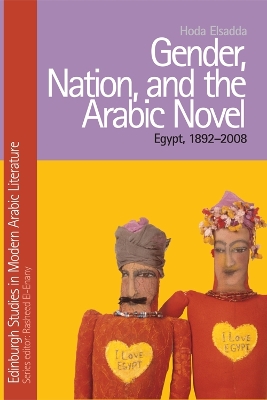
Gender, Nation, and the Arabic Novel: Egypt, 1892-2008 [Kõva köide]

(Cairo University)
  • Formaat: Hardback, 304 pages, kõrgus x laius: 234x156 mm, kaal: 592 g, Illustrations
  • Sari: Edinburgh Studies in Modern Arabic Literature
  • Ilmumisaeg: 18-Jul-2012
  • Kirjastus: Edinburgh University Press
  • ISBN-10: 0748639268
  • ISBN-13: 9780748639267
  • Kõva köide
  • Hind: 126,60 €*
  • * hind on lõplik, st. muud allahindlused enam ei rakendu
  • Tavahind: 158,25 €
  • Säästad 20%
  • Raamatu kohalejõudmiseks kirjastusest kulub orienteeruvalt 3-4 nädalat
  • Kogus:
  • Lisa ostukorvi
  • Tasuta tarne
  • Tellimisaeg 2-4 nädalat
  • Lisa soovinimekirja
  • Formaat: Hardback, 304 pages, kõrgus x laius: 234x156 mm, kaal: 592 g, Illustrations
  • Sari: Edinburgh Studies in Modern Arabic Literature
  • Ilmumisaeg: 18-Jul-2012
  • Kirjastus: Edinburgh University Press
  • ISBN-10: 0748639268
  • ISBN-13: 9780748639267
A nuanced understanding of literary imaginings of masculinity and femininity in the context of the 'national' canon of Egypt.

A nuanced understanding of literary imaginings of masculinity and femininity in the Egytian novel. Gender studies in Arabic literature have become equated with women's writing, leaving aside the possibility of a radical rethinking of the Arabic literary canon and Arab cultural history. While the 'woman question' in the Arabic novel has received considerable attention, the 'male question' has gone largely unnoticed. Now, Hoda Elsadda bucks that trend.Foregrounding voices that have been marginalised alongside canonical works, she engages with new directions in the novel tradition.

Arvustused

Elsadda brilliantly upends standing understandings of the Arabic novel. Nuanced and incisive, she dissects over a century of Egyptian Arabic novels, demonstrating that the liberal national elites gendered imaginations of the nation shaped the literary canon. She convincingly argues that national political projects must imagine themselves through cultural production and that both are systematically shot through with gendered constructions of power. -- Suad Joseph, Professor of Anthropology and Women and Gender Studies, University of California, Davis

Series Editor's Foreword vii
Acknowledgments x
Note on Transliteration and Translation xii
Introduction Gender, Nation, and the Canon of the Arabic Novel xiii
Part One
1 Beginnings
3(35)
2 The New Man
38(21)
3 Tawfiq al-Hakim and the Civilizational Novel
59(18)
Part Two
4 Naguib Mahfouz's Trilogy
77(20)
5 Latifa al-Zayyat
97(22)
6 Defeated Masculinities
119(26)
Part Three
7 The Personal Is Political
145(20)
8 The Postcolonial Nomadic Novel
165(25)
9 Liminal Spaces/Liminal Identities
190(23)
Postscript After Tahrir: Imagining Otherwise 213(4)
References 217(24)
Index 241
Hoda Elsadda is Professor of English and Comparative Literature at Cairo University, and co-founder and Chair of the Board of the Women and Memory Forum. Previously, she held a Chair in the Study of the Contemporary Arab World at the University of Manchester. She is a widely published scholar and activist and her work has focused on Arab and Muslim womens history and narratives, comparative literature and feminist issues.