Muutke küpsiste eelistusi

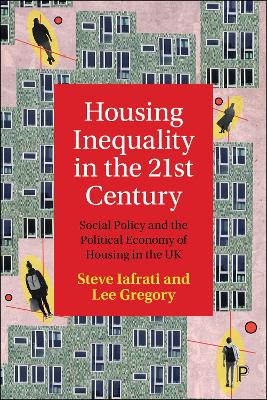
Housing Inequality in the 21st Century: Social Policy and the Political Economy of Housing in the UK [Pehme köide]

(University of Nottingham), (University of Nottingham)
  • Formaat: Paperback / softback, 194 pages, kõrgus x laius: 234x156 mm, 12 Illustrations, black and white
  • Ilmumisaeg: 09-Apr-2026
  • Kirjastus: Policy Press
  • ISBN-10: 1447376773
  • ISBN-13: 9781447376774
  • Formaat: Paperback / softback, 194 pages, kõrgus x laius: 234x156 mm, 12 Illustrations, black and white
  • Ilmumisaeg: 09-Apr-2026
  • Kirjastus: Policy Press
  • ISBN-10: 1447376773
  • ISBN-13: 9781447376774
Why does housing inequality persist in one of the worlds wealthiest nations? This book exposes how deep-rooted political and economic forces continue to shape unequal housing outcomes in the UK. Moving beyond headlines and policy snapshots, it uncovers how housing inequality is embedded more broadly within political economy, tracing how global crises, austerity, and shifting welfare regimes intersect to produce todays housing landscape.


Offering a fresh, holistic analysis, this book situates housing within the wider social policy context, arguing that meaningful solutions must address the complex interplay of social, economic, and political factors that shape both policy and lived experience.


Interdisciplinary in nature, the book connects social policy, housing studies, and political economy to guide readers in better understanding and challenging the perpetual injustices at the heart of the UKs housing system.

Arvustused

'Debates about the housing crisis often just focus on build, build, build. Iafrati and Gregorys text is a refreshing rejoinder to this, highlighting how it is as much a crisis of inequality.' Peter Matthews, University of Stirling

Preface


1. Introduction: why there is more to housing inequality than just housing


2. New Labour and the Third Way: a new millennium and the more equal society


3. 20072010: the global financial crisis and a new direction


4. Small government and the Big Society


5. Housing and welfare reforms


6. Core and periphery


7. Housing commodification and financialisation


8. Grenfell Tower and intersectionality


9. Housing vulnerability and social cleansing


10. Hegemony and housing


11. Reflections and the direction of travel


12. Conclusion
Steve Iafrati is Assistant Professor of Social Policy at the University of Nottingham.


Lee Gregory is Associate Professor of Social Policy at the University of Nottingham.