Muutke küpsiste eelistusi

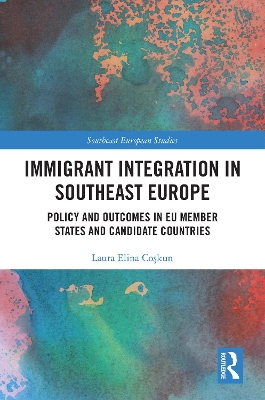
E-raamat: Immigrant Integration in Southeast Europe: Policy and Outcomes in EU Member States and Candidate Countries

  • Formaat - PDF+DRM
  • Hind: 59,79 €*
  • * hind on lõplik, st. muud allahindlused enam ei rakendu
  • Lisa ostukorvi
  • Lisa soovinimekirja
  • See e-raamat on mõeldud ainult isiklikuks kasutamiseks. E-raamatuid ei saa tagastada.
  • Raamatukogudele

DRM piirangud

  • Kopeerimine (copy/paste):

    ei ole lubatud

  • Printimine:

    ei ole lubatud

  • Kasutamine:

    Digitaalõiguste kaitse (DRM)
    Kirjastus on väljastanud selle e-raamatu krüpteeritud kujul, mis tähendab, et selle lugemiseks peate installeerima spetsiaalse tarkvara. Samuti peate looma endale  Adobe ID Rohkem infot siin. E-raamatut saab lugeda 1 kasutaja ning alla laadida kuni 6'de seadmesse (kõik autoriseeritud sama Adobe ID-ga).

    Vajalik tarkvara
    Mobiilsetes seadmetes (telefon või tahvelarvuti) lugemiseks peate installeerima selle tasuta rakenduse: PocketBook Reader (iOS / Android)

    PC või Mac seadmes lugemiseks peate installima Adobe Digital Editionsi (Seeon tasuta rakendus spetsiaalselt e-raamatute lugemiseks. Seda ei tohi segamini ajada Adober Reader'iga, mis tõenäoliselt on juba teie arvutisse installeeritud )

    Seda e-raamatut ei saa lugeda Amazon Kindle's. 

This book presents a comparative analysis of the integration outcomes of immigrants in Southeast Europe, uncovering cross-country differences and ascertaining if they relate to the national integration policy frameworks within the context of the European Union (EU) accession.


This book presents a comparative analysis of the integration outcomes of immigrants in Southeast Europe, uncovering cross-country differences and ascertaining if they relate to the national integration policy frameworks within the context of the European Union (EU) accession.

Applying a multidimensional approach to measure immigrant integration and investigate a broad range of indicators, such as employment, income, social participation, and naturalization, the book reveals that there is a large cross-country variation in immigrant integration outcomes, and some differences in outcomes can indeed be dotted along the EU’s borderlines, as gaps between immigrants and non-immigrants are especially large in member states in the region. The findings highlight the struggles EU member states in Southeast Europe face in adjusting to the more dynamic immigration landscape that EU accession brings.

This book will be a valuable resource to scholars and students of immigrant integration, migration governance, European studies and Southeast European studies, as well as those with an interest in EU enlargement and immigration policymaking.

Part 1: Turning towards the Southeast introducing an emerging region
of interest for immigrant integration in contemporary Europe
1. Introduction
2. Explaining immigrant integration outcomes: Interplay between individual
characteristics and contextual factors?
3. Research design and methods Part
2: Immigrant integration politics, policies, and contextual landscapes in
Southeast Europe
4. Disentangling the European Unions influence in shaping
migration management and immigrant integration
5. Setting the stage: Analysis
of immigrant integration contexts in the countries of Southeast Europe Part
3: What drives integration? Exploring multidimensional integration outcomes
in comparative context of Southeast Europe
6. Immigrants legal-political
integration in Southeast Europe: Naturalization and political participation
7. Immigrants economic integration in Southeast Europe: Employment and
income
8. Immigrants social integration in Southeast Europe: Social contacts
and life satisfaction Part 4: Lessons learned and the way forward for the
future-looking Europe
9. Rethinking integration in Southeast Europe and beyond
Laura Elina Cokun is a migration practitioner, combining her academic and policy experience with a special focus on immigrant integration and international cooperation on migration in the European context. She has several years of experience in the field of migration across various international organizations, including both UN and EU agencies, and she defended her Ph.D. in Social Policy at the London School of Economics and Political Science (LSE) in 2024.