Muutke küpsiste eelistusi

E-raamat: Introduction to Autonomous Driving

  • Formaat: PDF+DRM
  • Sari: Computer Science
  • Ilmumisaeg: 30-Sep-2025
  • Kirjastus: Springer International Publishing AG
  • Keel: eng
  • ISBN-13: 9783031994852
  • Formaat - PDF+DRM
  • Hind: 67,91 €*
  • * hind on lõplik, st. muud allahindlused enam ei rakendu
  • Lisa ostukorvi
  • Lisa soovinimekirja
  • See e-raamat on mõeldud ainult isiklikuks kasutamiseks. E-raamatuid ei saa tagastada.
  • Formaat: PDF+DRM
  • Sari: Computer Science
  • Ilmumisaeg: 30-Sep-2025
  • Kirjastus: Springer International Publishing AG
  • Keel: eng
  • ISBN-13: 9783031994852

DRM piirangud

  • Kopeerimine (copy/paste):

    ei ole lubatud

  • Printimine:

    ei ole lubatud

  • Kasutamine:

    Digitaalõiguste kaitse (DRM)
    Kirjastus on väljastanud selle e-raamatu krüpteeritud kujul, mis tähendab, et selle lugemiseks peate installeerima spetsiaalse tarkvara. Samuti peate looma endale  Adobe ID Rohkem infot siin. E-raamatut saab lugeda 1 kasutaja ning alla laadida kuni 6'de seadmesse (kõik autoriseeritud sama Adobe ID-ga).

    Vajalik tarkvara
    Mobiilsetes seadmetes (telefon või tahvelarvuti) lugemiseks peate installeerima selle tasuta rakenduse: PocketBook Reader (iOS / Android)

    PC või Mac seadmes lugemiseks peate installima Adobe Digital Editionsi (Seeon tasuta rakendus spetsiaalselt e-raamatute lugemiseks. Seda ei tohi segamini ajada Adober Reader'iga, mis tõenäoliselt on juba teie arvutisse installeeritud )

    Seda e-raamatut ei saa lugeda Amazon Kindle's. 

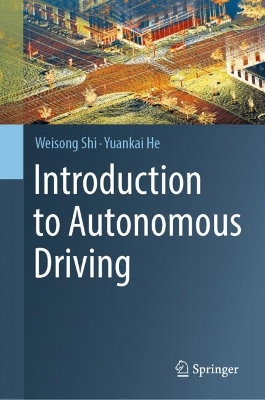
This book offers an accessible introduction to the fast-moving world of autonomous driving. Aimed at students, researchers, and professionals, it provides both a comprehensive overview and a hands-on guide to the core concepts and practical tools used to build self-driving cars.


Autonomous driving stands at the intersection of artificial intelligence, robotics, embedded systems, and transportation engineering. Over the past two decades, the field has advanced from speculative prototypes to road-tested systems with significant industrial and societal impact. This textbook reflects that evolution, offering readers a structured yet flexible entry point into the autonomous vehicle (AV) ecosystem.


Key topics include how autonomous vehicles perceive their surroundings, determine their location, plan routes, and make driving decisions. Each chapter bridges foundational concepts with real-world applications using open-source platforms such as ROS2, CARLA, BlueICE, and Autoware.Universe. Readers will gain hands-on experience through simulation environments, real-world datasets, and modular development tools.


A unique emphasis on experiential learning encourages active engagement with the complexities of AV development. From simulating sensor fusion to implementing planning strategies and security protocols, learners interact directly with the technical and design challenges inherent in the field. Reflection exercises throughout the book emphasize ethical considerations and the societal implications of AV technologyunderscoring the importance of responsible innovation alongside technical fluency.


While some background in programming and mathematics is helpful, the content is designed to be approachable and engaging for a broad audience interested in the future of mobility. The organization of the textfrom foundational chapters on perception and localization to advanced discussions of full-stack systems and industry trendsmirrors the layered architecture of an actual autonomous vehicle.


Introduction to Autonomous Driving equips readers not only with the skills needed to contribute to AV projects today, but also with the conceptual clarity and critical perspective required for leadership in this transformative domain.
Chapter 1 Introduction to Autonomous Driving.
Chapter 2 Simulation
Playground.
Chapter 3 Sensor Technologies.
Chapter 4 V2X Communications.-
Chapter 5 Perception Algorithms.- Chapter 6 Localization Algorithms.
Chapter
7 Path Planning and Decision-Making.
Chapter 8 Drive-by-Wire and Vehicle
Control Systems.
Chapter 9 Computing Systems.
Chapter 10 End-to-End
Solutions.
Chapter 11 Security and Privacy.
Chapter 12 Simulation and
Testing Techniques.
Chapter 13 Industry Landscape.
Chapter 14 Conclusion.
Dr. Weisong Shi is the Alumni Distinguished Professor and Chair of the Department of Computer and Information Sciences at the University of Delaware. He directs the Connected and Autonomous Research (CAR) Laboratory, which actively collaborates with leading companies in the automotive industry. A globally recognized leader in edge computing and autonomous driving, Dr. Shi currently serves as the Honorary Director of the NSF eCAT Industry University Cooperative Research Center (IUCRC). His landmark paper, Edge Computing: Vision and Challenges, has garnered over 8,800 citations. He is the Editor-in-Chief of IEEE Internet Computing and the founding chair of the steering committees for the ACM/IEEE Symposium on Edge Computing (SEC) and the IEEE International Conference on Mobility (MOST). Dr. Shi is a Fellow of the IEEE.


 Yuankai He is a Ph.D. candidate in Computer and Information Sciences at the University of Delaware and a researcher at the Connected and Autonomous Research Laboratory (CAR Lab). His work focuses on simulation frameworks, digital twin technologies, vehicle-to- everything (V2X) communication, and infrastructure-integrated computing systems for autonomous vehicles. He has developed modular tools for high-fidelity testing environments and contributed to systems that connect vehicles and infrastructure for collaborative driving.