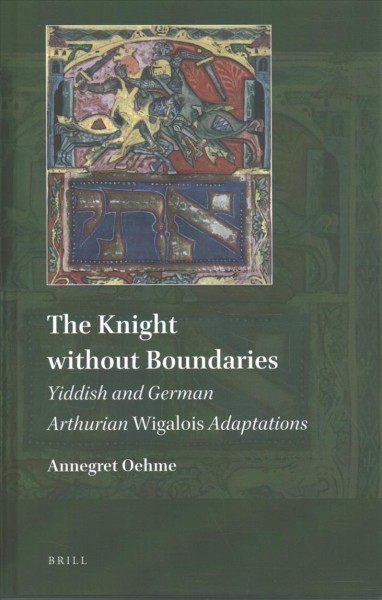
"This volume explores a core medieval myth, the tale of an Arthurian knight called Wigalois, and the ways it connects the Yiddish-speaking Jews and the German-speaking non-Jews of the Holy Roman Empire. The German Wigalois / Viduvilt adaptations grow from a multistage process: a German text adapted into Yiddish adapted into German, creating adaptations actively shaped by a minority culture within a majority culture. The Knight without Boundaries examines five key moments in the Wigalois / Viduvilt tradition that highlight transitions between narratological and meta-narratological patterns and audiences of different religious-cultural or lingual background"--
Among the texts that historian Daniel Ernst Wagner included in his 1780 anthology of stories from the heroic age of the Germanic people was "Wiedusilt," the tale of a largely unknown Arthurian knight-German Wigalois, Yiddish Viduvilt-that he took from a Yiddish ("German-Jewish") textbook. Oehme traces the story's journey through languages and cultures by exploring key moments in the adaptation process that represent both the critical engagement with previous material and the ways adaptors make the text relevant for their contemporaneous audiences. Annotation ©2022 Ringgold, Inc., Portland, OR (protoview.com)
Explores a core medieval myth, the tale of an Arthurian knight called Wigalois, and the ways it connects the Yiddish-speaking Jews and the German-speaking non-Jews of the Holy Roman Empire.

 Lisainfo e-raamatute kohta