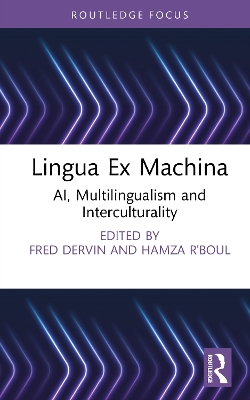
Lingua Ex Machina: AI, Multilingualism and Interculturality explores the evolving role of AI in shaping language, communication and intercultural encounters.
Lingua Ex Machina: AI, Multilingualism and Interculturality explores the evolving role of AI in shaping language, communication and intercultural encounters.
The term ‘Lingua Ex Machina’ (literally ‘language from the machine’) encapsulates the paradox of AI acting as both a tool for bridging linguistic and intercultural divides, and a potential amplifier of inequalities. This edited volume brings together critical perspectives on the impact of AI on language diversity, translation, education and the production and dissemination of knowledge. From questioning whether AI is more than a sophisticated ‘parrot’ to examining its effects on minor languages and intercultural education communication and research, the contributors highlight both the promises and drawbacks of machine-mediated communication. They also urge readers to reflect on the future of language, advocating for a reflexive approach to technology that prioritises agency, diversity, and critical engagement.
This interdisciplinary book is an essential read for students, scholars, and practitioners interested in multilingualism, intercultural communication education, and the implications of AI.
1. Problematising AI beyond a simple parrot? Part 1: AI, Language
Hierarchies and Global Discourse
2. AI and the language factor in
intercultural communication Or what happens to minor languages and the
global flow of discourses?
3. AI as an open-ended dialogue: Language
education beyond mastery and metrics
4. AI-powered multilingual assemblages
in comparative and international education Part 2: Pedagogy and Critical
Multilingual-intercultural Engagement with AI
5. Safe blades or sharp minds:
Priorities at AI-interculturality crossroads
6. A culturally responsive guide
to abstract writing: Resisting AI over-reliance through the pedagogy of
Al-Tadib ()
7. Defining a tricycle: Critical interaction with AI
through intercultural lenses
Fred Dervin is a Full Professor and PhD supervisor at the University of Helsinki, renowned for his groundbreaking contributions to intercultural studies. As a leading scholar and critical thinker, he challenges conventional narratives on interculturality in education and society, offering innovative perspectives on identity, mobility and the politics of interculturality. With an extensive academic legacy of over 300 publications, his influential work has earned him a place among the worlds top scientists on the prestigious Stanford Elsevier List.
Hamza Rboul is a Research Assistant Professor in the Department of International Education at the Education University of Hong Kong, Hong Kong. His research interests include intercultural education, (higher) education in the Global South, decolonial endeavours in education, cultural politics of language teaching, and postcoloniality.