Muutke küpsiste eelistusi

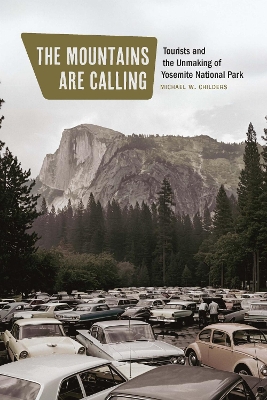
Mountains Are Calling: Tourists and the Unmaking of Yosemite National Park [Kõva köide]

  • Formaat: Hardback, 300 pages, kõrgus x laius: 229x152 mm, 29 photographs, 1 illustration, 3 maps, index
  • Sari: Environment and Region in the American West
  • Ilmumisaeg: 01-Jul-2026
  • Kirjastus: University of Nebraska Press
  • ISBN-10: 149623958X
  • ISBN-13: 9781496239587
  • Kõva köide
  • Hind: 54,90 €*
  • * hind on lõplik, st. muud allahindlused enam ei rakendu
  • Tavahind: 73,20 €
  • Säästad 25%
  • See raamat ei ole veel ilmunud. Raamatu kohalejõudmiseks kulub orienteeruvalt 3-4 nädalat peale raamatu väljaandmist.
  • Kogus:
  • Lisa ostukorvi
  • Tasuta tarne
  • Tellimisaeg 2-4 nädalat
  • Lisa soovinimekirja
  • Formaat: Hardback, 300 pages, kõrgus x laius: 229x152 mm, 29 photographs, 1 illustration, 3 maps, index
  • Sari: Environment and Region in the American West
  • Ilmumisaeg: 01-Jul-2026
  • Kirjastus: University of Nebraska Press
  • ISBN-10: 149623958X
  • ISBN-13: 9781496239587
Yosemite National Park hosts more than four million visitors annually, a number that underscores both the national park's immense popularity and its limits. Large numbers of visitors means air pollution from car emissions, noise pollution that drowns out the sounds of nature, and destroyed habitatespecially near campgrounds and crowded hiking trails. From the first party of tourists in 1855 to the millions who visit today, Yosemite's visitors have played a primary role in shaping the park's history. Visitors drove Yosemite's development and, ultimately, its popularity, but in doing so, they have turned out to be the greatest threat to the very experiences they seek.

In seeking to understand how visitors' perceptions and experiences have shaped their understanding of the purpose of national parks, and nature more broadly, The Mountains Are Calling places visitors at the center of Yosemite's story. In histories of the national parks, environmental historians traditionally focus on either a conflict between preservation or exploitation, or a celebration of its founders, but such approaches often overlook the millions of visitors or depict them as backdrops in a larger morality play over the preservation of nature. Michael W. Childers instead addresses the lived experiences of visitors and their role in creating national parks, within the context of national park policy shifts and broader American cultural history. Foregrounding the stories of Indigenous people, tourists, innkeepers, soldiers, rangers, climbers, concessioners, and administrators, The Mountains Are Calling tells a more complete story of the park's past to make sense of tourism's environmental costs.

Arvustused

"Michael Childers's excellent book provides a fresh inside-out perspective on the country's struggles to preserve 'wilderness' in Yosemite. Childers shifts the spotlight from national environmental and political leaders to the people of Yosemite, and how they also shaped the region's destiniesNative precursors, military guardians, poachers, inn holders, concessionaires, resident park personnel, and, of course, floods of diverse visitors with varied goals. This book joins the list of standard works on Yosemite."Richard J. Orsi, emeritus professor of history at California State University, East Bay

"We have a lot of Yosemite scholarship, but Michael Childers is correct that we have not paid nearly enough scholarly attention to the visitors. Childers has an eye for setting a scene or a moment by opening with a narration of a person or group arriving in, walking in, or contemplating the park. The visitors in this book help us imagine the park they saw, knew, and experienced. Their stories are more captivating than those of John Muir, Theodore Roosevelt, and Carleton Watkins."William Deverell, director of the HuntingtonUSC Institute on California and the West

"By turning attention to the many different voices and developments that have contributed to Yosemite's history, Michael Childers offers a much richer, more diverse, and more complicated understanding of Yosemite National Park. Childers excels at uncovering interesting, important, and revealing stories that illuminate the many people and forces that have shaped the park, and in doing so, he invites readers to ponder the wonders of Yosemite and their future anew."George Vrtis, coeditor of Mining North America: An Environmental History since 1522

List of Illustrations

Introduction

Part 1

1. Making an American Landscape

2. Making a National Park

Part 2

3. California's Playground

4. Let's Open the Parks

Part 3

5. A Flood of Visitors

6. Absolutely Democratic

Epilogue: Granite, Not Gridlock

Acknowledgments

Notes

Bibliography

Index
Michael W. Childers is an associate professor of history at Colorado State University. He is the author of Colorado Powder Keg: Ski Resorts and the Environmental Movement, winner of the International Ski History Association 2013 Ullr Award.