Muutke küpsiste eelistusi

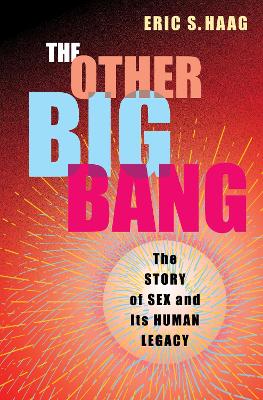
The Other Big Bang: The Story of Sex and Its Human Legacy [Kõva köide]

  • Formaat: Hardback, 304 pages, kõrgus x laius: 235x156 mm, 42 figures
  • Ilmumisaeg: 03-Dec-2024
  • Kirjastus: Columbia University Press
  • ISBN-10: 023120714X
  • ISBN-13: 9780231207140
Teised raamatud teemal:
  • Kõva köide
  • Hind: 34,80 €*
  • * hind on lõplik, st. muud allahindlused enam ei rakendu
  • Tavahind: 43,50 €
  • Säästad 20%
  • Raamatu kohalejõudmiseks kirjastusest kulub orienteeruvalt 3-4 nädalat
  • Kogus:
  • Lisa ostukorvi
  • Tasuta tarne
  • Tellimisaeg 2-4 nädalat
  • Lisa soovinimekirja
  • Formaat: Hardback, 304 pages, kõrgus x laius: 235x156 mm, 42 figures
  • Ilmumisaeg: 03-Dec-2024
  • Kirjastus: Columbia University Press
  • ISBN-10: 023120714X
  • ISBN-13: 9780231207140
Teised raamatud teemal:
Sex shapes who we are as individuals and as a species. Where in the mists of time did something so important—and eye-catching—originate, and what does this history tell us about ourselves? Why do we have sex, and sexes, at all?

In The Other Big Bang, the evolutionary and developmental biologist Eric S. Haag explores the two-billion-year history of sex, from the first organisms on Earth to contemporary humans. He delves into the deep history of sexual reproduction, from its origins as a fix for a mutational crisis to an essential feature of all complex life. Haag traces sexual differentiation from its earliest forms in microbes to its elaboration in animals, showing why sex differences in cells and organisms help species adapt, persist, and evolve. Humanity’s clear sexual kinship with yeast and clams exists even as we evolved differences that distinguish us from other mammals, and even other apes.

Bringing the story up to the present, Haag argues that the evolutionary history of human sexuality helps us better understand contemporary society. Our ancient male-female sexual system remains an important fact of life, even as we see increasingly diverse sexual orientations, gender expressions, and parenthood choices. Witty and inviting, The Other Big Bang offers a clear view of the evolutionary roots of human sexuality and their significance today.

The evolutionary and developmental biologist Eric S. Haag explores the two-billion-year history of sex, from the first organisms on Earth to contemporary humans.

Arvustused

This beautifully written book provides a tour of the biology of sex, offering both a rigorous overview and deeper evolutionary framing to help the reader fully grasp the key issues. Writing in a friendly, approachable voice, Eric S. Haag does a lovely job in drawing the reader into the relevance of a particular question and then zooming out to see where that issue fits in the broader scope of human evolution. -- Lisa M. Diamond, author of Sexual Fluidity: Understanding Womens Love and Desire In The Other Big Bang, Eric Haag explores one of lifes most basic features. In discussions at once accessible and deeply informed by biology, Haag illuminates not only the origins of sex and its role in promoting biological diversity but also the many ways in which it has shaped our own bodies and behavior. His chapters on sexism, sexual aggression, and sexual orientation are both firmly grounded in science and compassionaterequired reading for thoughtful citizens. -- Andrew H. Knoll, author of A Brief History of Earth: Four Billion Years in Eight Chapters The Other Big Bang offers a grand perspective on evolutionary and human history, from the origins of life on Earth to the emergent complexities of human sexuality. -- Simon LeVay, author of Attraction, Love, Sex: The Inside Story In this stimulating debut inquiry, [ Eric S. Haag]... investigates the natural history of sex. Haags illuminating analogies will help lay readers parse the jargon, as when he explains the evolutionary benefits of primitive bacterial sex by comparing it to stripping two junk cars of their best parts to construct one functional vehicle. This fascinates. * Publishers Weekly * This engaging book recounts the history of sexual reproduction. Given the pervasiveness of sex, gender, and sexual conflict cross-culturally, Haag takes a step back and asks, Why do we have sexes (and sex) at all? Excellent discussion material. Highly recommended. * Choice Reviews *

Muu info

Winner of Choice Outstanding Academic Title 2025 (United States).
Introduction
Note on Language
Part I. The Dots That Need Connecting
1. Sex in the Air
2. Ex Unum Pluribus
Part II. From Microbes to Mammals
3. Go Big
4. The Left Fin of Darkness
5. One Genome, Two Bodies
6. Going It Alone
7. Land Ho!
8. The Bun in the Oven
Part III. Sexual Homo
9. Period Piece
10. Scents and Sensibility
11. The Male Gaze
12. Sex Versus Sexism
13. Queerly Normal
14. Pronouns
Epilogue: Eyes Wide Open
Acknowledgments
Glossary
Notes
Bibliography
Index
Eric S. Haag is professor of biology and director of the Biological Sciences Graduate Program at the University of Maryland, College Park. For three decades, he has conducted research on the evolution of sex and reproduction in animals such as sea urchins, roundworms, and hermaphroditic fish.