Muutke küpsiste eelistusi

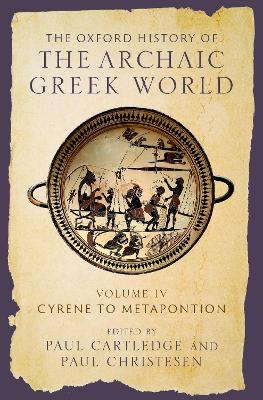
Oxford History of the Archaic Greek World: Volume IV: Cyrene to Metapontion [Kõva köide]

Edited by (William R. Kenan Professor of Ancient Greek History, Dartmouth College), Edited by (A.G. Leventis Senior Research Fellow; Inaugural A.G. Leventis Professor of Greek Culture emeritus, Faculty of Classics, University of Cambridge)
  • Formaat: Hardback, 864 pages, kõrgus x laius x paksus: 235x165x42 mm, kaal: 1574 g, 75 illustrations, 48 maps
  • Sari: Oxford History of the Archaic Greek World
  • Ilmumisaeg: 03-Feb-2025
  • Kirjastus: Oxford University Press Inc
  • ISBN-10: 0199383553
  • ISBN-13: 9780199383559
  • Kõva köide
  • Hind: 79,08 €*
  • * hind on lõplik, st. muud allahindlused enam ei rakendu
  • Tavahind: 98,85 €
  • Säästad 20%
  • Raamatu kohalejõudmiseks kirjastusest kulub orienteeruvalt 3-4 nädalat
  • Kogus:
  • Lisa ostukorvi
  • Tasuta tarne
  • Tellimisaeg 2-4 nädalat
  • Lisa soovinimekirja
  • Formaat: Hardback, 864 pages, kõrgus x laius x paksus: 235x165x42 mm, kaal: 1574 g, 75 illustrations, 48 maps
  • Sari: Oxford History of the Archaic Greek World
  • Ilmumisaeg: 03-Feb-2025
  • Kirjastus: Oxford University Press Inc
  • ISBN-10: 0199383553
  • ISBN-13: 9780199383559
The ancient Greek world consisted of approximately 1,000 autonomous polities scattered across the Mediterranean basin, and each one developed its own, unique set of socio-political institutions and social practices. The Oxford History of the Archaic Greek World offers twenty-one detailed studies of key sites from across the Greek world between c. 750 and c. 480 BCE--a crucial period when much of what is now seen as distinctive about Greek culture emerged. All the studies in this seven-volume series use the same structure and methodology so that readers can easily compare a wide range of Greek communities. The series thus offers a new and unique resource for the study of ancient Greece that will transform how we study and think about a crucial era in ancient Greek history. Volume IV contains detailed and up-to-date studies of Cyrene, Delphi, Macedonia, Massalia, and Metapontion.

The ancient Greek world consisted of approximately 1,000 autonomous polities scattered across the Mediterranean basin and was remarkable for both its diversity and its uniformity. As Greeks dispersed throughout the Mediterranean, the different environmental and human ecosystems they encountered created important differences among widely scattered settlements: each Greek community developed its own unique set of socio-political institutions and social practices. Nonetheless, despite their dispersal and diversity, Greek communities were bound together by a network of commercial, cultural, diplomatic, and military ties and shared important commonalities, most notably language and religion.

The Oxford History of the Archaic Greek World, a collaborative effort by more than forty eminent scholars, offers twenty-one detailed and comprehensive studies of key sites from across the Greek world in the period between c. 750 and c. 480 BCE. During that period, Greeks confronted a series of demographic, political, social, and economic challenges and generated an array of responses that transformed the ways in which they lived, worked, and interacted. Much of what is now seen as distinctive about Greek culture-such as democracy, stone temples, and nude athletics--first developed during the Archaic period.

The series is organized alphabetically by polis. Volume IV contains detailed and up-to-date studies of Cyrene, Delphi, Macedonia, Massalia, and Metapontion. Together with the other volumes in the series, the Oxford History of the Archaic Greek World offers a new and unique resource for the study of ancient Greece that will transform how we understand a crucial era in antiquity.

Arvustused

This project has the potential to revolutionise Greek history. * Greece & Rome * This volume represents a valuable and consolidated presentation of studies in the archaic Greek world. The editors have assembled an impressive group of specialists and, through careful editorial oversight, produced a collection that is both clearly organized and thoughtfully presented. The work offers an authoritative synthesis of existing archaeological, epigraphic, and literary evidence that will serve as invaluable reference material for future research. Individual chapters function effectively as stand-alone studies while collectively providing a broad overview of key centers of the archaic Mediterranean. The result is a well-edited volume which will undoubtedly become a standard point of reference and an indispensable addition to any library concerned with Greek antiquity. * Bryn Mawr Classical Review *

Note to the Reader
Series Editors' Preface
A Note on Chronology
Spelling Divergences
Acknowledgements
Chapter 1: Cyrene
Gerry Schaus List of Illustrations
List of Abbreviations 1.1 Introduction
1.2 Sources
1.3 Natural Setting
1,4 Material Culture
1.5 Political History
1.6 Legal History
1.7 Diplomatic History
1.8 Economic History
1.9 Familial/Demographic History
1.10 Social Customs and Institutions
1.11 Religious Customs and Institutions
1.12 Cultural History
1.13 Conclusion Guide to Further Reading
Contributor Biography
Gazetteer
Bibliography
Chapter 2: Delphi
Hélène Aurigny and Michael Scott List of Illustrations
List of Abbreviations 2.1 Introduction
2.2 Sources
2.3 Natural Setting
2,4 Material Culture
2.5 Political History
2.6 Legal History
2.7 Diplomatic History
2.8 Economic History
2.9 Demographic History
2.10 Social Customs and Institutions
2.11 Religious Customs and Institutions
2.12 Cultural History
2.13 Conclusion Guide to Further Reading
Contributor Biographies
Gazetteer
Bibliography
Chapter 3: Macedonia
Zosia Archibald List of Illustrations
List of Abbreviations 3.1 Introduction
3.2 Sources
3.3 Natural Setting
3,4 Material Culture
3.5 Political History
3.6 Legal History
3.7 Diplomatic History
3.8 Economic History
3.9 Demographic History
3.10 Social Customs and Institutions
3.11 Religious Customs and Institutions
3.12 Cultural History
3.13 General Conclusion Guide to Further Reading
Contributor Biographies
Gazetteer
Bibliography
Chapter 4: Massalia
Adolfo Domínguez List of Illustrations
List of Abbreviations 4.1 Introduction
4.2 Sources
4.3 Natural Setting
4,4 Material Culture
4.5 Political History
4.6 Legal History
4.7 Diplomatic History
4.8 Economic History
4.9 Familial and Demographic History
4.10 Social Customs and Institutions
4.11 Religious Customs and Institutions
4.12 Cultural History
4.13 Conclusion Guide to Further Reading
Contributor Biographies
Gazetteer
Bibliography
Chapter 5: Metapontion
Joseph Carter List of Illustrations
List of Abbreviations 5.1 Introduction
5.2 Sources
5.3 Natural Setting
5,4 Material Culture
5.5 Political History
5.6 Legal History
5.7 Diplomatic History
5.8 Economic History
5.9 Familial and Demographic History
5.10 Social Customs and Institutions
5.11 Religious Customs and Institutions
5.12 Cultural History
5.13 Conclusion Guide to Further Reading
Contributor Biographies
Gazetteer
Bibliography
Paul Cartledge is A.G. Leventis Senior Research Fellow of Clare College, Cambridge and Inaugural A.G. Leventis Professor of Greek Culture emeritus in the Faculty of Classics at the University of Cambridge. His most recent books are Democracy: A Life and Thebes: The Forgotten City of Ancient Greece.

Paul Christesen is William R. Kenan Professor of Ancient Greek History at Dartmouth College. He is the author of three books, including most recently A New Reading of the Damonon Stele (2019).