Muutke küpsiste eelistusi

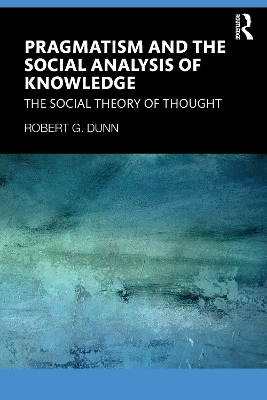
Pragmatism and the Social Analysis of Knowledge: The Social Theory of Thought [Pehme köide]

  • Formaat: Paperback / softback, 144 pages, kõrgus x laius: 234x156 mm
  • Ilmumisaeg: 19-Jun-2026
  • Kirjastus: Routledge
  • ISBN-10: 1041280440
  • ISBN-13: 9781041280446
Teised raamatud teemal:
  • Pehme köide
  • Hind: 44,76 €*
  • * hind on lõplik, st. muud allahindlused enam ei rakendu
  • Tavahind: 59,69 €
  • Säästad 25%
  • See raamat ei ole veel ilmunud. Raamatu kohalejõudmiseks kulub orienteeruvalt 3-4 nädalat peale raamatu väljaandmist.
  • Kogus:
  • Lisa ostukorvi
  • Tasuta tarne
  • Tellimisaeg 2-4 nädalat
  • Lisa soovinimekirja
  • Formaat: Paperback / softback, 144 pages, kõrgus x laius: 234x156 mm
  • Ilmumisaeg: 19-Jun-2026
  • Kirjastus: Routledge
  • ISBN-10: 1041280440
  • ISBN-13: 9781041280446
Teised raamatud teemal:
This volume is a study of previously unexplored theoretical convergences between John Deweys social pragmatism and the sociology of knowledge.

It demonstrates how these convergences combined with the social psychology of G. H. Mead and Kenneth Burke create a framework for the construction of a new and more comprehensive approach to the social analysis of knowledge, the social theory of thought. Dunn indicates in what respects Deweys philosophy and this theory represent forms of social critique that reorient sociology in a critical direction. He offers an original interpretation of Deweys pragmatism and the significance of his work for social theory, sociology, and the sociological analysis of knowledge. The work introduces readers to a new approach to social critique which highlights Deweys emphasis on the connection between theory and practice and the close relationships among inquiry, agency, and democracy.

With carefully organized chapters and accessible language relatively free of jargon, this book will be of value to scholars and students in social theory, sociology, social psychology, and philosophy who are interested in pragmatism and the contributions of Dewey, Mead, and Burke to the social sciences.

Arvustused

'In a compact, lucid, highly readable work, Robert Dunn provides incisive analysis of core sociological contributions of Dewey and Mead's pragmatism and of its continued relevance for critical social theory, social psychology, and democratic theory. Moreover, Dunn makes penetrating connections between their thought and classical theories of social thought, neo-pragmatism, and the related corpus of Kenneth Burke. The work's unique coverage stirs critical reflection about our practices.'

Robert J. Antonio, Chancellor's Club Teaching Professor, University of Kansas

'In this original, well-written and rigorous work, Robert Dunn reconsiders the sociology of knowledge from the perspective of American pragmatism. Drawing on a wide variety of theorists the author brings into conversation and shows connections among an eclectic and important group of authors, including Mead, Burke, Dewey, Mannheim, and Durkheim. Dunn demonstrates that the pragmatist emphasis on ordinary meanings and democratic experimentation can inform a new understanding of how we think, not just what we think. Dunn makes a persuasive case that academic theorizing in Sociology has become too fragmented and detached from the concerns of everyday life, and that his reassessment of pragmatism and the sociology of knowledge can contribute to a sociological theory attuned to a democratic ethos that can help revivify our public life.'

Kenneth H. Tucker, Jr., Helen P. Bibbero Professor of Sociology, Mount Holyoke College

1. The Sociology of Knowledge
2. On the Social Nature of Knowledge
3.
Pragmatism as a Social Theory of Knowledge, John Dewey
4. Pragmatism as a
Social Theory of Thought, G. H. Mead and Kenneth Burke
5. Conclusion
Reframing Social Theory
Robert G. Dunn is Emeritus Professor of Sociology at California State University, where taught for 32 years. He specializes in theory, cultural sociology, social inequality, and the sociology of identity. Most of his research has been in the areas of mass culture, critical theory, and postmodernity.