Muutke küpsiste eelistusi

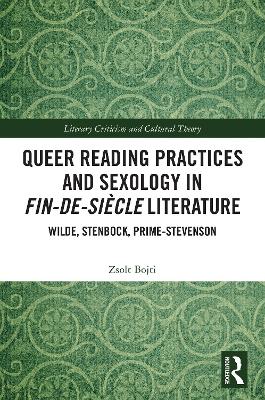
E-raamat: Queer Reading Practices and Sexology in Fin-de-Siecle Literature: Wilde, Stenbock, Prime-Stevenson

  • Formaat - PDF+DRM
  • Hind: 59,79 €*
  • * hind on lõplik, st. muud allahindlused enam ei rakendu
  • Lisa ostukorvi
  • Lisa soovinimekirja
  • See e-raamat on mõeldud ainult isiklikuks kasutamiseks. E-raamatuid ei saa tagastada.
  • Raamatukogudele

DRM piirangud

  • Kopeerimine (copy/paste):

    ei ole lubatud

  • Printimine:

    ei ole lubatud

  • Kasutamine:

    Digitaalõiguste kaitse (DRM)
    Kirjastus on väljastanud selle e-raamatu krüpteeritud kujul, mis tähendab, et selle lugemiseks peate installeerima spetsiaalse tarkvara. Samuti peate looma endale  Adobe ID Rohkem infot siin. E-raamatut saab lugeda 1 kasutaja ning alla laadida kuni 6'de seadmesse (kõik autoriseeritud sama Adobe ID-ga).

    Vajalik tarkvara
    Mobiilsetes seadmetes (telefon või tahvelarvuti) lugemiseks peate installeerima selle tasuta rakenduse: PocketBook Reader (iOS / Android)

    PC või Mac seadmes lugemiseks peate installima Adobe Digital Editionsi (Seeon tasuta rakendus spetsiaalselt e-raamatute lugemiseks. Seda ei tohi segamini ajada Adober Reader'iga, mis tõenäoliselt on juba teie arvutisse installeeritud )

    Seda e-raamatut ei saa lugeda Amazon Kindle's. 

This book scrutinises the production and transnational distribution of sexological knowledge at the turn of the century. The works of three transnationally mobile authors are in the focus: The Picture of Dorian Gray (1890/1891) and Teleny (1893) by, and attributed to, Oscar Wilde; The True Story of a Vampire (1894) by Count Stanislaus Eric Stenbock; and Imre: A Memorandum (1906) by Edward Prime-Stevenson. The textual analysis is governed by references in all four works to Hungarian culture to demonstrate how they conceptualised Hungarianness and same-sex desire simultaneously in the light of the new classificatory science of sexualities coming from German-speaking Central Europe. By foregrounding a timely literary angle and a culturalist approach, this book offers non-Anglocentric insights, not bound by either language or nationality, to shed new light on the interdisciplinary reading practices of late-Victorian subjects and the ways they contributed to the emergence of fin-de-siècle queer fiction.

Arvustused

Zsolt Bojtis Queer Reading Practices and Sexology in Fin-de-Siècle Literature: Wilde, Stenbock, Prime-Stevenson is a welcome contribution to nineteenth-century studies. Bojtis re/discovery of the synergies between these thinkers and writers is rich and erudite; and his painstaking investigation, in particular, into the elusive Prime-Stevensons life and works is pioneering. Bojtis archival findings are presented engagingly; and his close readings are revelatory. Ive learned much from Queer Reading Practices and Sexology. This is the work of a marvellous scholar at the top of his game.

Tom Ue, FRHistS, Assistant Professor, Cape Breton University, Canada

This book provides scholars and students with a much-needed critical resource on queer literature and sexology at the end of the nineteenth century. It changes the way we think about queer literatures contribution to fin-de-siècle sexual science, and vice versa; better yet, its bold interdisciplinary analysis pushes us to rethink the confines of period or national literaturesencouraging us to read canonical and non-canonical texts alongside each other in order to gain a richer sense of the modern invention of homosexuality and the polymath reading practices as embraced by our queer Victorian subjects. Queer Reading Practices and Sexology in Fin-de-Siècle Literature poses a significant contribution to literary studies and queer cultural histories alike.

S. Brooke Cameron, Associate Professor, Queens University, Canada

Homosexuality was a neologism coined by a Hungarian, so it is entirely fitting that, at precisely the point it was becoming the word of choice for same-sex attraction, there was a literary fashion for hungarophile/homophile literature. This book gives a lively account of three writersWilde, Stenbock, and Prime Stevensonwho deployed Hungarianness as a queer motif on either side of the fin de siècle.

Douglas Pretsell, Keele University, UK

Acknowledgements

Introduction: Homophilia and Hungarophilia

Chapter 1: (Con)texts of Same-Sex Desire: Medico-Legal Discourses and
Literature

Chapter 2: Literary Snares in Oscar Wildes The Picture of Dorian Gray and
Teleny

Chapter 3: Gothic Performance: Homophile Conceptual Muddle in Eric Stenbocks
The True Story of a Vampire

Chapter 4: False Snares and Sexology in Edward Prime-Stevensons Homosexual
Romance

Conclusions and Afterword: Whatever Happened to Reading Hungarophilia
Anthologically

Bibliography

Index
Zsolt Bojti is a senior lecturer in the Department of English Studies of ELTE Eötvös Loránd University (Budapest, Hungary) and is the editor-in-chief of the Departments scholarly journal, The AnaChronisT. His research focuses on the intersection of nineteenth-century German sexology and the English literary history of sexuality at the turn of the century.