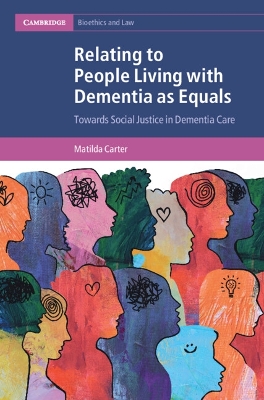
This book offers a moral and political analysis of the social position of people living with dementia. It takes a relational egalitarian view on the demands of justice, reflecting on what would be required for our society to become one in which we relate to members of this group as equals. By making several contributions to the legal and political philosophy of dementia care, the author uses a novel framework to underpin several public policy recommendations, aimed at remedying the injustices those living with the condition face. Whilst doing so, she takes care not to overlook the legislative and economic barriers to achieving an ideal, dementia-inclusive society, and considers ways in which they might be overcome. Providing public policy insights while furthering scholarship on justice, equality, and capability, this is a timely and novel book that speaks to some of the most urgent questions facing contemporary ageing societies.
Muu info
Drawing on her professional experience, Matilda Carter offers a political analysis of the social position of people living with dementia.
1. Introduction;
2. Diagnosing the injustices faced by people living
with dementia;
3. Severe cognitive disability and the relationship between
moral and social equality;
4. Determining the authentic interests of people
living with dementia: the case of advance directives;
5. The indirect-first
approach: towards non-dominating dementia care;
6. The imperative of
professional dementia care;
7. Can the secure dementia unit be justified?
building egalitarian dementia care infrastructure;
8. Dementia, equality, and
the law of the United Kingdom;
9. Dementia and the problem of speaking for
others;
10. Conclusion; Bibliography; Index.
Matilda Carter is a Lecturer in Applied Ethics at the University of Leeds, with a decade of experience in professional social care. She has published in leading journals like Analytic Philosophy and the Hastings Center Report, and was the 20212022 winner of the University College London Department of Political Science Best Doctoral Thesis Award.

 Lisainfo e-raamatute kohta