Muutke küpsiste eelistusi

E-raamat: Shifting Paradigms of the Anthropocene: Affective Responses to Anthropogenic Impacts

  • Formaat: PDF+DRM
  • Sari: Ecocriticism Unbound
  • Ilmumisaeg: 01-Jun-2026
  • Kirjastus: De Gruyter
  • Keel: eng
  • ISBN-13: 9783112224908
  • Formaat - PDF+DRM
  • Hind: 100,55 €*
  • * hind on lõplik, st. muud allahindlused enam ei rakendu
  • See e-raamat ei ole veel ilmunud. Saate seda tellida alles alates: 01-Jun-2026
  • Lisa soovinimekirja
  • See e-raamat on mõeldud ainult isiklikuks kasutamiseks. E-raamatuid ei saa tagastada.
  • Formaat: PDF+DRM
  • Sari: Ecocriticism Unbound
  • Ilmumisaeg: 01-Jun-2026
  • Kirjastus: De Gruyter
  • Keel: eng
  • ISBN-13: 9783112224908

DRM piirangud

  • Kopeerimine (copy/paste):

    ei ole lubatud

  • Printimine:

    ei ole lubatud

  • Kasutamine:

    Digitaalõiguste kaitse (DRM)
    Kirjastus on väljastanud selle e-raamatu krüpteeritud kujul, mis tähendab, et selle lugemiseks peate installeerima spetsiaalse tarkvara. Samuti peate looma endale  Adobe ID Rohkem infot siin. E-raamatut saab lugeda 1 kasutaja ning alla laadida kuni 6'de seadmesse (kõik autoriseeritud sama Adobe ID-ga).

    Vajalik tarkvara
    Mobiilsetes seadmetes (telefon või tahvelarvuti) lugemiseks peate installeerima selle tasuta rakenduse: PocketBook Reader (iOS / Android)

    PC või Mac seadmes lugemiseks peate installima Adobe Digital Editionsi (Seeon tasuta rakendus spetsiaalselt e-raamatute lugemiseks. Seda ei tohi segamini ajada Adober Reader'iga, mis tõenäoliselt on juba teie arvutisse installeeritud )

    Seda e-raamatut ei saa lugeda Amazon Kindle's. 
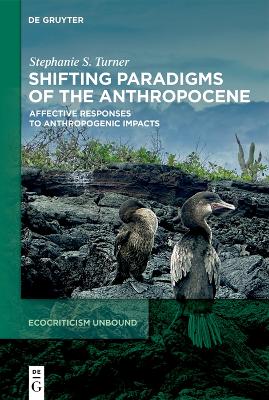
As a conceptual framework, the Anthropocene has fostered transdisciplinary analyses of global anthropogenic impacts in diverse fields: Earth system sciences, conservation biology, and the environmental humanities. The transdisciplinarity of these analyses reflects a paradigm shift in critiquing the duality of humankind as both a global change agent and just another species affecting, and being affected by, dynamic planetary systems. The duality in theorizing global anthropogenic harms presents an opportunity to decenter the human. Yet while rethinking anthropocentrism illuminates inequities in human populations and acknowledges agency among nonhuman actors, examining anthropogenic impacts nevertheless raises ethical questions, effectively recentering the human. Is there an obligation to witness and account for their disparate causes and effects? What does such accounting look like? This ethical issue is evident in affective responses to threats to biodiversity and ecosystems. Focusing on responses to these threats in conservation practices, heritage management, the visual arts, and scenarios of human futures, this book examines the productive ambivalence of such responses to the challenge of the Anthropocene paradigm shift. 
Stephanie S. Turner, University of Wisconsin-Eau Claire, Eau Claire, Wisconsin, USA.