"An anthology that deals with Witchcraft and the Witch as presented in motion pictures, television, and popular culture, in order to understand how, why, and when the common anti-Witchcraft/ anti-Witch attitude evolved. This collection discusses the Biblical figure of Lilith and Morgan le Fey from Arthurian legend/ myth before moving to contemporary depictions of the Witch, including in Bewitched, Star Wars, Harry Potter, Scooby-Doo, Game of Thrones; international depictions in Argento's films, Suspiria and Inferno; and from the Disney studio, where we discover the most fair and balanced portraits of Witches in the history of film and TV"--
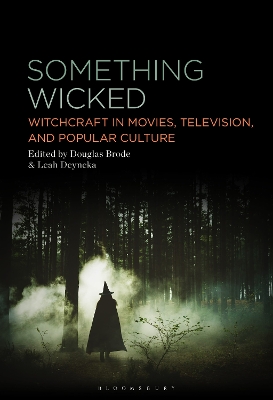
An anthology of essays that deal with Witchcraft and the figure of the Witch, as they have been presented in motion pictures, television, and popular culture, in order to understand how, why, and when the common anti-Witchcraft/ anti-Witch attitude evolved.
Mainstream tales of Witchcraft, including modern movies, novels, TV series, and other examples of our popular culture, more often than not express the traditional notion of a Witch as a wild, dangerous, untamable, “nasty” woman, obsessed with a desire for power to control all around her, in most narratives such a hunger presented as a negative. In truth, The Witch is a symbol of 'threatening evil' only to those men and women who accept a conservative sensibility. For members of either gender who do not, The Witch is perceived as hero and role model.
This collection begins with the Biblical figure of Lilith, followed by Morgan le Fey from Arthurian legend/ myth in literature as well as in popular culture, followed by the more contemporary depictions of the Witch that start to appear in the 1960s; for example, in the Bewitched sitcom, the Star Wars franchise, Harry Potter, and even the television show Scooby-Doo. International depictions of the Witch are discussed, including Italy's Dario Argento's films, Suspiria and Inferno. The final section of this collection focuses on the most iconic depictions of the Witch produced during the 21st century, including A Discovery of Witches, Penny Dreadful, Game of Thrones and the history of the Witch in films by the Walt Disney studio, from its origins more than a century ago to the latest releases, arguing that here, if perhaps surprisingly, we discover the most fair and balanced portraits of Witches in the history of film and TV.
Arvustused
Doug Brode is an innovative and prolific scholar who is known for exploring new areas and taking unconventional angles. In Something Wicked, he and co-editor Leah Deyneka present a provocative look at witchcraft in popular media, acknowledging the ways in which witches evoke questions regarding marginalization, diversity, and disability. This book is invaluable for those studying inclusion in American culture and media * Kathy Merlock Jackson, Professor of Media and Communication, Virginia Wesleyan University, USA * In the past we demonized them, hunted them down, tortured and hanged them, and burned them at the stake. To no effect. Nothing could suppress our fascination with witches and witchcraft. In this dynamic new collection by sharp-witted young scholar critics, we can examine the diverse and contradictory ways that popular culture has depicted the witches. In some trials we are rooting for them. * James MacKillop, author of The Oxford Dictionary of Celtic Mythology (2004), USA * Smart and versatile, Douglas Brode and Leah Deynekas spell-binding collection is something wicked indeed, containing nineteen brand new discussions of witchcraft and wizardry in movies, television, and penny dreadfuls. Vital for researchers and enthusiasts, itsinsights into misogyny, magic, and transgressive behavior are accessible and engaging. Carefully researched, this book is a must-read for feminist and film scholars, mass media buffs, and fans of Witch-Lit. Its a must-have for anyone interested in the occult and the ubiquitous Wiccan in popular culture. * Sue Matheson, Professor, University College of the North, Canada *
Muu info
An examination of Witchcraft and the figure of the Witch in film, television, and culture to understand how, why, and when the anti-Witch/craft attitude evolved.
Introduction: The Villain Still Pursues Us
Douglas Brode (Syracuse University, USA)
1. Seen in the Sphere of Lilith: Lilith as the Progenitor of Witches and
Other Nasty Women
J.S. Starkweather (Independent Scholar)
2. In My Time I Have Been Called Many Things: Morgan le Fay in Popular
Culture
Marta Cobb (University of Leeds, UK)
3. Through a Lens Darkly: Dreyers Witches
James Morrison (Claremont McKenna College, USA)
4. Sorcery in the Suburbs: Bewitched, Resistance and Gender Transgression
Fran Pheasant-Kelly (Wolverhampton University, USA)
5. Rosemarys Baby: Rosemarys Body and the Devil Inside
Jeremy Carr (Arizona State University, USA)
6. Whose Law is it Anyway?: Detection, Magic, and the Uncanny Spaces of The
Wicker Man
Kevin M. Flanagan (George Mason University, USA)
7. The Nightsisters of Dathomir: How Witchcraft Came to the Star Wars
Universe
Cyrus R. K. Patell (New York University, USA)
8. Sirius Black and the Wizard World: Power and Bias in Harry Potter
Hafsa Alkhudairi (Birkbeck College, University of London, UK)
9. Disenchantment, Haunting, and The Witchs Ghost!
Jeffrey McCambridge (Ohio University, USA)
10. Suzy, We Always Knew You: The Timeless Terror of Witches in Old and New
Suspiria
Allison Craven (James Cook University, Australia)
11. Bodies of Knowledge and Bodies of Power: Dario Argento's Inferno
Dennin Ellis (Ohio State University, USA)
12. The Mark May be Gone but the Spell is Still There: Dis/abling Magic
and Gender in Miyazakis Howls Moving Castle
Melissa Guadrón (Ohio State University, USA)
13. Shadow of Suspicion: Representations of Witchcraft and Misogyny Across
Cultures
Natalie Rosiek (University of Buffalo, USA)
14. A Woman Who Walks in the Footsteps of the Goddess: Genre, Adaptation,
and A Discovery of Witches Transformation of the Cinematic Witch
Susan Aronstein (University of Wyoming, USA)
15. So the Darkness Spoke: The Witch as a Compromised Figure of Liberation
in Penny Dreadful
Jack W. Shear (Binghamton University, USA)
16. No Safe Spaces: The American Colonial West as Historical Horror in Robert
Eggerss The Witch.
Garrett Castleberry (Mid-America Christian University, USA)
17. Gaias Vengeance: Ecofeminist Horror in Apostle (2018)
Kerri-Leanne Taylor (University of Miami, USA)
18. A Witch in Westeros: Melisandre, Compulsory Maternity, and the Snow
White Factor
Heidi Breuer (California State University, San Marcos, USA)
19. Something Wicked This Way Comes: Walt Disneys Wonderful World of
Witchcraft
Douglas Brode (Syracuse University, USA)
Index
Douglas Brode, now retired, was the Creator/Coordinator of the Film Classics Program for The Newhouse School of Public Communications at Syracuse University, USA. He is a novelist, screenwriter, playwright, film historian, multi-award winning journalist, and multi-award winning educator.
Leah Deyneka holds a masters degree in 19th-century literature from Kings College, London, UK, and has written extensively on literature, film, media, and popular culture.

 Lisainfo e-raamatute kohta