Contributing to scholarship studying Islam alongside other late antique religions, Traces of the Prophets highlights how early Muslims deployed sacred objects and spaces to inscribe and dispute Islam’s continuities with, and differences from, Judaism and Christianity. The book argues that prophets’ relics ritually and rhetorically shaped Muslim identities in the first centuries of Islam.
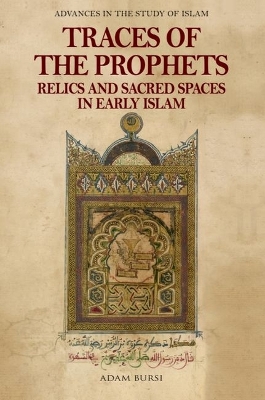
Traces of the Prophets rewrites the history of holy bodies and sacred spaces in the emergence of Islam. Rather than focusing on theological controversies among early Muslims, this book is grounded in the material objects and places that Muslims touched and "thought with" in defining Islamic practice and belief. While often marginalized in modern scholarship, sacred relics and spaces stood at the disputed boundaries of emergent Islamic identities. Objects and spaces like Abraham’s footprints in Mecca and Muhammad’s tomb in Medina provided sites of shared Islamic ritual, as well as tools for differentiating Muslims from non-Muslims.
Contributing to scholarship studying Islam alongside other late antique religions, Traces of the Prophets highlights how early Muslims deployed sacred objects and spaces to inscribe and dispute Islam’s continuities with, and differences from, Judaism and Christianity.
Arvustused
This engagingly written study replaces stereotypes about Muslim iconoclasm and Christian saint-worship with an absorbing account of late antique debates over the significance of holy remains and the parameters of ritual engagement with them debates that crossed boundaries between elites and commoners, Sunnis and Shiites, and Muslims and non-Muslims. -- Marion H. Katz New York University This is an excellent book and will reward reading by all studying and researching early Islamic history. -- Harry Munt, University of York * Bulletin of SOAS * Well-researched and documented, yet enjoyably readable and thought-provoking. -- Natana J. DeLong-Bas, Boston College * Islam and Christian-Muslim Relations * Traces of the Prophets convincingly demonstrates that, since Islams inception, Muslims managed to circumvent and manipulate the theological-ethical unlawfulness surrounding the veneration of prophetic figures tombs and relics so as to allow for its practice...Furthermore, in addition to offering the richest body of references for anyone interested in the subject, the books fresh historical perspective constitutes a robust springboard for future research. -- Valérie Gonzalez * Material Religion * Bursis analyses...show him to be at home both with Arabic primary sources and with the new scholarship on early Islam. Bursi also writes about complex ideas in an accessible fashion, which makes the book usable both in graduate courses as well as advanced undergraduate courses. -- Kambiz GhaneaBassiri, Carleton College * Journal of Near Eastern Studies *
List of Abbreviations Acknowledgements Introduction 1 Grave Markers:
Rhetoric and Materiality of Relic and Tomb Veneration in Early Islam 2 A
Clear Sign: The Maqm Ibrhm and Early Islamic Continuity and Difference3
Inverted Inventions: Finding and Hiding Holy Bodies in the First Islamic
Century 4 Paradoxes and Problems of the Prophetic Body: Muammads Corpse and
Tomb 5 Places Where the Prophet Prayed: Ritualising the Prophets Traces
Epilogue Bibliography Index
Adam Bursi is an associate acquisitions editor at Fortress Press. He received his PhD in Near Eastern Studies from Cornell University, and has held research and teaching positions at the University of Tennessee, the Hill Museum and Manuscript Library, and Utrecht University. He coedited the collection His Pen and Ink Are a Powerful Mirror: Andalusi, Judaeo-Arabic, and Other Near Eastern Studies in Honor of Ross Brann (Brill, 2020), and his articles have appeared in the journals Medieval Encounters, Arabica, Studies in Late Antiquity, and elsewhere.

 Lisainfo e-raamatute kohta