Muutke küpsiste eelistusi

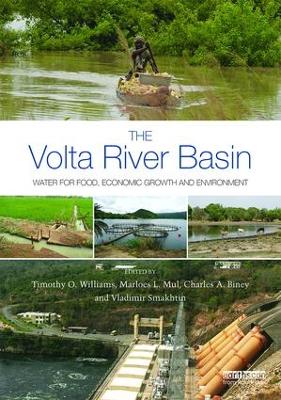
Volta River Basin: Water for Food, Economic Growth and Environment [Kõva köide]

Edited by , Edited by , Edited by (The United Nations University Institute for Water, Environment and Health, Canada), Edited by
  • Formaat: Hardback, 302 pages, kõrgus x laius: 246x174 mm, kaal: 907 g, 55 Tables, black and white; 87 Line drawings, color; 30 Halftones, color; 117 Illustrations, color; 55 Illustrations, black and white
  • Sari: Earthscan Series on Major River Basins of the World
  • Ilmumisaeg: 30-Aug-2016
  • Kirjastus: Routledge
  • ISBN-10: 1138900249
  • ISBN-13: 9781138900240
  • Kõva köide
  • Hind: 164,25 €*
  • * hind on lõplik, st. muud allahindlused enam ei rakendu
  • Tavahind: 219,00 €
  • Säästad 25%
  • Raamatu kohalejõudmiseks kirjastusest kulub orienteeruvalt 3-4 nädalat
  • Kogus:
  • Lisa ostukorvi
  • Tasuta tarne
  • Tellimisaeg 2-4 nädalat
  • Lisa soovinimekirja
  • Formaat: Hardback, 302 pages, kõrgus x laius: 246x174 mm, kaal: 907 g, 55 Tables, black and white; 87 Line drawings, color; 30 Halftones, color; 117 Illustrations, color; 55 Illustrations, black and white
  • Sari: Earthscan Series on Major River Basins of the World
  • Ilmumisaeg: 30-Aug-2016
  • Kirjastus: Routledge
  • ISBN-10: 1138900249
  • ISBN-13: 9781138900240
The Volta River Basin (VRB) is an important transboundary basin in West Africa that covers approximately 410,000 square kilometres across six countries: Benin, Burkina Faso, Côte dIvoire, Ghana, Mali and Togo. Its natural resources sustain the livelihoods of its population and contribute to economic development. This book provides a comprehensive, interdisciplinary review and assessment of the issues and challenges faced.

The authors provide a science-based assessment of current and future scenarios of water availability, the demands of key sectors, including agriculture and hydropower, and the environment under changing demographic, economic, social and climatic conditions. They also identify solutions and strategies that will allow available water resources to be sustainably used to improve agricultural productivity, food security and economic growth in the VRB. Overall, the work examines from a multidisciplinary and multi-stakeholder perspective the solutions and strategies to improve the use of water and other natural resources in the VRB to achieve enhanced food security, livelihoods and economic growth.

Arvustused

"The diverse topics covered, contributed by leading researchers and senior policy makers in the basin, are presented with forward looking perspectives and recommendations on key strategies to inform planning and investment decisions at basin, national and regional levels to enhance food security, livelihoods, growth and sustainable management of natural resources. The book is essential for policy makers, development partners, students, researchers and those who work in public and non-governmental organizations to provide advice to farmers, as it will serve as a source of useful information and an important reference document." From the Foreword by Hon. Dr Kwaku Agyemang Mensah, Minister of Water Resources, Works and Housing, Republic of Ghana

Notes on authors ix
Chapter photos xiii
Foreword by Kwaku Agyemang Mensah xiv
Acknowledgements xv
Acronyms and abbreviations xvi
PART I Introduction
1(10)
1 Introduction
3(8)
Timothy O. Williams
Marloes L. Mul
Charles A. Biney
Vladimir Smakhtin
PART II Basin resources: trends, drivers and status
11(82)
2 Socioeconomic trends and drivers of change
13(18)
Shashidhara Kolavalli
Timothy O. Williams
3 Surface water resources of the Volta Basin
31(15)
Marloes L. Mul
Raymond A. Kasei
Matthew McCartney
4 Groundwater resources of the Volta Basin
46(16)
Emmanuel Obuobie
Boubacar Barry
William Agyekum
5 Climate variability and change over the Volta River Basin
62(14)
Mouhamadou B. Sylla
Frank O. Annor
Raymond A. Kasei
Mamadou L. Mbaye
6 Managing floods and droughts
76(17)
Raymond A. Kasei
Barnabas Amisigo
Marloes L. Mul
PART III People, policies and institutions
93(36)
7 Poverty, vulnerability and livelihoods in the Volta Basin: a gendered analysis
95(13)
Amy Sullivan
Elsie Odonkor
Nicoline de Haan
8 Water governance in the Volta Basin
108(21)
Ben Ampomah
Winston Andah
Charles A. Biney
PART IV Challenges and opportunities in the use of water resources
129(50)
9 Improving agriculture and food security in the Volta Basin
131(14)
Augustine Ayantunde
Pamela G. Katie
Olufunke Cofie
Edward K. Abban
10 Urban and industrial development
145(16)
Daniel van Rooijen
Ben Ampomah
Josiane Nikiema
Yacouba Noel Coulibaly
Lydie Yiougo
11 Water---food---energy nexus and hydropower development
161(18)
Emmanuel O. Bekoe
Winston Andah
Frederick Y. Logah
Bedru B. Balana
PART V Balancing development and nature
179(64)
12 Ecosystem services in the Volta Basin
181(18)
Fred Kizito
Bedru B. Balana
13 Environmental flow requirements in the Volta Basin
199(15)
Marloes L. Mul
Yongxuan Gao
14 Water quality and public health
214(14)
Chris Gordon
Adelina Mensah
Josiane Nikiema
Pay Drechsel
15 Sustainable agricultural intensification in the Volta River Basin
228(15)
Timothy O. Williams
Jennie Barron
Olufunke Cofie
PART VI Governance and livelihoods
243(31)
16 Simulating current and future Volta Basin water development scenarios
245(29)
Aditya Sood
Ousmane Seidou
Gerald Forkuor
Frank O. Annor
Matthew McCartney
Index 274
Timothy O. Williams is Director for Africa at the International Water Management Institute (IWMI), based in Accra, Ghana.

Marloes L. Mul is a Senior Researcher in Hydrology and Water Resources at the IWMI, Accra, Ghana.

Charles A. Biney is Acting Executive Director of the Volta Basin Authority, based in Ouagadougou, Burkina Faso.

Vladimir Smakhtin was Head of the Water Availability, Risk and Resilience Research Department at IWMI, Colombo, Sri Lanka. He is now the Director of the Institute for Water, Environment and Health (UNU-INWEH), based in Hamilton, Ontario, Canada.