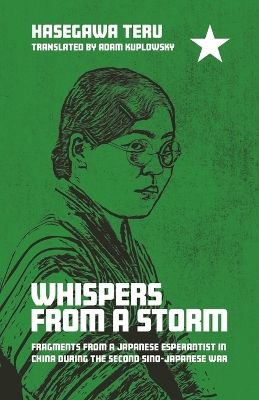
"Writing as Verda Majo, Hasegawa Teru (19121947) carried on a campaign of resistance against the imperialist forces of Japan, her homeland. Amidst the chaos of war and at times weighed down by pain and anguish, she held fast to the rightness of her convictions as a thinking person. It is to my great joy and admiration that her writing will at last reach English readers through this translation." - Erika Kobayashi, author of Sunrise: Radiant Stories and Trinity, Trinity, Trinity
"Esperanto was one of the most popular trends in Japan at the start of the twentieth century, exposing vital issues that defined cultural and intellectual life in the non-West. Kuplowskys skillful translation of the work of a remarkable ordinary woman offers insights into the personal, political, and intellectual life of a Japanese Esperantist. It was Esperanto that enabled Teru to traverse hidden epistemic communities of anti-imperial resistance in Shanghai and beyond. The pieces translated here are an engrossing read and offer rich material to further our understanding of modern transnational intellectual history. They are a reminder of Esperantos capacious but overlooked linguistic response to Western modernity, invoking concerns pertinent to present-day crises." - Sho Konishi, University of Oxford
"Hasegawas critique of oppression and her advocacy for peace transcend the era of wartime Japan, reminding us of the power of speaking out against injustice. Kuplowskys translation preserves the lyrical beauty of her prose and deepens our understanding of transnational activism, feminist thought, and the lived experiences of wartime resistance." - Edwin Michielsen, University of Hong Kong
"Kuplowsky has given us a vivid and lively translation. Hasegawa Teru certainly deserves to be more widely known, and this book will introduce her at last to a wider, Anglophone readership." - Ian Rapley, author of Green Star Japan: Esperanto and the International Language Question, 18801945
"This is a truly inspiring work by a courageous Esperantist and her search for justice and peace in interwar Asia. It will be an extremely valuable resource for teaching courses ranging from global history and peace and conflict studies to language justice." - Lorraine Wong, University of Otago