Muutke küpsiste eelistusi

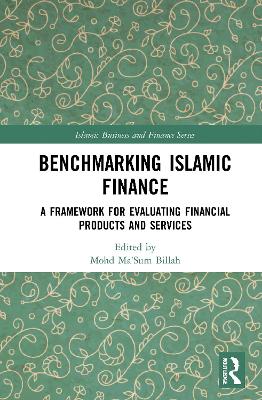
E-raamat: Benchmarking Islamic Finance: A Framework for Evaluating Financial Products and Services [Taylor & Francis e-raamat]

  • Formaat: 254 pages, 24 Tables, black and white; 19 Line drawings, black and white; 19 Illustrations, black and white
  • Sari: Islamic Business and Finance Series
  • Ilmumisaeg: 15-Jul-2021
  • Kirjastus: Routledge
  • ISBN-13: 9781003089988
  • Taylor & Francis e-raamat
  • Hind: 189,26 €*
  • * hind, mis tagab piiramatu üheaegsete kasutajate arvuga ligipääsu piiramatuks ajaks
  • Tavahind: 270,37 €
  • Säästad 30%
  • Formaat: 254 pages, 24 Tables, black and white; 19 Line drawings, black and white; 19 Illustrations, black and white
  • Sari: Islamic Business and Finance Series
  • Ilmumisaeg: 15-Jul-2021
  • Kirjastus: Routledge
  • ISBN-13: 9781003089988
Pricing or benchmarking is a process of evaluating the performance of a financial companys products and services or systems, against other businesses, considered to be at the top of their field, by applying a measurement of best in performance.

This book includes contributions from the leading global experts in the field who tackle topics such as whether the Islamic financial system has been dependent on the LIBOR / EURIBOR in its benchmarking exercises to date, and thus, whether it will be affected negatively by the predicted non-existence of the LIBOR / EURIBOR from 2021 onwards. They also address the question of whether the Islamic financial system requires benchmarking of its products and services and consider the emergence of Shar ah-justified benchmarking in todays Islamic financial system. Additionally, they look at how benchmarking formulas should be adapted to ensure the satisfaction of customers within the principles of Maqasid al-Shar ah.

It takes a legal and institutional approach to the subject, which readers will find particularly valuable, as there are various forms of Islamic finance institutions that do not conform to established models in the finance industry. Furthermore, there are emerging business models that will benefit from this line of investigation.

This book offers a timely analysis of these issues and redresses the existing misconceptions and misinterpretations pertaining to benchmarking, in an Islamic finance context, and, as such, provides guidance and strategies for future directions. It will appeal to researchers of Islamic banking, finance, and insurance, as well as, practitioners, particularly standard setting bodies, regulators, and policy makers.
Introduction Part I Goodbye to LIBOR? Emergence of Benchmarking in
Islamic Financial System
1. Does Islamic Finance Need Benchmarking?
2. Why
Does Islamic Finance Require Benchmarking?
3. Goodbye to LIBOR: An
Alternative Islamic Interbank Benchmarking Mechanism
4. Islamic Finance,
Benchmarking and LIBOR Transition: Impacts and Implications
5. SWOT Analysis
of Benchmarking in the Islamic Finance Industry Part II Shariah Analysis of
Benchmarking Islamic Finance
6. How is the Qur nic Solution to Benchmarking
Financial System?
7. How Does Sunnah Recognize Benchmarking Formula for the
Islamic Financial System?
8. Shariah Analysis of Benchmarking in the Islamic
Financial System
9. Fiqh Analysis of Benchmarking in the Islamic Financial
Products and Services
10. Analyzing Fatwa on Benchmarking Islamic Financial
Products and Services
11. Fatwa Analysis of Benchmarking in Islamic Financial
System
12. Analyzing Traditional Benchmarking Experiences from Maqasid
al-Shariah Perspective Part III Benchmarking Islamic Finance: its Law and
Compliance
13. Legal and Compliance Reform for Islamic Financial Benchmarking
14. Implications of the Regulatory Shift from LIBOR to SONIA Benchmark for
the Islamic Banking Industry in UK Part IV Testing and Experiences in
Benchmarking Islamic Finance
15. How Does Benchmarking Matter in Islamic
Microfinance?
16. What Benchmarking Formula in Islamic SME Financing May be?
17. Foreign Currency and Rate Derivatives on Firm Value: A Shariah Experience
Mohd MaSum Billah is a Senior Professor of Finance at the Islamic Economics Institute, King Abdul Aziz University, Jeddah, Kingdom of Saudi Arabia.