Muutke küpsiste eelistusi

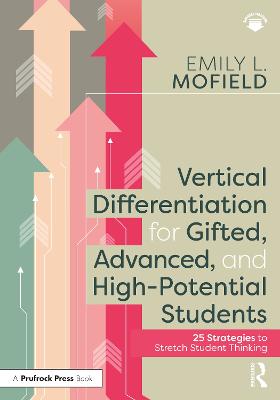
E-raamat: Vertical Differentiation for Gifted, Advanced, and High-Potential Students: 25 Strategies to Stretch Student Thinking [Taylor & Francis e-raamat]

(Lipscomb University, USA)
  • Formaat: 182 pages, 19 Tables, black and white; 59 Line drawings, black and white; 1 Halftones, black and white; 60 Illustrations, black and white
  • Ilmumisaeg: 11-Jul-2022
  • Kirjastus: Routledge
  • ISBN-13: 9781003293286
Teised raamatud teemal:
  • Taylor & Francis e-raamat
  • Hind: 161,57 €*
  • * hind, mis tagab piiramatu üheaegsete kasutajate arvuga ligipääsu piiramatuks ajaks
  • Tavahind: 230,81 €
  • Säästad 30%
  • Formaat: 182 pages, 19 Tables, black and white; 59 Line drawings, black and white; 1 Halftones, black and white; 60 Illustrations, black and white
  • Ilmumisaeg: 11-Jul-2022
  • Kirjastus: Routledge
  • ISBN-13: 9781003293286
Teised raamatud teemal:
Vertical Differentiation for Gifted, Advanced, and High-Potential Students outlines 25 engaging tools and strategies to stretch student thinking, promote deep learning, and provide layers of challenge in the classroom and beyond.

Each strategy is expertly designed to foster deep inquiry and conceptual understanding by guiding students to justify conclusions, apply critical and creative thinking, develop solutions to real-world problems, and transfer learning across contexts. Packed with both "tried and true" thinking models and new, innovative ideas with concrete examples, this resource ensures that no matter where students are in their learning journey, theyll find themselves challenged and engaged.

This book is essential reading for educators looking to support and extend student thinking across content areas and grade levels.
Acknowledgements ix
List of Resources
xi
About the Author xiii
Introduction 1(6)
1 What is Vertical Differentiation?
7(22)
2 The Big Picture: Frameworks for Thinking
29(22)
3 Strategies for Analysis
51(24)
Strategy #1 Connections Web
52(5)
Strategy #2 Wonder Window
57(3)
Strategy #3 See Beyond
60(4)
Strategy #4 Schema Board
64(4)
Strategy #5 Inductive Reasoning--"Group, Re-Group, Here's the Scoop"
68(4)
Strategy #6 POWER Analysis
72(3)
4 Strategies for Problem Solving: Understanding the Problem
75(14)
Strategy #7 Iceberg of Why's
76(3)
Strategy #8 Cascade of Consequences
79(4)
Strategy #9 Six Thinking Hats
83(6)
5 Strategies for Problem Solving: Creating and Evaluating Solutions
89(16)
Strategy #10 The SCAMPER Stretch
89(6)
Strategy #11 Synectic Trigger Mechanisms
95(3)
Strategy #12 SWOT (Evaluating Ideas)
98(3)
Strategy #13 Should-Could-Would Criteria
101(4)
6 Strategies for Creative Thinking: Making Connections
105(20)
Strategy #14 Synectic Analogies
106(3)
Strategy #15 Forced Associations
109(3)
Strategy #16 Extended Synectics
112(5)
Strategy #17 Metapatterns
117(8)
7 Strategies for Constructing Arguments
125(12)
Strategy #18 Argument Construction Model
126(4)
Strategy #19 Balloon Debate
130(7)
8 Strategies for Metacognition
137(14)
Strategy #20 Johari Learning Window
138(2)
Strategy #21 The Ripple Reflection
140(2)
Strategy #22 Mind Maps
142(2)
Strategy #23 Reflecting on Relevance
144(1)
Strategy #24 WOOP--A Goal Attainment Strategy
145(2)
Meta-affective Strategies
147(4)
9 Planning for Deep Learning and Differentiation
151(22)
Planning for Deep Learning
152(4)
Planning for Differentiated Tasks
156(3)
Strategy #25 "Show You Know" Board
159(4)
Assessing for Understanding
163(2)
Scaffolds and Supports for Students from Diverse Backgrounds / Twice-Exceptional
165(8)
Appendix 173(1)
Further Readings: Research/Theory to Practice 173(6)
References 179
Emily L. Mofield is Assistant Professor in the College of Education at Lipscomb University, USA. She has over 20 years of experience in the field of gifted education in a variety of roles including teacher, district leader, researcher, assistant professor, and author.