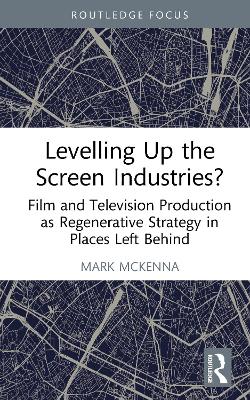
"This timely book examines how screen industry development has emerged as a vital strategy for economic and cultural regeneration in England's post-industrial regions. While Bristol, Manchester, and Liverpool have become established creative hubs, this study shifts focus to three underrepresented areas-The Solent and South Hampshire, Stoke-on-Trent and Staffordshire, and Sunderland-each grappling with decline and persistent underinvestment. Through comparative case studies, the book reveals how these regions are attempting to address these issues by developing screen industry initiatives despite having only limited resources. It analyses how local stakeholders navigate the interplay of infrastructure, governance, cultural capital, and narrative positioning to build creative ecosystems that strengthen cultural identity and promote place-based storytelling. Set against the backdrop of devolution, regional policy failures, and "Levelling Up" rhetoric, this research offers practical insights into how historically excluded areas can challenge established patterns of creative investment concentration. As such, it is essential reading for policymakers, creative professionals, researchers, and students in media studies, cultural policy, regional development, andeconomic geography interested in place-based cultural regeneration strategies"-- Provided by publisher.
This timely book examines how screen industry development has emerged as a vital strategy for economic and cultural regeneration in England's post-industrial regions.
While Bristol, Manchester, and Liverpool have become established creative hubs, this study shifts focus to three underrepresented areas—The Solent and South Hampshire, Stoke-on-Trent and Staffordshire, and Sunderland—that are grappling with decline and persistent underinvestment. Through comparative case studies, the book reveals how these regions are attempting to address these issues by developing screen industry initiatives despite having only limited resources. It analyses how local stakeholders navigate the interplay of infrastructure, governance, cultural capital, and narrative positioning to build creative ecosystems that strengthen cultural identity and promote place-based storytelling.
Set against the backdrop of devolution, regional policy failures, and "Levelling Up" rhetoric, this research offers practical insights into how historically excluded areas can challenge established patterns of creative investment concentration. As such, it is essential reading for policymakers, creative professionals, researchers, and students in media studies, cultural policy, regional development, and economic geography, who are interested in place-based cultural regeneration strategies.
This timely book examines how screen industry development has emerged as a vital strategy for economic and cultural regeneration in England's post-industrial regions. It is essential reading for policymakers, creative professionals, researchers, and students in media and cultural studies.

 Rohkem infot Taylor & Francis e-raamatute kohta