Update cookies preferences

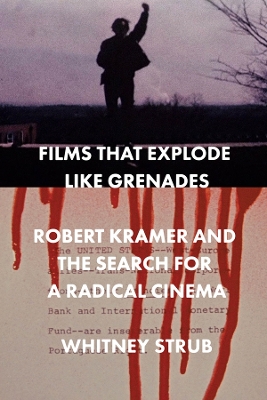
Films That Explode Like Grenades: Robert Kramer and the Search for a Radical Cinema [Hardback]

  • Format: Hardback, 400 pages, height x width: 229x152 mm, weight: 454 g, 45 halftones
  • Pub. Date: 16-Jun-2026
  • Publisher: University of Chicago Press
  • ISBN-10: 0226849864
  • ISBN-13: 9780226849867
Other books in subject:
  • Hardback
  • Price: 95,40 €*
  • * the price is final i.e. no additional discount will apply
  • Regular price: 127,20 €
  • Save 25%
  • This book is not yet published. Book will arrive in about 3-4 weeks after it is published. Please allow another 2 weeks for shipping outside Estonia.
  • Quantity:
  • Add to basket
  • Delivery time 2-4 weeks
  • Add to Wishlist
  • Format: Hardback, 400 pages, height x width: 229x152 mm, weight: 454 g, 45 halftones
  • Pub. Date: 16-Jun-2026
  • Publisher: University of Chicago Press
  • ISBN-10: 0226849864
  • ISBN-13: 9780226849867
Other books in subject:
The definitive portrait of independent filmmaker Robert Kramer that traces the revolutionary dreams of the Left from the 1960s through the end of the twentieth century.   Robert Kramer (193999) was the emblematic filmmaker of the late-1960s New Left in the United States. Yet because most of his three dozen films have been out of circulation for decades, he has long been neglected by film historians and the Left. Kramer was the cofounder of the leftist documentary collective Newsreel and the director of underground films such as Ice (1970), Milestones (1975), and Route One/USA (1989). His films provide distinctive insights into how Americas political terrain has changed over time, capturing each eras revolutionary ethos and its contradictions. Whitney Strubs Films That Explode Like Grenades tracks the histories of leftist film and global revolutionary movements via Kramers life and travels. Moving among New York City, Chicago, North Vietnam, Paris, Portugal, Angola, and other crucial flashpoints, Kramer left a major and influential body of work in his wake that has fundamentally shaped the work of radical filmmakers across the globe. 

For Strub, Kramers career is a key thread in an intimate history of the 1960s New Left, one that emphasizes the complexities of the movements internal tensions and its legacies. Drawing on visual analysis, extensive archival research across the United States and France, and myriad interviews with Kramer contemporaries, including Bernardine Dohrn, Tom Hayden, Jonas Mekas, and Kramers relatives, Strub transforms Kramers life story into a dynamic and engaging social history of 1960s radicalism and its generational legacies.

With detailed mapping of Robert Kramers many social and artistic contexts, Films That Explode Like Grenades restores him to a place of global importance in leftist cinema.  

Reviews

In a signature accomplishment, ground-breaking historian Whitney Strub unpicks the many threads in the life and work of radical filmmaker Robert Kramer with keen curiosity and powerful investigative skills. The result is an unflinching portrait of the tumultuous era and the political cinema of the incandescent Left-wing artist whose shade haunts these pages. -- Alan Wald, author of "Writing From the Left"' In this remarkable book, Whitney Strub offers the definitive account of Robert Kramers multifaceted radical filmmaking and a new history of the evolution of the commitments, politics, and practices of the global Left. Comprehensive, thoroughly researched, and brilliantly argued, Films that Explode Like Grenades is a must-read for scholars of the Left and for everyone grappling with what a radical film culture could be in the twenty-first century. -- Allyson Nadia Field, author of 'Acts of Love Black Performance and the Kiss That Changed Film History' With the sharply interpretative eye of a film critic and the compulsively contextual voice of a historian, Whitney Stub has done the impossible: he has captured the many complexities of Robert Kramer, the most influential independent filmmaker to emerge from the American New Left, the auteur who captured the spirit of sixties radicalism in all its contradictory forms.   -- Andrew Hartman, author of "Karl Marx in America"

Preface

Chapter 1: In the Middle Distance
Chapter 2: Bringing Venezuela to Newark
Chapter 3: Alienation as Alibi
Chapter 4: Agitprop Theorist
Chapter 5: Up Against the Lens, Motherfucker
Chapter 6: The Ice Age
Chapter 7: Free Vermont, Lost San Francisco
Chapter 8: Genocide Is a Hard Act to Follow
Chapter 9: Frozen Revolution
Chapter 10: Neon Infusion
Chapter 11: Apocalypse Then, Holocaust Now
Chapter 12: Not Home, But Back
Chapter 13: Fragments of the Nineties
Epilogue: Remembering Robert

Acknowledgments
Notes
Bibliography of Archives and Interviews
Index
Whitney Strub is associate professor of history at Rutgers UniversityNewark. He is the author of Perversion for Profit: The Politics of Pornography and the Rise of the New Right and editor of Queer Newark: Stories of Resistance, Love, and Community, among other books.