Muutke küpsiste eelistusi

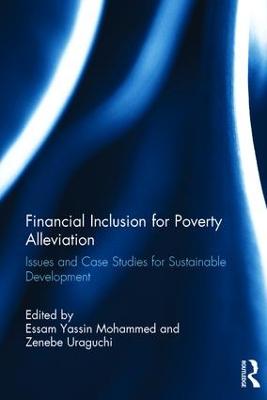
E-raamat: Financial Inclusion for Poverty Alleviation: Issues and Case Studies for Sustainable Development [Taylor & Francis e-raamat]

Edited by (HELVESTAS Swiss Intercooperation, Switzerland), Edited by (International Institute for Environment and Development, UK)
  • Formaat: 260 pages, 36 Tables, black and white; 19 Line drawings, black and white; 13 Halftones, black and white; 66 Illustrations, black and white
  • Ilmumisaeg: 12-Dec-2017
  • Kirjastus: Routledge
  • ISBN-13: 9781315103457
  • Taylor & Francis e-raamat
  • Hind: 189,26 €*
  • * hind, mis tagab piiramatu üheaegsete kasutajate arvuga ligipääsu piiramatuks ajaks
  • Tavahind: 270,37 €
  • Säästad 30%
  • Formaat: 260 pages, 36 Tables, black and white; 19 Line drawings, black and white; 13 Halftones, black and white; 66 Illustrations, black and white
  • Ilmumisaeg: 12-Dec-2017
  • Kirjastus: Routledge
  • ISBN-13: 9781315103457
More than one billion people still live below the poverty line most of them in South Asia and Sub-Saharan Africa. Financial inclusion is a major issue, as more than three-quarters of the numbers of poor and disadvantaged women and men do not have access to financial products and services, such as bank accounts, affordable and suitable loans, and insurance.

The key objective of this book is to provide practical case studies of financial inclusion, rather than focus on academic debates such as the ideological basis of promoting microfinance. Using the recently adopted Sustainable Development Goals as an overall framing of the issues, it shows how poor and disadvantaged women and men can be bankable if the right facilitation for maximizing opportunities and addressing constraints are in place. Case studies confirm that achieving inclusive and sustainable access to financial products and services goes beyond simply enabling poor and disadvantaged women and men to have access to credit, or the ability to open a bank account. Examples from Africa, Asia and Latin America demonstrate encouraging progress in making microcredit accessible to millions of poor people. The foremost challenge, however, has been to ensure that they have access to, and usage intensity of, suitable and affordable financial products and services that meet the needs of their livelihoods as well as risks and mitigation strategies. This requires understanding that poor and disadvantaged women and men do not exist in isolation from complex and interdependent functions in the financial system, which includes a number of actors, diversified services, constraints (not just symptoms) and capacities and incentives.

Overall, the book provides a rich source of examples of how building inclusive financial systems can empower the world's poor by increasing income and employment opportunities, securing livelihoods and reducing poverty.
List of figures
vii
List of tables
ix
Contributors xi
Preface xvi
1 Introduction
1(14)
Zenebe Bashaw Uraguchi
Essam Yassin Mohammed
2 From access to progress: setting our sights on a worthier goal
15(19)
Leah Wardle
3 The Bangladesh experience on financial inclusion: a market systems review
34(17)
Md. Rubaiyath Sarwar
Md. Ashraful Alam
4 Financial inclusion: understanding concept, barriers and measurement
51(17)
Rashmi Arora
5 Towards inclusion through lessons from informal money lenders
68(19)
Camilla Andersson
Erik Holmgren
James MacGregor
Jesper Stage
6 Extending access to the formal financial system: the banking correspondent business model
87(19)
Noelia Camara
7 Savings as forward payments: innovations on mobile money platforms
106(12)
Ignacio Mas
8 Mobile money and financial inclusion: the case of Susu operations in Ghana
118(18)
Eric Osei-Assibey
9 Towards a gender transformative approach to financial inclusion: lessons from CARE's village savings and loan associations in sub-Saharan Africa
136(19)
Gerry Boyle
10 Gender-based barriers and opportunities to financial inclusion: new evidence from Ghana
155(19)
Christian S. Otchia
11 Islamic finance approach to financial inclusion to enhance shared-prosperity
174(23)
Ayse Nur Aydin
Zamir Iqbal
12 Vulnerability reduction efficacy of financial inclusion to climate and economic changes: evidences, bottlenecks and way forward
197(19)
S. V. R. K. Prabhakar
13 Green microcredit-assisted microenterprises in a wetland area of Bangladesh and its implications for women's empowerment and ecological sustainability
216(24)
Khurshed Alam
Md. Habibur Rahman
Mohammed Salim Uddin
14 Where to from here?
240(11)
Essam Yassin Mohammed
Zenebe Bashaw Uraguchi
Index 251
Essam Yassin Mohammed is Senior Economist, Sustainable Markets Group, at the International Institute for Environment and Development (IIED), London, UK.

Zenebe Bashaw Uraguchi is Senior Advisor, Market Systems Development, and Programme Coordinator, Eastern Europe Unit, for Helvetas Swiss Intercooperation, Switzerland.