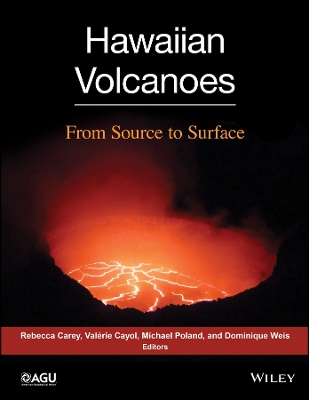
Hawaiian Volcanoes, From Source to Surface is the outcome of an AGU Chapman Conference held on the Island of Hawai‘i in August 2012. As such, this monograph contains a diversity of research results that highlight the current understanding of how Hawaiian volcanoes work and point out fundamental questions requiring additional exploration.
Volume highlights include:
- Studies that span a range of depths within Earth, from the deep mantle to the atmosphere
- Methods that cross the disciplines of geochemistry, geology, and geophysics to address issues of fundamental importance to Hawai‘i’s volcanoes
- Data for use in comparisons with other volcanoes, which can benefit from, and contribute to, a better understanding of Hawai‘i
- Discussions of the current issues that need to be addressed for a better understanding of Hawaiian volcanism
Hawaiian Volcanoes, From Source to Surface will be a valuable resource not only for researchers studying basaltic volcanism and scientists generally interested in volcanoes, but also students beginning their careers in geosciences. This volume will also be of great interest to igneous petrologists, geochemists, and geophysicists.
| Contributors |
|
vii | |
| Preface |
|
xi | |
| About the Companion Website |
|
xiii | |
|
1 How and Why Hawaiian Volcanism Has Become Pivotal to Our Understanding of Volcanoes from Their Source to the Surface |
|
|
1 | (18) |
|
|
|
2 Seismic Constraints on a Double-Layered Asymmetric Whole-Mantle Plume Beneath Hawai'i |
|
|
19 | (16) |
|
|
|
|
|
|
|
|
|
3 Asymmetric Dynamical Behavior of Thermochemical Plumes and Implications for Hawaiian Lava Composition |
|
|
35 | (24) |
|
|
|
|
|
|
|
4 Major-Element and Isotopic Variations in Mauna Loa Magmas over 600 ka: Implications for Magma Generation and Source Lithology as Mauna Loa Transits the Hawaiian Plume |
|
|
59 | (20) |
|
|
|
5 Lithium Isotopic Signature of Hawaiian Basalts |
|
|
79 | (26) |
|
|
|
|
|
|
|
|
|
6 Onset of Rejuvenated-Stage Volcanism and the Formation of Lihu'e Basin: Kaua'i Events That Occurred 3--4 Million Years Ago |
|
|
105 | (20) |
|
|
|
|
|
|
|
7 Evidence for Large Compositional Ranges in Coeval Melts Erupted from Kilauea's Summit Reservoir |
|
|
125 | (22) |
|
|
|
|
|
|
|
|
|
8 Petrologic Testament to Changes in Shallow Magma Storage and Transport During 30+ Years of Recharge and Eruption at Kilauea Volcano, Hawai'i |
|
|
147 | (42) |
|
|
|
|
|
|
|
|
|
9 Shallow Magma Storage at Piton de la Fournaise Volcano After 2007 Summit Caldera Collapse Tracked in Pele's Hairs |
|
|
189 | (24) |
|
|
|
|
|
|
|
|
|
|
|
|
|
|
|
10 Analysis of Seismicity Rate Changes and Tilt During Early Episodic Fountaining Stage of Pu'u `O'o, Hawai'i, Eruption: Implications for Magma Storage and Transport |
|
|
213 | (16) |
|
|
|
|
|
11 Episodic Deflation--Inflation Events at Kilauea Volcano and Implications for the Shallow Magma System |
|
|
229 | (22) |
|
|
|
|
|
|
|
|
|
12 Crustal Stress and Structure at Kilauea Volcano Inferred from Seismic Anisotropy |
|
|
251 | (18) |
|
|
|
|
|
|
|
|
|
|
|
13 Delicate Balance of Magmatic-Tectonic Interaction at Kilauea Volcano, Hawai'i, Revealed from Slow Slip Events |
|
|
269 | (20) |
|
Emily K. Montgomery-Brown |
|
|
|
|
|
|
14 From Reservoirs and Conduits to the Surface: Review of Role of Bubbles in Driving Basaltic Eruptions |
|
|
289 | (34) |
|
|
|
|
|
15 Insights Into Mixing, Fractionation, and Degassing of Primitive Melts at Kilauea Volcano, Hawai'i |
|
|
323 | (28) |
|
|
|
|
|
|
|
16 Reticulite-Producing Fountains From Ring Fractures in Kilauea Caldera ca. 1500 CE |
|
|
351 | (18) |
|
|
|
|
|
|
|
|
|
17 Hawaiian Fissure Fountains: Quantifying Vent and Shallow Conduit Geometry, Episode 1 of the 1969--1974 Mauna Ulu Eruption |
|
|
369 | (24) |
|
|
|
|
|
|
|
|
|
|
|
18 Kilauea's 5--9 March 2011 Kamoamoa Fissure Eruption and Its Relation to 30+ Years of Activity From Pu'u `O'o |
|
|
393 | (28) |
|
|
|
|
|
|
|
|
|
|
|
|
|
|
|
|
|
|
|
19 Onset of a Basaltic Explosive Eruption From Kilauea's Summit in 2008 |
|
|
421 | (18) |
|
|
|
|
|
|
|
|
|
|
|
|
|
|
|
20 Primitive Components, Crustal Assimilation, and Magmatic Degassing During the Early 2008 Kilauea Summit Eruptive Activity |
|
|
439 | (18) |
|
|
|
|
|
|
|
21 FLOWGO 2012: An Updated Framework for Thermorheological Simulations of Channel-Contained Lava |
|
|
457 | (26) |
|
|
|
|
|
22 Lava Flows in 3D: Using Airborne Lidar and Preeruptive Topography To Evaluate Lava Flow Surface Morphology and Thickness in Hawai'i |
|
|
483 | (24) |
|
|
|
|
|
|
|
|
|
23 Are Piton de la Fournaise (La Reunion) and Kilauea (Hawai'i) Really "Analog Volcanoes"? |
|
|
507 | (26) |
|
|
|
|
|
|
|
24 "Points Requiring Elucidation" About Hawaiian Volcanism |
|
|
533 | (30) |
|
|
| Index |
|
563 | |
Rebecca Carey is a postdoctoral researcher in School of Earth Sciences at the University of Tasmania. Rebecca's research interests revolve around the physical aspects of volcanology: processes of magma ascent and degassing, fieldwork deposit mapping, synchrotron microanalytical techniques - both FTIR and Micro X-ray tomography.
Michael Poland isa research geophysicist at the U.S. Geological Survey in the Hawaiian Volcano Observatory.He has about ten peer-reviewed publications including in the Nature Geoscience and Geophysical Research Letters. He conducts research in deformation monitoring of Hawaiian volcanoes and in active volcanism.
Valerie Cayol is a research associate in The National Center for Scientific Research (CNRS) at the Univeristy of Blaise Pascal, Clermont-Ferrand, France. He has five major peer-reviewed publications in the Journal of Geophysical Research. His research focuses on numerical modeling of stresses and deformations, inversion of surface deformation data, development of methods allowing the simultaneous inversion of geometries and stress distributions on fractures or in the volume, joint inversion of deformation data and seismicity, study of magma transfer and storage within volcanic edifices, study of the interaction between magma transfers and the tectonics.
Professor Dominique Weis is a full professor and Canadian Research Chair in the department of Earth and Ocean Sciences at the University of British Columbia. She is the Director of the Pacific Centre for Isotopic and Geochemical Research (PCIGR) at University of British Columbia. He has been a fellow of AGU (2010) and Geochemical Society/European Association of Geochemistry (2011). He has over 165 peer-reviewed publications in reputed journals including Nature Geoscience and Geochemistry, Geophysics, Geosystems. His research interests include isotope geology, petrology, volcanology, geochronology and environmental sciences with special focus on defining the source and evolution of igneous and metamorphic rocks, the interactions between different reservoirs (mantle, crust and atmosphere) and the role of tectonic settings, geochemical and isotopic studies of sedimentary rocks, global changes and reconstitution of past environments, distribution of pollutants in natural and anthropogenic systems and application of non-traditional heavy stable to environmental issues and analytical technique developments.

 Rohkem infot Wiley Online kohta