Muutke küpsiste eelistusi
  • Taylor & Francis e-raamat
  • Hind: 170,80 €*
  • * hind, mis tagab piiramatu üheaegsete kasutajate arvuga ligipääsu piiramatuks ajaks
  • Tavahind: 244,00 €
  • Säästad 30%
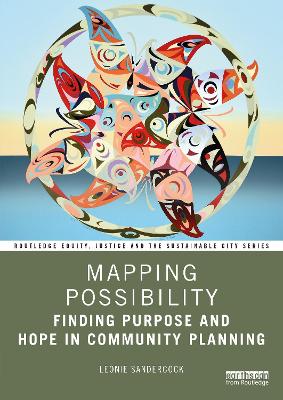
"Mapping Possibility traces the intellectual, professional and emotional life of Leonie Sandercock. In an impressive career spanning nearly half a century as an educator, researcher, artist, and practitioner, Sandercock is one of the leading figures in community planning and has dedicated her life to pursuing social, cultural and environmental justice through her work. In this book, Leonie Sandercock reflects on her past writings and films, which played an important role in redefining the field in more progressive directions, both in theory and practice. It includes previously published essays in conjunction with insightful commentaries prefacing each section and four new essays, two discussing Sandercock's most recent work on a feature film project withIndigenous partners. The book questions whether there is a way forward for the city and community building professions and draws a map of hope for emerging planners dedicated to equity, justice and sustainability. Innovative, visionary and audacious, Leonie Sandercock's community-based scholarship and practice in the fields of urban planning and community development have engaged some of the most intractable issues of our time - inequality, discrimination, and racism. Through award-winning books and films, she has influenced the planning field to become more culturally fluent, addressing diversity and difference through structural change. This is a book to inspire the next generation of community planners, as well as current practitioners and students inplanning, cultural studies, urban studies, architecture and community development"--
List of Figures
xiii
Preface xiv
Acknowledgments xviii
Introduction 1(18)
PART I Diversifying Planning's History, Theory, and Epistemology
19(64)
Commentary: The Los Angeles Years: 1986-1996
21(12)
1 Rewriting Planning History: Official and Insurgent Stories (1998)
33(17)
2 Who Knows?: Exploring Planning's Knowledges (2003)
50(17)
3 Voices from the Borderlands: A Meditation on a Metaphor (1995)
67(16)
PART II Imagining Cities of Difference
83(50)
Commentary: The Cosmopolis Project: From Theory to Practice, 1992-2006
85(12)
4 Towards Cosmopolis: A Postmodern Utopia (1998)
97(14)
5 When Strangers Become Neighbors: Managing Cities of Difference (2000)
111(13)
6 Mongrel Cities of the 21st Century: Is Multiculturalism the Solution, or the Problem? (2006)
124(9)
PART III Expanding the Language of Planning
133(70)
Commentary: The Storytelling Project: 1986--2022
135(8)
7 Out of the Closet: The Importance of Stories and Storytelling in Planning Practice (2003)
143(13)
8 Digital Ethnography as Planning Praxis: An Experiment with Film as Social Research, Community Engagement, and Policy Dialogue (2010)
156(16)
9 Changing the Lens: Film as Action Research and Therapeutic Planning Practice
172(15)
10 Edge of the Knife: Film as a Catalyst for Indigenous Cultural Revitalization? (2022)
187(16)
PART IV Navigating Indigenous Worlds: Praxis and Pedagogy
203(70)
Commentary: The Inner Journey: 2007-2022
205(6)
11 Finding My Way: Emotions and Ethics in Community-Based Action Research with Indigenous Communities (2018)
211(19)
12 Partnership Praxis in a `Reconciliation' Context: What Is Mine to Do? (2022)
230(9)
13 Beyond Cosmopolis: Dreaming Co-existence as Indigenous Justice (2019)
239(23)
Conclusion: Mapping Possibility: The View from 2022
255(2)
Commentary: Beneath the Pavement, the Beach?
257(5)
14 Once Upon a Planet: Reimagining the Soul of Planning (2022)
262(11)
Index 273
Leonie Sandercock is a professor at the School of Community and Regional Planning at the University of British Columbia, Canada. Her main research interest is in working with First Nations through collaborative community planning, using the medium of film as a catalyst for dialogue on the possibilities of healing, reconciliation, and partnership. Other research interests include immigration, cultural diversity, and integration; the possibilities of a more therapeutic model of planning; the importance of stories and storytelling in planning theory and practice; and the role of multimedia in planning.