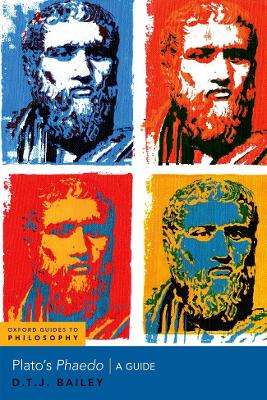
D.T.J. Bailey here offers a student-friendly guide to Plato's dialogue Phaedo, as part of the Oxford Guides to Philosophy series. In the process of explaining the text, Bailey provides a picture of Plato's metaphysics as revealed by the four major arguments it contains. Offering a concise discussion of Platonic forms--the abstract objects Plato famously proposed--Bailey argues that Plato was thinking carefully about names and naming throughout the construction of the Phaedo. Readers of the Symposium and the Republic, those intrigued by the figure of Socrates, and those who believe in the immortality of the Soul will value Bailey's expert explanation of the thematic diversity contained in the Phaedo.
D.T.J. Bailey here offers a student-friendly guide to Plato's dialogue Phaedo, as part of the Oxford Guides to Philosophy series. In the process of explaining the text, Bailey provides a picture of Plato's metaphysics as revealed by the four major arguments it contains. Offering a concise discussion of Platonic forms--the abstract objects Plato famously proposed, Bailey argues that Plato was thinking carefully about names and naming throughout the construction of the Phaedo. Readers of the Symposium and the Republic, those intrigued by the figure of Socrates, and those who believe in the immortality of the Soul, will value Bailey's expert explanation of the thematic diversity contained in the Phaedo.