Muutke küpsiste eelistusi

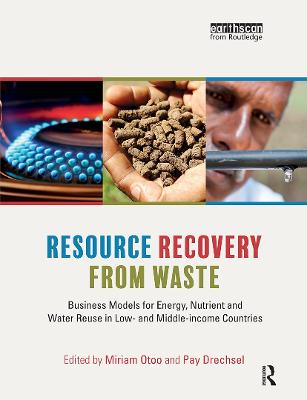
E-raamat: Resource Recovery from Waste: Business Models for Energy, Nutrient and Water Reuse in Low- and Middle-income Countries [Taylor & Francis e-raamat]

Edited by (International Water Management Institute, Sri Lanka), Edited by (International Water Management Institute, Sri Lanka)
  • Formaat: 832 pages
  • Ilmumisaeg: 31-Mar-2021
  • Kirjastus: Routledge
  • ISBN-13: 9781315780863
  • Taylor & Francis e-raamat
  • Hind: 240,04 €*
  • * hind, mis tagab piiramatu üheaegsete kasutajate arvuga ligipääsu piiramatuks ajaks
  • Tavahind: 342,91 €
  • Säästad 30%
Humans generate millions of tons of waste every day. This waste is rich in water, nutrients, energy and organic compounds. Yet waste is not being managed in a way that permits us to derive value from its reuse, whilst millions of farmers struggle with depleted soils and lack of water. This book shows how Resource Recovery and Reuse (RRR) could create livelihoods, enhance food security, support green economies, reduce waste and contribute to cost recovery in the sanitation chain.


While many RRR projects fully depend on subsidies and hardly survive their pilot phase, hopeful signs of viable approaches to RRR are emerging around the globe including low- and middle-income countries. These enterprises or projects are tapping into entrepreneurial initiatives and public private partnerships, leveraging private capital to help realize commercial or social value, shifting the focus from treatment for waste disposal to treatment of waste as a valuable resource for safe reuse.


The book provides a compendium of business options for energy, nutrients and water recovery via 24 innovative business models based on an in-depth analysis of over 60 empirical cases, of which 47 from around the world are described and evaluated in a systematic way. The focus is on organic municipal, agro-industrial and food waste, including fecal sludge, supporting a diverse range of business models with potential for large-scale out-and up-scaling.
Foreword Part I Business models for a circular economy: Introduction
1.
Business Models for a Circular Economy: Linking Waste Management and
Sanitation with Agriculture
2. Defining and Analysing RRR Business Cases and
Models Part II Energy Recovery from Organic Waste
3. Business Models on Solid
Fuel Production from Waste
4. Business Models for in-house Biogas Production
for Energy Savings 5: Business Models for Sustainable and Renewable Power
Generation
6. Business Models on Emerging Technologies/Bio-fuel Production
from Agro-Waste Part III Nutrient and Organic Matter Recovery
7. Business
Models on Partially Subsidized Composting at District Level
8. Business
Models on Subsidy-Free Community Based Composting
9. Business Models on
Large-Scale Composting for Revenue Generation
10. Business Models on Nutrient
Recovery from own Agro-Industrial Waste
11. Business Models on Compost
Production for Sustainable Sanitation Service Delivery
12. Business Models
for Outsourcing Fecal Sludge Treatment to the Farm
13. Business Models on
Phosphorus recovery from Excreta and Wastewater Part IV Wastewater for
Agriculture, Forestry and Aquaculture
14. Business Models on institutional
and regulatory pathways to cost recovery
15. Business Models beyond Cost
Recovery
16. Business Models for Cost sharing and Risk Minimization
17.
Business Models on Rural-Urban Water Trading
18. Business Models for
increasing Safety in Informal Wastewater Irrigation
19. The Enabling
Environment and Finance of Resource Recovery and Reuse Frugal Innovations for
the Circular Economy An Epilogue
Miriam Otoo is a Research Economist, leading the Research Group on Resource Recovery and Reuse at the International Water Management Institute (IWMI).

Pay Drechsel is a Principal Researcher at the International Water Management Institute (IWMI), leading IWMIs Strategic Program, on Rural-Urban Linkages and the related Research Flagship of the CGIAR Research Program on Water, Land and Ecosystems (WLE).