This book is the outcome of a national seminar for research scholars on Pakistan organized by the Centre for Pakistan Studies at the MMAJ Academy of International Studies, Jamia Millia Islamia, New Delhi. The aim of the seminar was to explore how young minds in India view Pakistan, the quintessential ‘enemy’ country. The range of topics inc
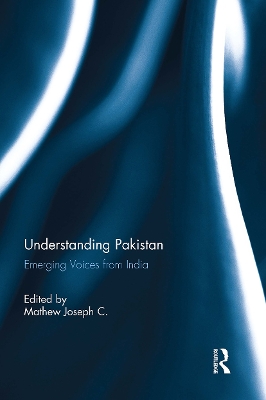
Understanding Pakistan: Emerging Voices from India is the outcome of a national seminar for research scholars on Pakistan organized by the Centre for Pakistan Studies at the MMAJ Academy of International Studies, Jamia Millia Islamia, New Delhi. The aim of the seminar was to explore how young minds in India view Pakistan, the quintessential ‘enemy’ country or the ‘other’ of India. The range of topics included issues related to Pakistan’s politics, economy, popular culture, education, environment, sectarian divide, minorities, policy towards Jammu & Kashmir and foreign relations.
The established academic discourse on Pakistan in India is largely dominated by concerns linked to security threats emanating from within Pakistan. Due to this overemphasis on security-related issues, Indian scholarship on Pakistan is considered to be highly subjective and partisan. However, in this volume, most of the young scholars distance themselves from the main thrust of Indian scholarship on Pakistan and provide a fresh perspective on Pakistan which can potentially rupture the established tradition of Indian scholarship on Pakistan. Hopefully, it will be these scholars who in the near future will be at the forefront of emerging scholarship on Pakistan in India.
1. Introduction (Mathew Joseph C.) Part One: Politics and Economy
2.
Pakistan through the Kaleidoscope of Modernization (Dipanwita Roy Ghatak)
3.
Ethno-nationalism in Pakistan: The Case of Baluchistan (Shashi Kant) Ethnic
Transformation of Karachi and its Implications (Tarun Mathur)
5.
Environmental Movements in Pakistan: A Case Study of Mangala Dam in Mirpur
(Puyesh Kant Sharma) Part Two: Education, Media and Popular Culture
6.
Language Controversy and Education in Pakistan (Azad Ahmed Khan)
7.
Construction of History in Pakistani Textbooks (Zarine Khan)
8. Media Agenda
Setting in Pakistan: Prospects for Socio-Political Transformation (Dheeraj
Khan)
9. Pakistani Women Poets and the Dynamics of Religion, Politics and
Society: A Comparative Study of Kishwar Naheed and Zehra Nigah (Urvashi Sabu)
10. Coke Studio: A Musical Identity (Bidisha Mukherjee)
11. Understanding
Pakistani Cinema: A Peek from Across the Border (Shalmaly Mukherjee) Part
Three: Minorities and Sectarianism
12. Religious Minorities in Pakistan:
Aspirations and Challenges (Shiraz Sheikh)
13. The Blasphemy Laws and the
Minorities in Pakistan (T. J. Jabir)
14. Religious Extremism and Sectarian
Violence in Pakistan: Revisiting Islamization (Azhar Ali) Part Four:
Pakistan, Afghanistan, the US and the War on Terror
15. Pakistans Afghan
Policy: The Dynamics of Continuity and Change (Anwesha Ghosh)
16. Pakistan:
Islamic Identity, Jihadist Upsurge and the War on Terror (Yaqoob-Ul-Hassan)
17. War on Terror and Democracy in Pakistan (Ashish Shukla)
18. Terrorism in
Pakistan and Fragile Counter-terrorism Strategy (Nishu Sharma)
19.
US-Pakistan Relations: Retrospect and Prospect (Sumit Kumar Jha) Part Five:
Pakistan and Jammu and Kashmir
20. Pakistans Changing Policy on Kashmir:
Dimensions and Determinants (Samir Ahmad Bhat)
21. Pakistans Incoherent
Claim on Kashmir (Deepali Raghunath Khaire)
Mathew Joseph C. is Reader at the MMAJ Academy of International Studies, Jamia Millia Islamia, New Delhi, India. Before joining Jamia Millia Islamia he was with the Department of Strategic and Regional Studies (DSRS), University of Jammu, Jammu and Kashmir, India. Currently he specializes in studies related to Pakistan, South Asia and International Relations. His major publications include Ethnic Conflict in Bhutan (1999) and Pakistan in a Changing Strategic Context (2004), which he co-edited with Ajay Darshan Behera.

 Rohkem infot Taylor & Francis e-raamatute kohta