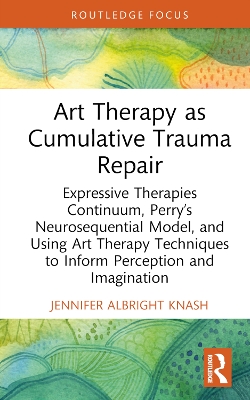
This book explores the effectiveness of art therapy as treatment for cumulative trauma survivors.
Bringing together case studies, research and the author’s clinical and personal experience, it outlines different clinical approaches as well as numerous art therapy interventions that are processed through somatic, metaverbal, and narrative means. It further aims to answer the question of “how art therapy works,” by pairing aspects of Lusebrink’s Expressive Therapies Continuum with Perry’s four functional domains (from the Neurosequential Model of Therapeutics) to demonstrate how these practices may increase relational capacity and the patient’s access to higher level functioning, in turn decreasing trauma responses.
Foregrounding a person-centered and multi-dimensional approach to trauma repair and creative interventions, this book will appeal to postgraduate students in art therapy and counselling, as well as professionals and researchers in somatic work and trauma specialties.
This book explores the effectiveness of art therapy as treatment for cumulative trauma survivors.
PART 1: Laying the groundwork
1. Introduction
2. Terminology
3. Connecting the Expressive Therapies Continuum (ETC) and the Four Functional Domains (from NMT) PART 2: Exploration of Art Therapy Approaches
4. Directive vs. Non-Directive
5. Collaborative Approach to Media and/or Directives PART 3: Integration and Regulation: Beginning the Therapeutic Process for Cumulative Trauma Repair
6. Engaging Sensory Integration and the Kinesthetic/ Sensory Levels of the Expressive Therapies Continuum
7. Engaging Emotional Regulation and Perceptual/ Affective Levels of the Expressive Therapies Continuum PART
4. Building the Therapeutic Alliance and Relational Capacity
8. Art Media and Art Interventions that Will Enhance the Therapeutic Alliance
9. The Artwork as Container: Defining Safety and Creating Safety PART
5. Embracing the Cognitive/ Symbolic and the Creative Levels
10. Bridging the Bottom-Up and the Top-Down through Oscillation and Metaphoric Meaning Making
11. The Creative and The Imagination Network
12. Survival Responses and Adaptive Options PART
6. Conclusion
Jennifer Albright Knash works with Platteville Family Resource Center in Richland Center, Wisconsin, utilizing art therapy with children, teens, and adults who have experienced cumulative trauma. She is the former Academic Programs Director at Southwestern College, Santa Fe, NM.

 Rohkem infot Taylor & Francis e-raamatute kohta