Muutke küpsiste eelistusi

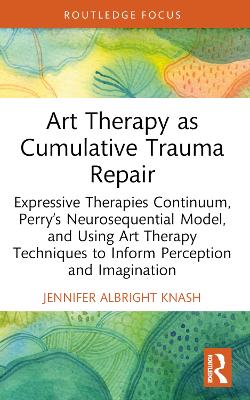
Art Therapy as Cumulative Trauma Repair: Expressive Therapies Continuum, Perrys Neurosequential Model, and Using Art Therapy Techniques to Inform Perception and Imagination [Pehme köide]

  • Formaat: Paperback / softback, 90 pages, kõrgus x laius: 216x138 mm, 1 Line drawings, black and white; 5 Halftones, black and white; 6 Illustrations, black and white
  • Sari: Advances in Mental Health Research
  • Ilmumisaeg: 22-Jun-2026
  • Kirjastus: Routledge
  • ISBN-10: 1032695234
  • ISBN-13: 9781032695235
  • Pehme köide
  • Hind: 23,50 €*
  • * hind on lõplik, st. muud allahindlused enam ei rakendu
  • Tavahind: 31,34 €
  • Säästad 25%
  • See raamat ei ole veel ilmunud. Raamatu kohalejõudmiseks kulub orienteeruvalt 3-4 nädalat peale raamatu väljaandmist.
  • Kogus:
  • Lisa ostukorvi
  • Tasuta tarne
  • Tellimisaeg 2-4 nädalat
  • Lisa soovinimekirja
  • Formaat: Paperback / softback, 90 pages, kõrgus x laius: 216x138 mm, 1 Line drawings, black and white; 5 Halftones, black and white; 6 Illustrations, black and white
  • Sari: Advances in Mental Health Research
  • Ilmumisaeg: 22-Jun-2026
  • Kirjastus: Routledge
  • ISBN-10: 1032695234
  • ISBN-13: 9781032695235
This book explores the effectiveness of art therapy as treatment for cumulative trauma survivors.

Bringing together case studies, research, and the authors clinical and personal experience, it outlines different clinical approaches as well as numerous art therapy interventions that are processed through somatic, metaverbal, and narrative means. It further aims to answer the question of how art therapy works, by pairing aspects of Lusebrinks Expressive Therapies Continuum with Perrys four functional domains (from the Neurosequential Model of Therapeutics) to demonstrate how these practices may increase relational capacity and the patients access to higher level functioning, in turn, decreasing trauma responses.

Foregrounding a person-centered and multi-dimensional approach to trauma repair and creative interventions, this book will appeal to postgraduate students in art therapy and counselling, as well as professionals and researchers in somatic work and trauma specialties.

Arvustused

Knash remarks that within the profession of art therapy, there seems to be an implicit understanding of the power of imagery in trauma therapy. Her doctoral dissertation, synthesized in this text, sought to provide an evidenced based explanation, and practical application of art therapy approaches in the treatment of trauma that is accessible yet deeply resonant. She enhances understanding with compelling vignettes from her own clinical experience of over 20 years. She shares prompts for directive and non-directive approaches, detailing specific media and processes, and invites the use of music and movement in accompaniment. As a practicing clinician and art therapist educator, I have not encountered other texts that synthesize these theories with such clarity and readability.

- Denise R. Wolf, Associate Clinical Professor at Drexel University, in Journal of the American Art Therapy Association

The question of how to heal from trauma, particularly when the damage is ingrained within both the body and the mind, is an essential one in therapeutic practices. In her book Art Therapy as Cumulative Trauma Repair, Jennifer Albright Knash offers an insightful exploration of how art therapy can address trauma in a way that goes beyond verbal expression. Art-making is posited as a potential language, offering a means of being seen and understood, even when words fail. This book contributes significantly to the field of creative arts therapies (CAT) by weaving together theory and practice, demonstrating art therapys capacity to engage with and repair the effects of cumulative trauma. By integrating somatic, meta-verbal, and narrative approaches, Knash provides a comprehensive framework for therapeutic intervention that honours the complexity of trauma and facilitates healing through creative engagement.

- Georgia Ruby Polichroniadis MAT, BFA(Hons), BFA, in Journal of Creative Arts Therapies

PART 1: Laying the groundwork
1. Introduction
2. Terminology
3.
Connecting the Expressive Therapies Continuum (ETC) and the Four Functional
Domains (from NMT) PART 2: Exploration of Art Therapy Approaches
4. Directive
versus Nondirective
5. Collaborative Approach to Media and/or Directives PART
3: Integration and Regulation
6. Engaging Sensory Integration and the
Kinesthetic/ Sensory Levels of the Expressive Therapies Continuum
7. Engaging
Emotional Regulation and Perceptual/ Affective Levels of the Expressive
Therapies Continuum PART
4. Building the Therapeutic Alliance and Relational
Capacity
8. Art Media and Art Interventions that Will Enhance the Therapeutic
Alliance
9. The Artwork as Container: Defining Safety and Creating Safety
PART
5. Embracing the Cognitive/ Symbolic and the Creative Levels
10.
Bridging the Bottom-Up and the Top-Down through Oscillation and Metaphoric
Meaning Making
11. The Creative and The Imagination Network
12. Survival
Responses and Adaptive Options PART
6. Conclusion
Jennifer Albright Knash works with Platteville Family Resource Center in Richland Center, Wisconsin, utilizing art therapy with children, teens, and adults who have experienced cumulative trauma. She is the former Academic Programs Director at Southwestern College, Santa Fe, NM.