This book studies religion through the eyes of some of its most influential, exemplary and sometimes controversial people. Thought provoking and wide-ranging, this book will be essential reading for students and scholars of world religions, comparative religion, and the history and philosophy of religion.
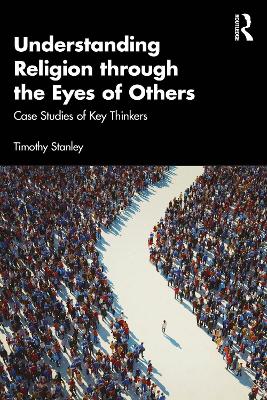
This book studies religion through the eyes of some of its most influential, exemplary, and sometimes controversial people. Historically organized and philosophically nuanced, each chapter locates a thinker in their material context to elucidate the impact of their ideas. Figures covered include Philo Judaeus, Adi Shankara, Abu Hamid al-Ghazali, Julian of Norwich, and W.E.B. Du Bois. Empathizing with their different viewpoints aims to build the capacities necessary to live tolerantly in religiously diverse democracies today. It draws students into perennial debates that evoke the habits of mind capable of engaging today’s multi-religious societies, and provides options for further reading at the end of each chapter.
Thought provoking and wide-ranging, this book will be essential reading for students and scholars of world religions, comparative religion, and the history and philosophy of religion.
Introduction
1. Philo Judaeus (c. 25 BCE c. 50 CE)
2. Adi Shankara (c.
700-750 CE)
3. Abu Hamid al-Ghazali (c. 1056 1111 CE)
4. Julian of Norwich
(c. 1343 1416 CE)
5. W. E. B. Du Bois (1868 1963 CE)
Timothy Stanley is a Senior Lecturer in the School of Humanities, Creative Industries and Social Sciences at the University of Newcastle, Australia. His recent books include Religion after Deliberative Democracy (Routledge 2022), Printing Religion after the Enlightenment (Bloomsbury Publishers 2022), and Writing Faith (Fortress 2017).

 Rohkem infot Taylor & Francis e-raamatute kohta