Muutke küpsiste eelistusi

E-raamat: Understanding Religion through the Eyes of Others: Case Studies of Key Thinkers

(University of Newcastle, Australia)
  • Formaat: EPUB+DRM
  • Ilmumisaeg: 09-Dec-2025
  • Kirjastus: Routledge
  • Keel: eng
  • ISBN-13: 9781040747285
Teised raamatud teemal:
  • Formaat - EPUB+DRM
  • Hind: 54,59 €*
  • * hind on lõplik, st. muud allahindlused enam ei rakendu
  • Lisa ostukorvi
  • Lisa soovinimekirja
  • See e-raamat on mõeldud ainult isiklikuks kasutamiseks. E-raamatuid ei saa tagastada.
  • Formaat: EPUB+DRM
  • Ilmumisaeg: 09-Dec-2025
  • Kirjastus: Routledge
  • Keel: eng
  • ISBN-13: 9781040747285
Teised raamatud teemal:

DRM piirangud

  • Kopeerimine (copy/paste):

    ei ole lubatud

  • Printimine:

    ei ole lubatud

  • Kasutamine:

    Digitaalõiguste kaitse (DRM)
    Kirjastus on väljastanud selle e-raamatu krüpteeritud kujul, mis tähendab, et selle lugemiseks peate installeerima spetsiaalse tarkvara. Samuti peate looma endale  Adobe ID Rohkem infot siin. E-raamatut saab lugeda 1 kasutaja ning alla laadida kuni 6'de seadmesse (kõik autoriseeritud sama Adobe ID-ga).

    Vajalik tarkvara
    Mobiilsetes seadmetes (telefon või tahvelarvuti) lugemiseks peate installeerima selle tasuta rakenduse: PocketBook Reader (iOS / Android)

    PC või Mac seadmes lugemiseks peate installima Adobe Digital Editionsi (Seeon tasuta rakendus spetsiaalselt e-raamatute lugemiseks. Seda ei tohi segamini ajada Adober Reader'iga, mis tõenäoliselt on juba teie arvutisse installeeritud )

    Seda e-raamatut ei saa lugeda Amazon Kindle's. 

"This book studies religion through the eyes of some of its most influential, exemplary and sometimes controversial people. Historically organized and philosophically nuanced, each chapter locates a thinker in their material context to elucidate the impact of their ideas. Figures covered include Philo Judaeus, Adi Shankara, Abu Hamid al-Ghazali, Julian of Norwich and W.E.B. Du Bois. Empathizing with their different viewpoints aims to build the capacities necessary to live tolerantly in religiously diverse democracies today. It draws students into perennial debates that evoke the habits of mind capable of engaging today's multi-religious societies, and provides options for further reading at the end of each chapter. Thought provoking and wide-ranging, this book will be essential reading for students and scholars of world religions, comparative religion, and the history and philosophy of religion"-- Provided by publisher.

This book studies religion through the eyes of some of its most influential, exemplary and sometimes controversial people. Thought provoking and wide-ranging, this book will be essential reading for students and scholars of world religions, comparative religion, and the history and philosophy of religion.

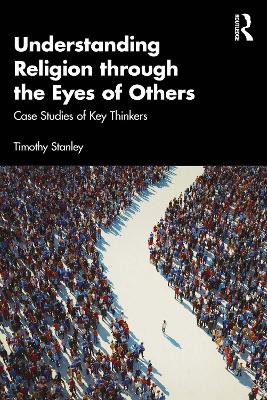

This book studies religion through the eyes of some of its most influential, exemplary, and sometimes controversial people. Historically organized and philosophically nuanced, each chapter locates a thinker in their material context to elucidate the impact of their ideas. Figures covered include Philo Judaeus, Adi Shankara, Abu Hamid al-Ghazali, Julian of Norwich, and W.E.B. Du Bois. Empathizing with their different viewpoints aims to build the capacities necessary to live tolerantly in religiously diverse democracies today. It draws students into perennial debates that evoke the habits of mind capable of engaging today’s multi-religious societies, and provides options for further reading at the end of each chapter.

Thought provoking and wide-ranging, this book will be essential reading for students and scholars of world religions, comparative religion, and the history and philosophy of religion.

Arvustused

Stanley offers a different way of cultivating the empathy necessary for religious pluralism. Move across time and space to understand religion and religious di\erence through someone's else's eyesand discover our own world anew. Rabbi Dr. Rachel S. Mikva, Herman Schaalman Professor in Jewish Studies Stanley models a deeply human approach to the study of (inter)religious encounter through vivid case studies drawn from diverse religious traditions. With meticulous care and rigorous empathy, he engages not only the ideas of these key historical thinkers but the lives and contexts from which they arose, with an eye to the religious diversity they embody and confront. By striving to see through the eyes of others, to the extent such a thing is possible, Stanley oers a compelling model for how we can study religion more deeply and critically in human-centered ways - especially for living well in religiously diverse secular democracies. Dr. Hans S. Gustafson, Director of the Jay Phillips Center for Interreligious Studies, University of St. ThomasStanley offers us a unique and original book. Combining both a historical exegesis of texts and contexts with a focus on how we live in contemporary multicultural societies, his book attempts to help us see through others eyes while also understanding how past situations of diversity might be relevant to us. Accessible to upper undergraduates and graduate students, this challenging book can bring a new vision to the classroom for teaching religion to promote deliberative democracy. Professor Paul Hedges, Professor of Interreligious Studies, Nanyang Technological University, Singapore

Introduction
1. Philo Judaeus (c. 25 BCE c. 50 CE)
2. Adi Shankara (c.
700-750 CE)
3. Abu Hamid al-Ghazali (c. 1056 1111 CE)
4. Julian of Norwich
(c. 1343 1416 CE)
5. W. E. B. Du Bois (1868 1963 CE)
Timothy Stanley is a Senior Lecturer in the School of Humanities, Creative Industries and Social Sciences at the University of Newcastle, Australia. His recent books include Religion after Deliberative Democracy (Routledge 2022), Printing Religion after the Enlightenment (Bloomsbury Publishers 2022), and Writing Faith (Fortress 2017).