Muutke küpsiste eelistusi

E-raamat: Kenosis Creativity Architecture: Appearance through Emptying [Taylor & Francis e-raamat]

(University of Tasmania, Australia)
  • Formaat: 274 pages, 23 Halftones, black and white; 23 Illustrations, black and white
  • Sari: Routledge Research in Architecture
  • Ilmumisaeg: 22-Mar-2021
  • Kirjastus: Routledge
  • ISBN-13: 9781003056973
  • Taylor & Francis e-raamat
  • Hind: 189,26 €*
  • * hind, mis tagab piiramatu üheaegsete kasutajate arvuga ligipääsu piiramatuks ajaks
  • Tavahind: 270,37 €
  • Säästad 30%
  • Formaat: 274 pages, 23 Halftones, black and white; 23 Illustrations, black and white
  • Sari: Routledge Research in Architecture
  • Ilmumisaeg: 22-Mar-2021
  • Kirjastus: Routledge
  • ISBN-13: 9781003056973
"Kenosis, Creativity, and Architecture locates and explores creativity's grounding in the ancient concept of kenosis, the "emptying" that allows creativity to happen; that makes appearance possible. It concretises that grounding through architecture-a primal expression of human creativity-critically examining, for the first time, kenotic instantiations evidenced in four iconic, international projects; works by Kahn, Pei, Ando, and Libeskind. Then, in a final turn, the potentiality of architecture's own emptying is probed. Architect and author, Randall Lindstrom, draws on Western and Eastern philosophy, including that of Heidegger, Levinas, Derrida, Vattimo, Nishida, and Nishitani, as well as on the theology of Christianity, Judaism, and aspects of Buddhism, Hinduism, and Islam. Every chapter expands the argument that, if responsiveness to our world is taken seriously-if proper and sustainable responses are to be realised-then a deeper understanding of creativity, and so kenosis, is essential. This book opens-up a way of thinking about creativity and humanity's readiness to be creative. It thereby presents a crucial enquiry-at the nexus of architecture, philosophy, and theology-for researchers, graduate and postgraduate students, and practitioners alike"--

Kenosis Creativity Architecture

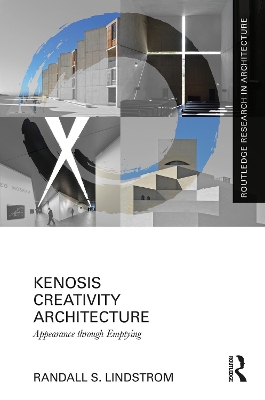
locates and explores creativity’s grounding in the ancient concept of kenosis, the “emptying” that allows creativity to happen; that makes appearance possible.

It concretises that grounding through architecture—a primal expression of human creativity—critically examining, for the first time, kenotic instantiations evidenced in four iconic, international projects; works by Kahn, Pei, Ando, and Libeskind. Then, in a final turn, the potentiality of architecture’s own emptying is probed. Architect and author Randall Lindstrom draws on Western and Eastern philosophy, including that of Heidegger, Levinas, Derrida, Vattimo, Nishida, and Nishitani, as well as on the theology of Christianity, Judaism, and aspects of Buddhism, Hinduism, and Islam. Every chapter expands the argument that, if responsiveness to our world is taken seriously—if proper and sustainable responses are to be realised—then a deeper understanding of creativity, and so kenosis, is essential.

This book opens-up a way of thinking about creativity and humanity’s readiness to be creative. It thereby presents a crucial enquiry—at the nexus of architecture, philosophy, and theology—for researchers, graduate and postgraduate students, and practitioners alike.

 

Foreword x
Jeff Malpas
Acknowledgements xiii
PART ONE Foundations
1(54)
1 Introduction: Awaiting Kenosis
3(10)
Thinking about Kenosis
6(2)
Thinking about Kenosis through Architecture
8(2)
Thinking about Architecture through Kenosis
10(3)
2 Kenosis: A Synoptic View
13(42)
Locus Classicus
13(5)
Antecedents
18(7)
Philosophy
18(4)
Judaism
22(3)
Medieval Thinking
25(3)
Meister Eckhart and Gelassenheit
26(1)
Rabbi Luria and Zimzum
27(1)
Modern Development and Revival
28(6)
Early Modernity
28(2)
Late Modernity
30(3)
Gelassenheit Redux
33(1)
Analogous Concepts
34(7)
Buddhism and Taoism
35(2)
Hinduism
37(2)
Islam
39(2)
Postmodern Radicalisation
41(14)
PART TWO Manifestations
55(136)
3 Modernism and Order: Kahn at the Salk Institute
57(30)
Religiosity and Design
58(3)
Theories in Practice
61(11)
Idea
62(1)
Shadow
63(6)
Reality
69(3)
Creativity Ascribed
72(6)
Mystic
73(1)
Romantic Idealist
74(1)
Essentialist
75(2)
Social and Political Activist
77(1)
Each, All, and None
78(1)
A Deeper Provenance
78(9)
4 Post-Modernism and Empathy: Pei at the Museum of Islamic Art
87(35)
Container and Contents
88(3)
Cultural Translation
91(6)
Rejection and Acceptance
92(1)
Readying and Awaiting
93(2)
The Approach
95(2)
Situational Response
97(4)
Materialisation
101(13)
Exteriority
102(4)
Interiority
106(6)
Fidelity
112(2)
Dervish-ness as Kingly-ness
114(8)
5 Neo-Modernism and Nothingness: Ando at the Church of the Light
122(32)
Criticising Perfection
122(2)
Potentiality
124(5)
Receptivity
129(13)
Church and Liturgy
129(3)
Liturgy, Symbology, and Architecture
132(9)
Architecture and Church
141(1)
Creativity
142(5)
Conversations with Self and Others
142(3)
Conversations with Other Things
145(2)
Valorising Imperfection
147(7)
6 Critical-Modernism and Kindness: Libeskind at the Jewish Museum Berlin
154(37)
Illustrations versus Captions
154(3)
Uncanniness
157(10)
Conceptualisation and Evolvement
157(3)
Formality and Spatiality
160(7)
Hope
167(12)
Reconciliation and Continuity
168(2)
Questions and Negotiations
170(6)
Identity and Being
176(3)
Laughter
179(2)
Spectacularity and Exemplarity
181(10)
PART THREE Amplifications
191(50)
7 Turning Away and Turning Back: The End of Architecture
193(41)
Barriers to Emptying
193(6)
"-ists"
194(2)
"-isms"
196(3)
Emptying to Create
199(22)
Creators, Relationality, and Power
202(6)
Engagement
208(5)
Imagining and Imaging
213(6)
Upside Down and Inside Out
219(2)
Grounded in Emptying
221(3)
End-ing
224(10)
8 Conclusion: The Grace of Dis-grace
234(7)
Bibliography 241(12)
Index 253
Randall S. Lindstrom, PhD, in more than forty years of architectural practice, has served clients on four continents and received frequent recognition and awards. Since 2011, his primary focus has shifted to academic pursuits at the University of Tasmania, where he is Adjunct Lecturer in Architecture and Design.