Muutke küpsiste eelistusi

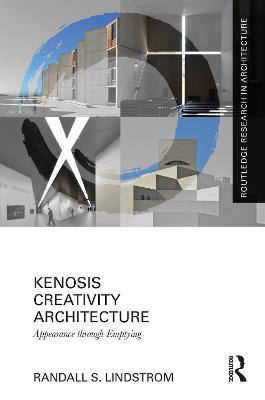
Kenosis Creativity Architecture: Appearance through Emptying [Kõva köide]

(University of Tasmania, Australia)
  • Formaat: Hardback, 274 pages, kõrgus x laius: 234x156 mm, kaal: 700 g, 23 Halftones, black and white; 23 Illustrations, black and white
  • Sari: Routledge Research in Architecture
  • Ilmumisaeg: 22-Mar-2021
  • Kirjastus: Routledge
  • ISBN-10: 0367522187
  • ISBN-13: 9780367522186
  • Kõva köide
  • Hind: 159,19 €*
  • * hind on lõplik, st. muud allahindlused enam ei rakendu
  • Tavahind: 212,25 €
  • Säästad 25%
  • Raamatu kohalejõudmiseks kirjastusest kulub orienteeruvalt 3-4 nädalat
  • Kogus:
  • Lisa ostukorvi
  • Tasuta tarne
  • Tellimisaeg 2-4 nädalat
  • Lisa soovinimekirja
  • Raamatukogudele
  • Formaat: Hardback, 274 pages, kõrgus x laius: 234x156 mm, kaal: 700 g, 23 Halftones, black and white; 23 Illustrations, black and white
  • Sari: Routledge Research in Architecture
  • Ilmumisaeg: 22-Mar-2021
  • Kirjastus: Routledge
  • ISBN-10: 0367522187
  • ISBN-13: 9780367522186
"Kenosis, Creativity, and Architecture locates and explores creativity's grounding in the ancient concept of kenosis, the "emptying" that allows creativity to happen; that makes appearance possible. It concretises that grounding through architecture-a primal expression of human creativity-critically examining, for the first time, kenotic instantiations evidenced in four iconic, international projects; works by Kahn, Pei, Ando, and Libeskind. Then, in a final turn, the potentiality of architecture's own emptying is probed. Architect and author, Randall Lindstrom, draws on Western and Eastern philosophy, including that of Heidegger, Levinas, Derrida, Vattimo, Nishida, and Nishitani, as well as on the theology of Christianity, Judaism, and aspects of Buddhism, Hinduism, and Islam. Every chapter expands the argument that, if responsiveness to our world is taken seriously-if proper and sustainable responses are to be realised-then a deeper understanding of creativity, and so kenosis, is essential. This book opens-up a way of thinking about creativity and humanity's readiness to be creative. It thereby presents a crucial enquiry-at the nexus of architecture, philosophy, and theology-for researchers, graduate and postgraduate students, and practitioners alike"--

Kenosis Creativity Architecture

locates and explores creativity’s grounding in the ancient concept of kenosis, the “emptying” that allows creativity to happen; that makes appearance possible.

It concretises that grounding through architecture—a primal expression of human creativity—critically examining, for the first time, kenotic instantiations evidenced in four iconic, international projects; works by Kahn, Pei, Ando, and Libeskind. Then, in a final turn, the potentiality of architecture’s own emptying is probed. Architect and author Randall Lindstrom draws on Western and Eastern philosophy, including that of Heidegger, Levinas, Derrida, Vattimo, Nishida, and Nishitani, as well as on the theology of Christianity, Judaism, and aspects of Buddhism, Hinduism, and Islam. Every chapter expands the argument that, if responsiveness to our world is taken seriously—if proper and sustainable responses are to be realised—then a deeper understanding of creativity, and so kenosis, is essential.

This book opens-up a way of thinking about creativity and humanity’s readiness to be creative. It thereby presents a crucial enquiry—at the nexus of architecture, philosophy, and theology—for researchers, graduate and postgraduate students, and practitioners alike.


Arvustused

"What concerns Lindstrom is the role of kenosis as a central element in architectural thought and practice, as well as in the built forms of architecture. It is through this connection with the architectural that Lindstrom also connects with creativity. And, as architecture is essentially creative, so, too, is Lindstrom concerned with the way the kenotic character of architecture illuminates the character of creativitythe way in which a form of emptying is indeed at the very heart of creativity, and so at the heart also of architectural thought and practice as such."

Jeff Malpas, Emeritus Distinguished Professor, University of Tasmania

"In a period in which arbitrary production, characterized as experimental, is a predominant form of creativity, Lindstroms remarkable book refreshingly resets the foundations of architecture and creativity by uniquely and boldly taking, as its basis, the concept of kenosis. His writing eloquently mediates the theological mystery of divine self-emptying and the practical capacity of architecture to find its own ground in emptying; to await, to accept, and to be continually transcended by the situations to which it is called to respond."

Dr. Jin Baek, Professor, Department of Architecture and Architectural Engineering, Seoul National University

"Randall Lindstrom here breaks ground, where theological and philosophical underpinnings of the holy mystery of life reach for revelation. With the strong substantiation of academic and scholarly brilliance unfolding across disciplines, with the marvel of disarming design and aesthetics, the emptying thrust of kenosis theologically carries the wonder of the servant. Lindstrom helps us do something we frequently fail to do, which is to acknowledge the breadth across which emptying serves and liberates."

Rev. Dr. Arthur A. R. Nelson, Emeritus Professor, Dean, and President of North Park University and Theological Seminary, Chicago

"Regardless of the countless studies in philosophy, psychology, and neuroscience, the creative capacity and act remain largely unknown. Randall Lindstrom approaches this enigma in the context of architecture, through the philosophical and theological notion of kenosis, which also touches on modes of eastern spiritual thinking. The writer is erudite, devoted, and sincere, and he succeeds in evoking the readers genuine interest in the mental process of emptying as a condition for new creative visions, thoughts, and emotions to enter. He contributes a new concept and way of approaching the greatest human gift, creativity."

Juhani Pallasmaa, Architect, Emeritus Professor and Dean, Aalto University, Helsinki

"This remarkable book is a highly original contribution to the theory of architectural creativity, unpacking its ethical imperatives while criticizing their prevalent excessive formalism, suggesting ways to do justice to the local quality of places and diversity of cultures. Rooted in philosophy, yet authored by an architect/scholar with hands-on awareness of contemporary practice, the study argues, through the Christian concept of kenosis (emptying), for a more humble attitude in architectural design, less arrogant and top-down, suggesting a useful framework for creativity in our complex world of global practices and conflicting and converging values."

Dr. Alberto Pérez-Gómez, Bronfman Professor of Architecture, McGill University, Montreal

"Creation is not simply the emergence of something absent, but also the emptying that enables appearance in the first place. This idea is at the center of Randall Lindstroms excellent study of the ancient notion of kenosis, or "emptying," by way of architecture. We know how kenosis manifests itself in religion, philosophy, and art, but no one has attempted to show it through architecture. How might architecture look if viewed through a kenotic lens? Is an architectural kenosis possible? Lindstrom responds to these difficult questions drawing on architects such as Louis Kahn and Daniel Libeskind and philosophers such as Jacques Derrida and Gianni Vattimo. His ability to read them together is unique. Readers will not only discover something different about architecture and philosophy, but also a new intellectual path that Lindstrom has generously opened up, through kenosis, for all of us to pursue."

Santiago Zabala, ICREA Research Professor of Philosophy, Pompeu Fabra University, Barcelona

Foreword x
Jeff Malpas
Acknowledgements xiii
PART ONE Foundations
1(54)
1 Introduction: Awaiting Kenosis
3(10)
Thinking about Kenosis
6(2)
Thinking about Kenosis through Architecture
8(2)
Thinking about Architecture through Kenosis
10(3)
2 Kenosis: A Synoptic View
13(42)
Locus Classicus
13(5)
Antecedents
18(7)
Philosophy
18(4)
Judaism
22(3)
Medieval Thinking
25(3)
Meister Eckhart and Gelassenheit
26(1)
Rabbi Luria and Zimzum
27(1)
Modern Development and Revival
28(6)
Early Modernity
28(2)
Late Modernity
30(3)
Gelassenheit Redux
33(1)
Analogous Concepts
34(7)
Buddhism and Taoism
35(2)
Hinduism
37(2)
Islam
39(2)
Postmodern Radicalisation
41(14)
PART TWO Manifestations
55(136)
3 Modernism and Order: Kahn at the Salk Institute
57(30)
Religiosity and Design
58(3)
Theories in Practice
61(11)
Idea
62(1)
Shadow
63(6)
Reality
69(3)
Creativity Ascribed
72(6)
Mystic
73(1)
Romantic Idealist
74(1)
Essentialist
75(2)
Social and Political Activist
77(1)
Each, All, and None
78(1)
A Deeper Provenance
78(9)
4 Post-Modernism and Empathy: Pei at the Museum of Islamic Art
87(35)
Container and Contents
88(3)
Cultural Translation
91(6)
Rejection and Acceptance
92(1)
Readying and Awaiting
93(2)
The Approach
95(2)
Situational Response
97(4)
Materialisation
101(13)
Exteriority
102(4)
Interiority
106(6)
Fidelity
112(2)
Dervish-ness as Kingly-ness
114(8)
5 Neo-Modernism and Nothingness: Ando at the Church of the Light
122(32)
Criticising Perfection
122(2)
Potentiality
124(5)
Receptivity
129(13)
Church and Liturgy
129(3)
Liturgy, Symbology, and Architecture
132(9)
Architecture and Church
141(1)
Creativity
142(5)
Conversations with Self and Others
142(3)
Conversations with Other Things
145(2)
Valorising Imperfection
147(7)
6 Critical-Modernism and Kindness: Libeskind at the Jewish Museum Berlin
154(37)
Illustrations versus Captions
154(3)
Uncanniness
157(10)
Conceptualisation and Evolvement
157(3)
Formality and Spatiality
160(7)
Hope
167(12)
Reconciliation and Continuity
168(2)
Questions and Negotiations
170(6)
Identity and Being
176(3)
Laughter
179(2)
Spectacularity and Exemplarity
181(10)
PART THREE Amplifications
191(50)
7 Turning Away and Turning Back: The End of Architecture
193(41)
Barriers to Emptying
193(6)
"-ists"
194(2)
"-isms"
196(3)
Emptying to Create
199(22)
Creators, Relationality, and Power
202(6)
Engagement
208(5)
Imagining and Imaging
213(6)
Upside Down and Inside Out
219(2)
Grounded in Emptying
221(3)
End-ing
224(10)
8 Conclusion: The Grace of Dis-grace
234(7)
Bibliography 241(12)
Index 253
Randall S. Lindstrom, PhD, in more than forty years of architectural practice, has served clients on four continents and received frequent recognition and awards. Since 2011, his primary focus has shifted to academic pursuits at the University of Tasmania, where he is Adjunct Lecturer in Architecture and Design.