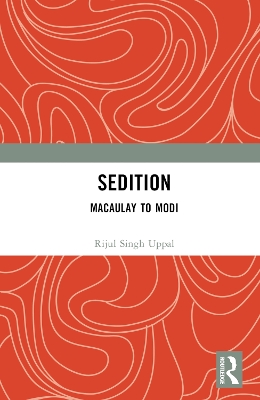
The liberal use of the sedition law in recent years, mainly by state governments intolerant of dissenting opinion, has provoked justified controversy. After some prominent individuals fell afoul of the law, activists, journalists, lawyers, and jurists took up cudgels on behalf of the victims, and demanded that the law be scrapped, as it belongs to the colonial era. The Supreme Court of India, in May 2022, admitted a host of petitions challenging the law as upheld in Kedar Nath Singh vs Union of India, 1961.
The author believes that the fundamental right to free speech is a non-negotiable right in a democratic country, but the law is relevant for countering threats to national security and sovereignty. Examining the trajectory of the sedition law from its introduction by the British colonial power and its subsequent rejection by the Constituent Assembly of India, the author observes that the statute had to be hastily restored by the Provisional Parliament to cope with the challenges posed by communal rioting in many parts of the country, several years after independence. As such, it is pertinent in times of crisis. The current law undeniably needs safeguards against political misuse, but deserves a place on the statute.
Print edition not for sale in South Asia (India, Sri Lanka, Nepal, Bangladesh, Pakistan and Bhutan)
This book examines the trajectory of the sedition law from its introduction by the British colonial power and its subsequent rejection by the Constituent Assembly of India.

 Rohkem infot Taylor & Francis e-raamatute kohta