Muutke küpsiste eelistusi

E-raamat: Sedition: Macaulay to Modi

  • Formaat: EPUB+DRM
  • Ilmumisaeg: 07-Jun-2024
  • Kirjastus: Routledge
  • Keel: eng
  • ISBN-13: 9781040038451
  • Formaat - EPUB+DRM
  • Hind: 55,89 €*
  • * hind on lõplik, st. muud allahindlused enam ei rakendu
  • Lisa ostukorvi
  • Lisa soovinimekirja
  • See e-raamat on mõeldud ainult isiklikuks kasutamiseks. E-raamatuid ei saa tagastada.
  • Formaat: EPUB+DRM
  • Ilmumisaeg: 07-Jun-2024
  • Kirjastus: Routledge
  • Keel: eng
  • ISBN-13: 9781040038451

DRM piirangud

  • Kopeerimine (copy/paste):

    ei ole lubatud

  • Printimine:

    ei ole lubatud

  • Kasutamine:

    Digitaalõiguste kaitse (DRM)
    Kirjastus on väljastanud selle e-raamatu krüpteeritud kujul, mis tähendab, et selle lugemiseks peate installeerima spetsiaalse tarkvara. Samuti peate looma endale  Adobe ID Rohkem infot siin. E-raamatut saab lugeda 1 kasutaja ning alla laadida kuni 6'de seadmesse (kõik autoriseeritud sama Adobe ID-ga).

    Vajalik tarkvara
    Mobiilsetes seadmetes (telefon või tahvelarvuti) lugemiseks peate installeerima selle tasuta rakenduse: PocketBook Reader (iOS / Android)

    PC või Mac seadmes lugemiseks peate installima Adobe Digital Editionsi (Seeon tasuta rakendus spetsiaalselt e-raamatute lugemiseks. Seda ei tohi segamini ajada Adober Reader'iga, mis tõenäoliselt on juba teie arvutisse installeeritud )

    Seda e-raamatut ei saa lugeda Amazon Kindle's. 
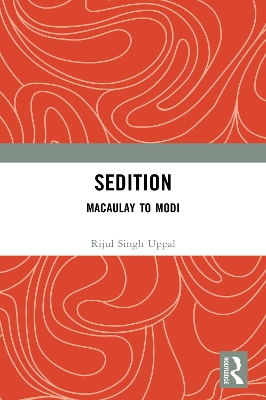
The liberal use of the sedition law in recent years, mainly by state governments intolerant of dissenting opinion, has provoked justified controversy. After some prominent individuals fell afoul of the law, activists, journalists, lawyers, and jurists took up cudgels on behalf of the victims, and demanded that the law be scrapped, as it belongs to the colonial era. The Supreme Court of India, in May 2022, admitted a host of petitions challenging the law as upheld in Kedar Nath Singh vs Union of India, 1961.

The author believes that the fundamental right to free speech is a non-negotiable right in a democratic country, but the law is relevant for countering threats to national security and sovereignty. Examining the trajectory of the sedition law from its introduction by the British colonial power and its subsequent rejection by the Constituent Assembly of India, the author observes that the statute had to be hastily restored by the Provisional Parliament to cope with the challenges posed by communal rioting in many parts of the country, several years after independence. As such, it is pertinent in times of crisis. The current law undeniably needs safeguards against political misuse, but deserves a place on the statute.

Print edition not for sale in South Asia (India, Sri Lanka, Nepal, Bangladesh, Pakistan and Bhutan)


This book examines the trajectory of the sedition law from its introduction by the British colonial power and its subsequent rejection by the Constituent Assembly of India.

Preface

1. Introduction

2. Sedition in Colonial India

3. The First Amendment

4. Need for Sedition Law

Postscript

Annexure I

Annexure II

Annexure III

Annexure IV

Annexure V

Annexure VI

Annexure VII

Annexure VIII

Annexure IX

Annexure X

Annexure XI

Annexure XII

Annexure XIII

Annexure XIV

Annexure XV

Annexure XVI

Annexure XVII
Rijul Singh Uppal is an advocate practicing at the Courts and Tribunals in New Delhi. He did his Master (LL.M.) in Transnational Crime and Justice from UNICRI, Turin, in partnership with UN mandated University of Peace (UPEACE), Costa Rica. The present work is the fruit of a deep interest in constitutional issues that impact contemporary politics and public life.