Muutke küpsiste eelistusi

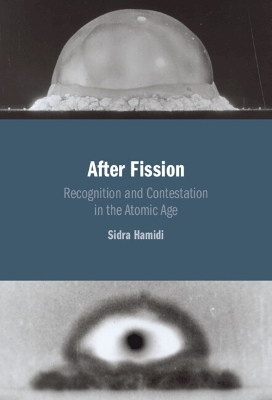
After Fission: Recognition and Contestation in the Atomic Age [Kõva köide]

(Trinity College, Hartford)
  • Formaat: Hardback, 220 pages, kaal: 472 g, Worked examples or Exercises
  • Ilmumisaeg: 08-Jan-2026
  • Kirjastus: Cambridge University Press
  • ISBN-10: 1009607154
  • ISBN-13: 9781009607155
Teised raamatud teemal:
  • Kõva köide
  • Hind: 103,50 €*
  • * hind on lõplik, st. muud allahindlused enam ei rakendu
  • Tavahind: 138,00 €
  • Säästad 25%
  • Raamatu kohalejõudmiseks kirjastusest kulub orienteeruvalt 3-4 nädalat
  • Kogus:
  • Lisa ostukorvi
  • Tasuta tarne
  • Tellimisaeg 2-4 nädalat
  • Lisa soovinimekirja
  • Formaat: Hardback, 220 pages, kaal: 472 g, Worked examples or Exercises
  • Ilmumisaeg: 08-Jan-2026
  • Kirjastus: Cambridge University Press
  • ISBN-10: 1009607154
  • ISBN-13: 9781009607155
Teised raamatud teemal:
Nuclear status is typically treated as a stable feature of a state's capacity to possess, use, or build nuclear weapons. Challenging this view, After Fission reveals how states contest their nuclear status in the atomic age. By examining the legal structure of the Non-Proliferation Treaty, technical ambiguities surrounding nuclear testing, and debates over rights and responsibilities in the global nuclear regime, Sidra Hamidi argues that a state's nuclear status is not simply a function of technical capability. Instead, states actively contest the way they want their nuclear status to be presented to the world, and powerful states like the US, either recognize or reject these formulations. By analysing key diplomatic junctures in Indian, Israeli, Iranian, and North Korean nuclear history, this book presents a theory of when and how states contest their nuclear status which has key policy implications for negotiating with ostensible rogues such as Iran and North Korea.

Arvustused

'For those who think that the answer to the question 'What is a nuclear state?' is obvious, Sidra Hamidi opens up a much more complex nuclear world in which the relationship between technical capabilities and nuclear status is always in negotiation. After Fission is a smart, compelling, carefully-researched account of nuclear meaning-making. From the liminal spaces within the nuclear order occupied by India, Iran, Israel, and North Korea, Hamidi shows us how the contested politics of recognition reveal the tenuousness of taken-for-granted categories, and why that matters for international diplomacy. This theoretically-rich and empirically-grounded analysis will be of value to both scholars and policy-makers.' Shampa Biswas, Judge & Mrs. Timothy A. Paul Chair of Political Science, Whitman College 'Why, how, and when do countries declare themselves to be 'nuclear' or 'non-nuclear' states? The answer, Hamidi argues, requires disentangling status from capability. After Fission's groundbreaking analysis will enable political scientists to get out of the long rut that has plagued their approach to the nuclear world.' Gabrielle Hecht, Professor of History, Stanford University

Muu info

Challenges conventional approaches to nuclear security by theorizing the difference between nuclear status and nuclear capability.
1. The puzzle of nuclear status;
2. Becoming nuclear;
3. The NPT and its
discontents;
4. Nuclear testing and the instrumental value of (non)nuclear
status;
5. Nuclear rights, responsibility and the status anxiety of Iran and
North Korea;
6. The future of conflict in nuclear politics.
Sidra Hamidi is Assistant Professor in the Department of Political Science at Trinity College in Hartford. Her articles have appeared in the European Journal of International Relations and International Affairs, and she is a recipient of the McElvany grand prize for exceptional scholarship published in the Nonproliferation Review.