Muutke küpsiste eelistusi

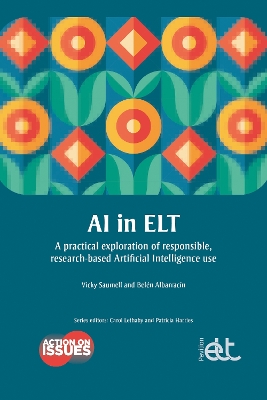
AI in ELT: A practical exploration of responsible, research-based Artificial Intelligence use [Pehme köide]

  • Formaat: Paperback / softback, 290 pages, kõrgus x laius: 234x156 mm, kaal: 800 g
  • Sari: Action on Issues
  • Ilmumisaeg: 20-Apr-2026
  • Kirjastus: Pavilion Publishing and Media Ltd
  • ISBN-10: 1803885009
  • ISBN-13: 9781803885001
Teised raamatud teemal:
  • Pehme köide
  • Hind: 36,68 €
  • See raamat ei ole veel ilmunud. Raamatu kohalejõudmiseks kulub orienteeruvalt 3-4 nädalat peale raamatu väljaandmist.
  • Kogus:
  • Lisa ostukorvi
  • Tasuta tarne
  • Tellimisaeg 2-4 nädalat
  • Lisa soovinimekirja
  • Formaat: Paperback / softback, 290 pages, kõrgus x laius: 234x156 mm, kaal: 800 g
  • Sari: Action on Issues
  • Ilmumisaeg: 20-Apr-2026
  • Kirjastus: Pavilion Publishing and Media Ltd
  • ISBN-10: 1803885009
  • ISBN-13: 9781803885001
Teised raamatud teemal:
Discussions around Artificial Intelligence (AI) are everywhere, and are therefore inevitably on the minds of teachers and materials alike. But as many of us will freely admit, its easy to feel confused, overwhelmed, and even exasperated by the hype, the rapid new developments and the explosion of information that we face. Integrating AI in the classroom offers both significant opportunities and complex challenges, alongside nuanced ethical considerations.


AI in ELT offers a comprehensive, critical and practical guide for teachers navigating the complex world of generative AI in education, especially in the context of English language teaching. Whether you are new to AI or looking to deepen your practice, this book equips you to make informed decisions that centre pedagogy, equity and the learners agency. It aims to ensure AI becomes a thoughtful addition to your teaching that genuinely enhances, rather than undermines, the quality and inclusivity of education.


In the first part of the book, the authors explain the concept of AI and what it is and what it can refer to. They aim to provide a clear and balanced view of the serious moral and ethical considerations in the use of AI, as well as an overview of the implications of and potential for AI in the ELT classroom. In part two, they give examples of real and practical uses for AI in English teaching and learning, placing the emphasis on establishing ethical guidelines, codes of conduct and having principled reasons for the incorporation of AI into our teaching. Whether you are tech-savvy or not, this book offers step-by-step plans to help you confidently bring AI into your teaching practice, with no advanced technical knowledge required.
Introduction: The current state of AI in ELT


Part one: Identifying and understanding the challenges


Chapter
1: Inherent biases and assumptions in AI algorithms
Chapter
2: (Im)Precise output
Chapter
3: Environmental impact
Chapter
4: Varieties of English and multilingual representation
Chapter
5: Data privacy, safety and copyright
Chapter
6: Access and equity in AI deployment


Part two: Practical solutions and strategies


Chapter
7: Guidelines for responsible use
Chapter
8: AI literacy
Chapter 9
: Positive uses of AI
Chapter
10: Prompting
Chapter
11: AI-enhanced projects


Conclusion


Glossary and References
Vicky Saumell is a teacher, teacher educator, author and presenter. She has worked for major publishers, especially in the areas of project-based learning and the meaningful use of technology for language learning. She has been the IATEFL Learning Technologies SIG Coordinator. She has had an extensive career teaching at primary and secondary level schools in Buenos Aires, Argentina, and higher education internationally. She continues to work as a freelancer for publishers and educational institutions.


Belén Albarracín is a Teacher of English, ICT Facilitator at Bayard School, Sworn Translator, and e-learning specialist based in Buenos Aires, Argentina. She is an advocate of the meaningful integration of technology to enhance language learning and has presented at national and international conferences on technology-enhanced SLA. She is a recipient of international scholarships, including the IATEFL Robert ONeil Scholarship and Trinity College London scholarship. She has been the webmaster of IATEFLs Learning Technologies SIG since 2020 and continues to work with educators on the effective use of digital tools in educational contexts.