Muutke küpsiste eelistusi

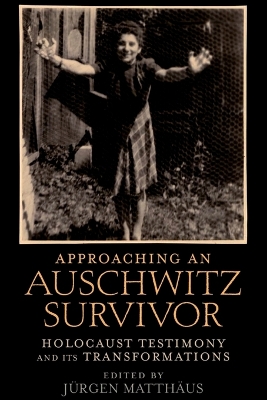
Approaching an Auschwitz Survivor: Holocaust Testimony and its Transformations [Pehme köide]

Edited by (Director, Applied Research, Center for Advanced Holocaust Studies, U.S. Holocaust Memorial Museum)
  • Formaat: Paperback / softback, 224 pages, kõrgus x laius x paksus: 234x156x12 mm, kaal: 322 g, 10 black and white halftones
  • Sari: Oxford Oral History Series
  • Ilmumisaeg: 03-Feb-2011
  • Kirjastus: Oxford University Press Inc
  • ISBN-10: 0199772533
  • ISBN-13: 9780199772537
  • Pehme köide
  • Hind: 40,19 €*
  • * hind on lõplik, st. muud allahindlused enam ei rakendu
  • Tavahind: 50,24 €
  • Säästad 20%
  • Raamatu kohalejõudmiseks kirjastusest kulub orienteeruvalt 3-4 nädalat
  • Kogus:
  • Lisa ostukorvi
  • Tasuta tarne
  • Tellimisaeg 2-4 nädalat
  • Lisa soovinimekirja
  • Formaat: Paperback / softback, 224 pages, kõrgus x laius x paksus: 234x156x12 mm, kaal: 322 g, 10 black and white halftones
  • Sari: Oxford Oral History Series
  • Ilmumisaeg: 03-Feb-2011
  • Kirjastus: Oxford University Press Inc
  • ISBN-10: 0199772533
  • ISBN-13: 9780199772537
Among sources on the Holocaust, survivor testimonies are the least replaceable and most complex, reflecting both the personality of the narrator and the conditions and perceptions prevailing at the time of narration. Scholars, despite their aim to challenge memory and fill its gaps, often use testimonies uncritically or selectively-mining them to support generalizations. This book represents a departure, bringing Holocaust experts Atina Grossmann, Konrad Kwiet, Wendy Lower, Jürgen Matthäus, and Nechama Tec together to analyze the testimony of one Holocaust survivor. Born in Bratislava at the end of World War I, Helen "Zippi" Spitzer Tichauer was sent to Auschwitz in 1942. One of the few early arrivals to survive the camp and the death marches, she met her future husband in a DP camp, and they moved to New York in the 1960s. Beginning in 1946, Zippi devoted many hours to talking with a small group of scholars about her life. Her wide-ranging interviews are uniquely suited to raise questions on the meaning and use of survivor testimony. What do we know today about the workings of a death camp? How willing are we to learn from the experiences of a survivor, and how much is our perception preconditioned by standardized images? What are the mechanisms, aims, and pitfalls of storytelling? Can survivor testimonies be understood properly without guidance from those who experienced the events? This book's new, multifaceted approach toward Zippi's unique story combined with the authors' analysis of key aspects of Holocaust memory, its forms and its functions, makes it a rewarding and fascinating read.

Arvustused

Should be read by all who produce and consume writings and arts about the Holocaust. * CHOICE *

Foreword v
Mark Roseman
Introduction: What Does it Mean? Holocaust Testimony and the Story of Helen "Zippi" Tichauer 1(6)
Chapter 1 Designing Survival: A Graphic Artist in Birkenau
7(20)
Konrad Kwiet
Chapter 2 Recapturing the Past: Individuality and Cooperation in Auschwitz
27(22)
Nechama Tec
Chapter 3 Displacing Memory: The Transformations of an Early Interview
49(24)
Jurgen Matthaus
Chapter 4 Living On: Remembering Feldafing
73
Atina Grossmann
Director, Applied Research, Center for Advanced Holocaust Studies, U.S. Holocaust Memorial Museum