Muutke küpsiste eelistusi

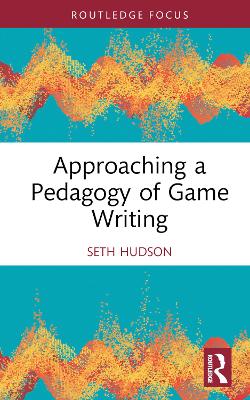
Approaching a Pedagogy of Game Writing [Kõva köide]

(George Mason University, USA)
  • Formaat: Hardback, 116 pages, kõrgus x laius: 216x138 mm, kaal: 520 g, 4 Tables, black and white
  • Ilmumisaeg: 18-Jul-2022
  • Kirjastus: Routledge
  • ISBN-10: 1032231459
  • ISBN-13: 9781032231457
  • Kõva köide
  • Hind: 57,93 €*
  • * hind on lõplik, st. muud allahindlused enam ei rakendu
  • Tavahind: 77,24 €
  • Säästad 25%
  • Raamatu kohalejõudmiseks kirjastusest kulub orienteeruvalt 3-4 nädalat
  • Kogus:
  • Lisa ostukorvi
  • Tasuta tarne
  • Tellimisaeg 2-4 nädalat
  • Lisa soovinimekirja
  • Raamatukogudele
  • Formaat: Hardback, 116 pages, kõrgus x laius: 216x138 mm, kaal: 520 g, 4 Tables, black and white
  • Ilmumisaeg: 18-Jul-2022
  • Kirjastus: Routledge
  • ISBN-10: 1032231459
  • ISBN-13: 9781032231457
This book examines the practices of writers in the AAA video game industry, to provide a model for game writing pedagogy that highlights the roles and skills utilized by these innovative storytellers.

Based on a two-year qualitative study, gathering data through conversational interviews, Seth Hudson combines theory, practice, and his experience as an educator-researcher to shed light on the phenomenon of game writing and writers who drive innovation in game storytelling. The author gives context for a range of audiences, examining the role of computer game design (CGD) in higher education, the role of writing and narrative design within those programs, the current and historical challenges game writers face, and the purpose of the research underpinning this book. Hudson frames a synthesis of research findings and relevant theory to illustrate new teaching practices informed by his findings that will help better serve students.

This book will provide an essential resource for game studies and game design educators and researchers, as well as game narrative enthusiasts.
1 CGD in Higher Education, Briefly
1(8)
Background: CGD as Field of Study
2(2)
Disparate Disciplines
4(2)
Industry Perceptions
6(1)
The Way Forward
7(2)
2 Game Writing in Contexts
9(27)
Industry Context
9(7)
CGD/Higher Education Context
16(4)
Educator-Researcher Context
20(6)
Designing the Study
26(2)
Data Collection
28(3)
Reflection: So What? (... and for Whom?)
31(5)
3 Approaching Game Writing/Writers
36(49)
Purpose
36(2)
Participant Overview
38(1)
Three Essential Roles of the Game Writer
39(1)
Five Areas of Competence/Functional Competencies
39(1)
"This Doesn't Have Anything to Do with Game Design."---Margaret
40(6)
"The Ability to Say, `Yeah, All Right.'"---Micah
46(5)
"It's About Finding Balance."---Lou
51(6)
"It's All Different Thinking"---Peter
57(5)
"You're the Wrapper."---Garreth
62(7)
"How Long Is a Piece of String?"---Henry
69(6)
"Logic Matters. Doing Math Matters."---Robert
75(7)
`Summary of Results
82(3)
4 Developing a Pedagogy of Game Writing
85(6)
From the Lobby to the Classroom and Back Again
85(1)
CGD: "What to teach?" vs. "How to teach it?"
86(1)
Those Who Can Teach...
87(1)
Bridging Education and Industry through Scholarship
88(1)
Fusing the Languages of Industry and Education
89(2)
5 Areas of Competence, Essential Roles
91(5)
Essential Roles
91(1)
Areas of Competence for Game Writers
92(4)
6 Deploying a Pedagogy of Game Writing
96(11)
Implementation in the Classroom
96(8)
Experimentation in the Classroom
104(1)
Identifying Relevant Coursework
104(1)
Inclusion across CGD Coursework
105(1)
Specialty-Specific Portfolios
105(1)
Conclusion
106(1)
Epilogue
107(6)
Now It's Your Turn
108(1)
Doing the Work vs. Getting Paid to Do the Work
109(1)
Finding Fulfillment
110(3)
Index 113
Seth Hudson is Associate Professor of Game Writing in the Computer Game Design program at George Mason University, where he teaches Story Design for Computer Games, Criticism and Research Methods, and the History of Computer Games. Hudsons scholarship explores playful approaches to teaching; game writing pedagogy; portfolio-focused curriculum development; and undergraduate student research and creative activity.